Introduction
Child care programs run best when key rules are written down. Good #policies help staff, families, and directors know what to do. They keep children safe, support staff, and make daily work easier. This article lists the main policies every program should have and explains why each one matters.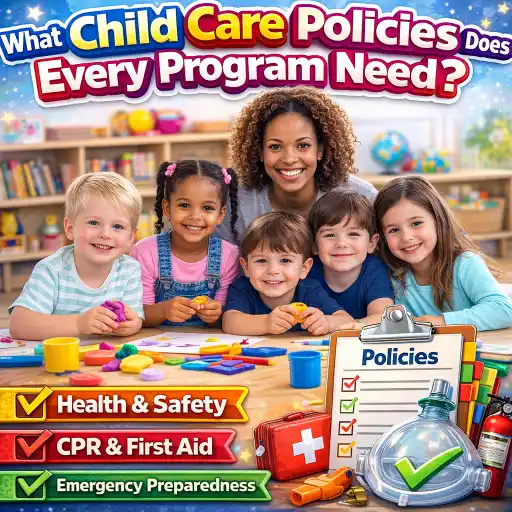
Why it matters:
1. Clear policies build trust with families and staff. 2. Written rules help you follow licensing and safety requirements. 3. Policies make decision-making faster during busy days or emergencies. Remember: state requirements vary - check your state licensing agency.
1. What written policies should every program have?
Every program needs a short, clear handbook with these written policies. Use numbers so staff can find things fast.
- 🔹 Admission & enrollment rules (who can join, required forms, waitlist steps). See examples at Above & Beyond Enrollment & Waitlist Policies.
- 📝 Fee, deposit, and payment policies (how you bill, late fees, refunds).
- 🩺 Illness, exclusion, and medication policies (when a child must stay home, medication permission, storage). For health wording, review ChildCareEd: Reduce Germs & Prevent Falls and the CDC guide Protecting Against Infections.
- 👥 Staffing, supervision, and ratio rules (who cares for which age; staff qualifications). See staff guidance at ChildCareEd: Staff Qualifications and Ratios Buy Now $0.00.
- 🚨 Emergency and evacuation plans, drills schedule, and reunification steps. Use the emergency planning ideas from ChildCareEd: Emergency Preparedness.
- 🔐 Privacy, recordkeeping, and communication rules (what is shared, how records are kept). See practical tips at ChildCareEd: Recordkeeping and Documentation Tips.
- ⚖️ Behavior and discipline policy (positive guidance, prohibited practices).
- 🧯 Health & Safety policies (SIDS, safe sleep, playground and water safety). Check resources like Playground & Water Safety Buy Now $0.00 and the course Creating Safe & Healthy Environments
 Buy Now $55.00.
Tip: Keep policies short, use bullet points, and post key rules where staff and families see them. Use plain language and translate key parts for families as needed. State rules and licensing forms often set minimum policy needs, so check local guidance.
2. How should we keep records and document care?
Good #documentation protects children, families, and staff. It also helps your program show compliance with licensing visits.
- 📁 Set up three main places for files:
- Child folder (enrollment, health, contact info).
- Classroom binder (daily sheets, attendance, logs).
- Program file (staff records, training, drills, policies).
- 🖊️ What to write down right away:
- Injuries or incidents with time and what staff did.
- Medication given or refused (name, dose, time, staff initials).
- Behavior that needs follow-up (biting, running away).
- 🔒 Keep records secure: locked cabinet or password-protected files. Share only with people who need to know.
- 🗂️ Make notes objective: time, what happened, staff action, parent notified. ChildCareEd has helpful tips in Recordkeeping and Documentation Tips.
- 💾 Back up digital files and keep scans of important forms. Keep a short daily checklist so paperwork does not pile up.
Why keep records? They support child development planning, protect staff from questions later, and show compliance in inspections. If you are unsure what to keep, check your state licensing list and attend trainings like ChildCareEd’s recordkeeping courses.
3. How do we prepare for emergencies, illnesses, and mandated reporting?
Planning ahead makes a scary moment calmer. Every program needs clear emergency steps, health rules, and reporter training.
- 🚒 Emergency plans: Have written evacuation routes, shelter-in-place steps, lockdown steps, and a reunification plan. Assign staff roles and practice drills regularly. See ChildCareEd: Emergency Preparedness for details.
- 🧴 Illness control: Post your sick policy, use mouthed-toy bins, teach handwashing, and have an isolation area for sick children. The CDC offers guidance at Protecting Against Infections.
- 📣 Communication: Keep an updated contact list for families and emergency services. Practice who calls families, who calls 911, and who keeps the child safe.
- 👩⚖️ Mandated reporting: Make sure staff complete mandated reporter training and know how to report suspected abuse. ChildCareEd offers required trainings like Mandatory Report Training.
- 🔁 Drill recordkeeping: After drills, log the date, time, who participated, and what to improve. Use records to update your plan.
Why it matters: practiced plans protect children and reduce confusion. State laws vary, so state requirements vary - check your state licensing agency and local emergency partners.
4. How do staffing, space, licensing, and enrollment policies keep programs strong?
Good staffing, the right space, and clear enrollment rules make care safe and predictable. These items also help with licensing reviews.
- 👩🏫 Staffing & ratios: Write minimum qualifications for staff, orientation steps, and required trainings (CPR, first aid). Keep a staffing plan that shows ratios by age. See Staff Qualifications and Ratios Buy Now $0.00.
- 📐 Space and equipment: Record room sizes and safe layout for play, rest, and meals. Follow guidelines for square feet per child and safe equipment. See space rules at Guidelines for Measuring Space Buy Now $0.00 and playground safety at Playground & Water Safety Buy Now $0.00.
- 🧾 Licensing & policies: Keep a licensing binder with inspections, fire reports, health checks, and program policies. Read your state rules; for example, Michigan explains licensing steps at Get Licensed as a Child Care Center (MI), and Tennessee posts rules at TN Child Care Rules.
- 🗳️ Enrollment & waitlist: Have a clear list of required forms, deposits, and timelines so families know what to expect. See an example at Enrollment & Waitlist Policies.
Tip: Put all policies and proof documents where licensors can find them. Keep staff files up to date and have a short orientation checklist for new hires. Regular staff meetings help everyone follow the same rules.
Common mistakes — how to avoid pitfalls?
- 🔸 Not writing policies down — fix: create a short handbook and review it yearly.
- 🔸 Records left unfiled — fix: use a daily 5-minute checklist to clear paperwork.
- 🔸 Skipping drills — fix: schedule quarterly or state-required drills and log them.
- 🔸 Not training staff on mandated reporting — fix: require training before direct care begins and refresh yearly.
FAQ
- Q: How often should policies be updated? A: At least once a year or after a licensing change.
- Q: What is the easiest way to share policies with families? A: A one-page family handbook and a posted sign at the door.
- Q: How long keep records? A: Follow your state rule, but many states expect several years for child and incident records.
- Q: Do all staff need mandated reporter training? A: Yes, staff who care for children should complete training. See ChildCareEd: Mandatory Report Training.
Conclusion
Strong written policies make your program safer and easier to run. Focus on clear rules for health, safety, staffing, emergencies, and recordkeeping. Use short lists and easy language so staff and families can follow them. Keep copies ready for licensors and review policies often. If you need training or templates, ChildCareEd has many useful resources, such as courses on Program Administration Buy Now $120.00$100.00 and Safe & Healthy Environments Buy Now $55.00.
By planning ahead you protect children, support staff, and build trust with families. Use these steps to make your written rules work for everyone. Stay practical, keep it simple, and check local rules — state requirements vary - check your state licensing agency.
- 45 Hour Child Growth and Development
- Bienvenido! Welcoming All Families
- 45 Hour School Age Methods and Materials
- CDA Bridge Bundle: Family Child Care without Portfolio Review
- CDA Bridge Bundle: Infant/Toddler without Portfolio Review
- CDA Bridge Bundle: Preschool without Portfolio Review
- Texas Director Credential
- 45 hour Growth and Development Birth-age 12 ONLINE
- Shoo, Germs! Don't Bother Me!
- Normas de Licenciamiento de Cuidado Infantil en Virginia para Centros Diurnos Infantiles y Hogares Diurnos Familiares
- Lista para Abrir una Guardería en Casa en Virginia: Cómo Empezar
- What Does New York's Health Care Plan Requirement Mean for Your Program?
- How Can Your Program Best Prepare for Accreditation?
- What Is the Difference Between Babysitting, Child Care at Home, and a Licensed Home Daycare?
- Including Every Child: What Child Care Providers Should Know About the ADA
- What Makes a Great Home Daycare? 10 Things Parents Notice First
- How to Become a Daycare Owner: What Qualifications Do You Actually Need?
- Child Care Administration Course: Are You Ready to Manage Adults, Not Just Classrooms?
- Caring for Our Children: Is It a Law, a Licensing Rule, or a Best-Practice Guide?
- What Certifications Do I Need to Open a Daycare? License, Training, and Credentials Explained
- Early Childhood Administration Certificate Online: Will It Qualify You to Be a Director?
- I Already Took the ADA Course—Do I Need It Again? Maryland Child Care Training Questions Answered
- Special Needs Training for Early Childhood Educators: Which Course Should You Take?
- What Qualifications Do You Need to Be an Assistant Director at a Daycare?
- When an Infant’s Daily Pattern Changes, How Can Providers Adjust the Routine Together?
- How Can You Fact-Check an AI-Written Classroom Update?
- How Can Family Child Care Providers Choose Hours That Meet Local Needs?
- What Should Parents and Providers Ask Before a Child Returns to Child Care After Illness?
- Personalized Learning in Preschool: Where Can Technology Help—and Where Should It Stop?
