Everyday items can make powerful learning moments for young children. This article gives simple, no-cost sensory ideas you can use in your program today. Sensory play helps little ones calm down, practice hands-on skills, and explore language. You will see quick setups, safety steps, learning goals, and cleanup tips so these activities fit into a busy day.
Why it matters: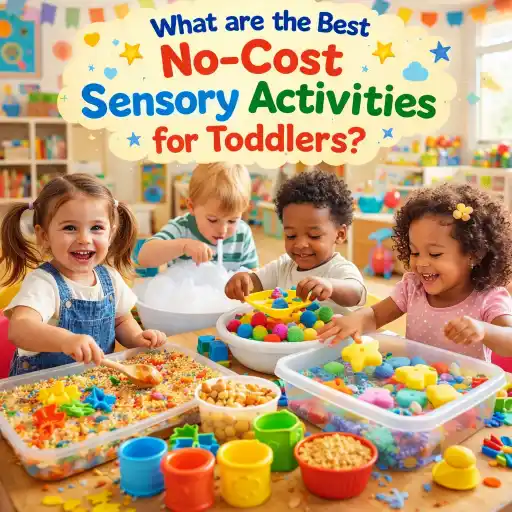
1) Children learn with their bodies. Sensory play builds fine motor skills, body awareness, and early thinking.
2) It helps children self-regulate. A simple #sensory tray can soothe a child who is upset and help them refocus.
3) It is low-cost and high-impact. Using things you already have saves money and gives children lots of chances to explore.
Want more how-to ideas and themes? See ChildCareEd for ready-made sensory bin themes and planning tips as part of sensory bin themes with household items and ideas for infants in sensory play for infants. In this article you will find short lists and steps so you can set up play quickly. Expect the words #toddlers #bins #play #development to appear as you read — they mark key ideas.
What simple no-cost sensory activities can I set up today?
Use things from your kitchen, closet, or yard. Try one activity at a time. Each setup takes minutes:
- 🍚 Rice or dry pasta tray
- Fill a shallow bin or tray with dry rice or pasta.
- Give scoops, cups, or a funnel. Ask: “Can you fill the cup?”
- Link: See ChildCareEd bin themes for ideas at sensory bin themes.
- 🧊 Ice excavation
- Freeze small toys in a container of water. Let children melt with warm water in cups.
- Great for exploring temperature and change.
- 🥄 Kitchen sound basket
- Put metal spoons, plastic lids, and a bowl for tapping and listening.
- Use during circle time to introduce rhythm or a song.
- 🪞Mirror faces
- Use an unbreakable mirror for self-discovery and language: “I see your nose!”
- Good for social-emotional play.
- 🧣Texture walk
- Lay fabric scraps: soft, rough, bumpy. Encourage children to name textures.
- 🫧Soap foam or bubbles (outdoors)
- Simple soap foam in a bin or bubble play outside lets children push, scoop, and practice hand movements.
- 🍼Sensory bottles
- Use clear bottles, water, glitter, or rice for calming bottles. ChildCareEd shows sensory bottle ideas in their resource library: make your own sensory bottles Buy Now $0.00.
- 🧴No-cook play dough
- Mix 2 cups flour, 1 cup salt, 1 cup water, and 1 tbsp oil. Knead and use cookie cutters for fine motor practice.
Keep setups short and supervised. Rotate one item each day so children return to familiar materials and build skills.
How do I keep sensory play safe and meet licensing rules?
Safety and supervision are key. Follow simple steps so sensory play fits your program and licensing. Remember: state requirements vary - check your state licensing agency.
- 👀 Supervise for age
- Infants need adult within arm’s reach. Toddlers need close supervision until they follow rules (no mouths).
- ChildCareEd offers guidance for infant setups: sensory play for infants.
- ⚠️ Choose safe fillers
- Use taste-safe items for younger children (oats, cooked pasta, large beans) or pick non-food alternatives if your center has food rules.
- 🧼 Clean and store
- Wash tools, replace cracked toys, seal reusable fillers in bags. ChildCareEd reminds providers to plan for cleaning in their trainings like Playful Spaces for Infants & Toddlers
 Buy Now $24.00.
- Wash tools, replace cracked toys, seal reusable fillers in bags. ChildCareEd reminds providers to plan for cleaning in their trainings like Playful Spaces for Infants & Toddlers
- 📋 Allergy and policy checks
- Check allergies and family preferences. If you use food, note center policy and allergies on sign-in sheets.
- 🧯 Prepare for spills
- Place a tray or drop cloth under bins, keep broom/wipes handy, and show children how to help clean up.
- 🔁 Rotate and inspect
- Discard materials that break or are hard to sanitize. Label bins by theme for easy rotation.
Use simple written rules near the activity: “Tools stay in the tray,” “No mouths.” Model rules and praise children who follow them. For calming tools, sensory bottles and quiet water play are useful; see ChildCareEd’s bottle ideas at make your own sensory bottles Buy Now $0.00.
How can no-cost sensory play support learning goals?
Sensory activities are not just play — they meet learning targets you already have. Use these steps to connect play to goals for each child.
- Pick 1 learning goal (choose one):
- 1) Fine motor: scooping, pinching, using tongs.
- 2) Language: describe textures, name actions.
- 3) Math: count scoops, compare sizes.
- 4) Social skills: take turns, share tools.
- Match materials to the goal
- Use clothespins or tongs for fine motor. Add picture cards for vocabulary. Add number bowls for counting.
- Plan small steps
- Offer 1 prompt: “Can you find three blue pieces?” Note what a child can do and plan the next small challenge.
- Record one observation
- Write a short note: who, what skill, next step. ChildCareEd’s developmental tools like the Developmental Milestones Checklist Buy Now $0.00 can guide observations.
Example: Use a rice tray with cups. Goal: pincer grasp. Prompt: “Pick up a pom-pom with the tweezers.” Observe how many times the child uses tweezers correctly. Repeat weekly and increase challenge. Sensory play also supports emotional regulation — soft rice or water can calm a child before nap time, as explained in ChildCareEd’s water play article: The Water Table.
How do I store, rotate, and avoid common mistakes?
Good storage and simple routines make sensory play easy on staff. Here are steps and common pitfalls with fixes.
- Daily setup checklist
- 1) Put a tray or shower curtain under the activity.
- 2) Place only 1 filler + 2 prop types to start.
- 3) Keep cleaning supplies nearby.
- Storage and rotation
- Label sealed bags or tubs by theme. Rotate one kit per week. ChildCareEd suggests labeling themed kits for quick swaps in their post on bin themes: sensory bin themes.
- Common mistakes and fixes
- 😬 Mistake 1: Too many tiny pieces. ✅ Fix: Use larger items for group bins; save tiny pieces for small-group work.
- 😩 Mistake 2: Big mess and no cleanup plan. ✅ Fix: Teach children to scoop back into the bin and have child-sized brooms/wipes available.
- 😕 Mistake 3: Materials not rotated. ✅ Fix: Keep a simple schedule and reuse favorites after washing.
- Quick clean-up steps
- 1) Remove large toys and wash them.
- 2) Scoop reusable filler into sealed bags.
- 3) Wipe surfaces and launder cloths.
Tip: Put a small checklist on the bin with steps so any staff member can set it up fast. For calm-down kits and bottle ideas, see ChildCareEd’s calm tools: make your own sensory bottles Buy Now $0.00.
FAQ (quick answers)
- How often should I offer sensory play? — 2–4 short sessions per week; short and frequent beats one long, messy session.
- Can I use food? — Yes if supervised and allowed by center policy; otherwise, use non-food fillers.
- What ages? — Infants: very simple, fully supervised setups. Toddlers: larger props, scooping. Preschoolers: sorting and counting.
- How to record learning? — Note one child, the skill seen, and the next step in your lesson notes.
Conclusion
No-cost sensory activities are easy to add and full of learning. Start simple: pick one theme, use safe materials, supervise, and note one learning goal. Rotate kits and teach cleanup so staff can run activities smoothly. For more training, ChildCareEd has courses like Playful Spaces for Infants & Toddlers Buy Now $24.00 and resources on planning and calming tools. Try one setup this week and watch how your #toddlers explore, calm, and grow through #sensory #play.
- CDA Certification en Español: Recursos y Consejos para Educadores Bilingües
- ¿Cuáles son las mejores actividades del Día de la Tierra para niños en casa o en el aula?
- Sweet National Ice Cream Day Activities Kids Will Love
- What age-appropriate learning activities should we use for infants, toddlers & preschoolers in New York?
- Can Toddlers Do STEM in the Sandbox at Minnesota Daycares?
- Summer Field Trips for Daycares in Wisconsin
- Fall Circle Time Ideas for Preschool and Daycare
- Calabazas, hojas y manzanas: actividades de otoño para preescolares
- How can North Dakota providers celebrate America’s 250th in age-appropriate ways?
- Canciones, juegos y preguntas de círculo para niños
- What toddler development activities can I use in my child care room?
- Easy Pool Noodle Sea Creatures for Ocean Theme Activities
- Daycare Activity Ideas for Infants, Toddlers, and Preschoolers
- How Can Farm-to-Table Experiences Teach Toddlers Where Food Comes From?
- Free Infant Lesson Plans for Daycare and Early Learning
- 15 Around-the-World Activities Toddlers Can Explore Through Play
- Big Feelings, Busy Bodies: Self-Control Activities for Toddlers
- What Toddler Activities Encourage Language and Communication?
- How Can Transition Routines Keep Toddlers Engaged Between Activities?
