Fall materials make abstract math ideas tangible, colorful, and inviting for young children. With a few leaves, acorns, pumpkins, dice, and open-ended questions, you can strengthen #counting, sorting, comparison, and early data reasoning through play; for deeper guidance, explore Early Mathematics Through Play Buy Now $24.00 to build practical strategies for integrating developmentally appropriate math throughout the preschool day.
Why do fall math games matter for preschool learning?
Preschool mathematics is more than reciting number words. Children develop durable concepts when they touch, move, organize, compare, explain, and revisit quantities in meaningful contexts. Fall offers an especially rich collection of materials: leaves vary in color and size, acorns invite counting, pumpkins support measurement, and apples create authentic opportunities for graphing and comparison.
Playful games also make room for mathematical language. When educators ask, “Which group has more?” or “How do you know?” children practice reasoning as well as vocabulary. A systematic review of early math games emphasizes that games can support learning when adults intentionally scaffold children’s thinking rather than treating the activity as mere entertainment.
These experiences are valuable because they connect mathematical ideas to children’s lived experiences. A child who collects five acorns on a nature walk is not simply completing a task; the child is organizing real information, remembering a quantity, and communicating an observation.
- Support one-to-one correspondence and cardinality.
- Build classification, comparison, and patterning.
- Encourage language, cooperation, and problem-solving.
- Provide natural opportunities for observation-based assessment.
How can you prepare safe and flexible fall math materials?
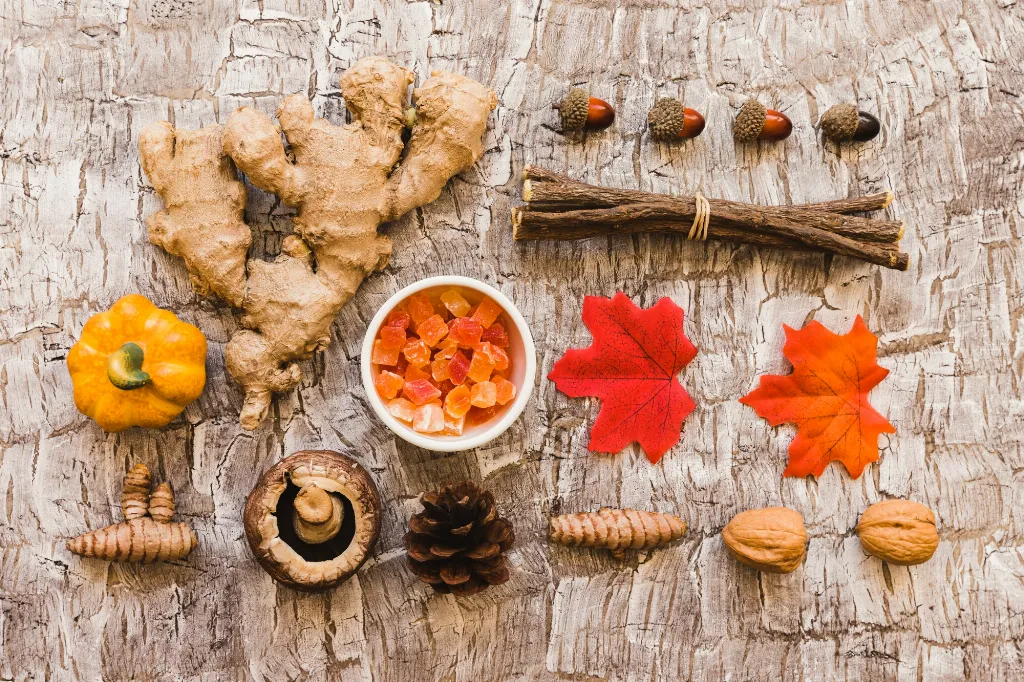
Effective centers do not require elaborate preparation. Begin with a small, intentional collection of materials and offer several ways to use them. Real leaves, large pinecones, mini pumpkins, craft apples, laminated number cards, bowls, trays, dice, tongs, cubes, and paper graphs are enough for a week of investigation.
Before inviting children to play, inspect natural objects for sharp edges, mold, insects, or breakage. Avoid small loose parts for children who mouth materials, and follow your program’s sanitation procedures. Adult supervision is essential when using acorns, seeds, beads, or other small manipulatives. State requirements vary - check your state licensing agency.
Organize materials in clearly labeled bins. Picture labels can support independence, while trays help children see the boundaries of each activity and simplify cleanup. Provide multiple entry points: some children may count three objects, while others may compare two-digit collections or record results on a graph.
- 🍂 Use natural objects alongside safer, larger substitutes when needed.
- Offer numeral cards with dot representations for emerging counters.
- Include tongs, scoops, and tweezers to add a fine-motor dimension.
- Keep paper, clipboards, and markers nearby for children who want to document ideas.
How can children count and compare with leaves, acorns, and pumpkins?
Counting becomes more meaningful when children count objects they selected themselves. Invite children to collect a specified number of large, safe objects, then check the quantity together. Ask them to touch or move one object for each number word and confirm the total: “You counted six leaves. How do you know there are six?”
Try a Fall Collection Count. Give each child a tray and a numeral card from 1 to 10. Children place the matching number of leaves, acorns, or large counters on the tray. Differentiate by beginning with 1–3, using dot cards, or extending the task with “one more” and “one fewer.”
For comparison, create two collections and ask which has more, fewer, or the same amount. Children can match objects one-to-one across two rows, an approach that makes comparison visible without requiring symbolic notation.
Use pumpkins for measurement and ordering. Children can arrange pumpkins from smallest to largest, estimate which is heavier, or measure circumference with yarn. Focus on comparative vocabulary such as heavier, lighter, taller, shorter, longer, and wider.
These activities align with the practical progression described in simple counting activities for preschoolers: model accurate counting, invite children to represent quantities, and adapt the range to each learner.
How can fall games develop sorting, patterns, and geometry?
Sorting is mathematical reasoning because children decide which attributes matter. Place a mixed collection of leaves, acorns, and paper pumpkins on a tray. Ask children to sort by color, shape, size, or type, then explain their rule. Afterward, challenge them to “sort it another way.” This simple prompt reveals whether children can shift perspectives and recognize multiple attributes.
Fall objects also support patterning. Arrange a repeating sequence such as leaf–acorn–leaf–acorn or red apple–yellow apple–yellow apple. Invite children to identify the repeating unit, copy it, extend it, and eventually create their own. Pair patterns with movement by using actions such as clap–tap–clap–tap.
For geometry, compare leaf shapes and describe positions: beside, beneath, inside, above, and between. Children can build a “pumpkin patch” with blocks, place pumpkins in rows, or design paths for a toy squirrel. Ask questions that encourage spatial reasoning: “How can we move the pumpkin so it is between the two leaves?”
Keep the activity open-ended. There is not always one correct way to sort or arrange materials, and children benefit when they justify their decisions. Use photographs or brief notes to document children’s strategies rather than only recording whether the final arrangement is correct.
How can you use dice, graphs, and stories to extend fall math play?
Dice games add anticipation and repeated practice. In a Roll and Cover Pumpkin Patch, children roll one die and cover that many pumpkins on a mat. Beginners can match dots to pictures; children ready for more complexity can roll two dice, combine quantities, or compare their totals. Keep the emphasis on explaining strategies rather than speed.
Graphing turns children’s experiences into visual information. After a leaf hunt, sort leaves by color and create a class graph. Ask: “Which color has the most? Which has the fewest? How many more yellow leaves than red leaves?” A graph can be made with sticky notes, blocks, or real objects, so children see that data can be represented in multiple ways.
Story problems make addition and subtraction concrete. Use a squirrel puppet and acorns: “The squirrel found four acorns and then found two more. How many does it have now?” Children can act out the story, move the objects, draw the result, or explain their strategy verbally. For subtraction, hide some objects and ask children to determine how many remain.
Seasonal roll-and-graph and sorting activities are also highlighted in intentional everyday math guidance. Rotate one game at a time so children encounter familiar structures with new materials.
How can you differentiate, assess, and avoid common pitfalls?
Mixed-ability groups are normal, and differentiation can remain playful. Offer smaller quantities, larger manipulatives, visual cues, or a partner for children who are beginning. For children who are ready, introduce two attributes, larger collections, estimation, or simple recording. Dual-language learners benefit when number words and comparison vocabulary are paired with gestures, pictures, and home-language support.
Assess during play rather than interrupting the experience with a formal test. Notice whether a child:
- Touches one object for each number word.
- Understands that the last number names the total.
- Recognizes small quantities without counting every object.
- Sorts by an attribute and explains the rule.
- Compares groups using more, fewer, or equal.
- Predicts or extends a repeating pattern.
Record one concise observation and a possible next step. For example: “Maya counted six leaves accurately but recounted when asked how many; next, invite her to state the total after moving the final leaf.”
Common mistakes include relying too heavily on worksheets, correcting children before understanding their strategy, introducing too many vocabulary words, and making games competitive. Instead, use manipulatives, ask open questions, and celebrate persistence. The Math Foundations in Early Childhood  Buy Now $16.00 course can help directors and providers strengthen intentional planning, math talk, and observation-based instruction.
What are the main takeaways for a fall math program?
How can you turn fall objects into meaningful math games for preschoolers? Start with children’s curiosity and use seasonal materials as tools for counting, sorting, comparing, measuring, patterning, graphing, and storytelling. A single collection of leaves or acorns can support multiple levels of challenge when educators adjust the quantity, language, tools, and questions.
Plan a small number of repeatable centers, supervise materials carefully, and document what children do. The goal is not to rush children toward worksheets or formal computation. The goal is to help them see that mathematics is something they can explore, explain, and use in everyday life.
For continued professional learning, consider these relevant ChildCareEd options:
- Early Mathematics Through Play Buy Now $24.00 for broad, play-based math strategies.
- No Such Thing as Boring Math Buy Now $24.00 for connecting intentional play with early mathematical concepts.
- Math Foundations in Early Childhood Buy Now $16.00 for classroom integration and professional knowledge.
- Letter & Number Planning in Child Care Buy Now $24.00 for individualized math and literacy planning.
- Preschool Assessments & Observations Buy Now $24.00 for documenting children’s learning through observation.
Small, joyful math moments add up. When children count a leaf collection, defend a sorting rule, or predict the next pumpkin in a pattern, they are building confidence as mathematical thinkers.
- Early Mathematics Through Play
- 24 Hour Texas Pre-Service
- Math Foundations in Early Childhood
- CDA Bridge Bundle: Family Child Care without Portfolio Review
- CDA Bridge Bundle: Infant/Toddler without Portfolio Review
- CDA Bridge Bundle: Preschool without Portfolio Review
- Emergent Learning & Development
- 45-Hour Infant and Toddler Curriculum
- Connections That Count: Building Relationships in Child Care
- Texas Director Credential
- Actividades de Motricidad Gruesa que Desarrollan el Equilibrio, la Coordinación y la Fuerza
- Easy Fall Activities for Preschoolers to Try This Season
- Actividades de Otoño Fáciles para Preescolares esta Temporada
- How can I teach colors, shapes & numbers through play in Michigan classrooms?
- Fall Circle Time Ideas for Preschool and Daycare
- Pumpkin, Leaves, and Apples: Fall Activities for Preschoolers
- Calabazas, hojas y manzanas: actividades de otoño para preescolares
- How Can I Use Fun Math Activities for Preschoolers Every Day?
- How can I use simple math activities for preschoolers every day?
- How can North Dakota child care providers build number sense in everyday routines?
- How can seasonal activities (spring, summer, fall, winter) combine fun with clear educational goals?
- How can pumpkin science create meaningful, hands-on fall learning for preschool classrooms?
- How can everyday play build number sense in young children?
- How can preschool programs intentionally support early math skills every day?
- How Can I Help Children Understand Shapes and Patterns?
- Rainy Fall Day? 12 Indoor Activities Preschoolers Won’t Want to Stop
- What’s Happening Outside? Fall Science Adventures for Preschoolers
- Count It, Sort It, Find It! Fall Math Games for Preschoolers
- Fall Challenge Accepted! Hands-On Learning Games for Pre-K
- ¿Cómo puede la retroalimentación visual apoyar la fluidez en la multiplicación?
