Everyday moments in your # preschoolers' day are full of chances to grow #number #sense. This short guide shows simple steps you can use right now in North Dakota child care programs. Use snack time, lining up, playground play, and diaper or toileting routines to make math easy and meaningful. For ideas you can print and use, see ChildCareEd resources like How Can I Use Simple Math Activities for Preschoolers Every Day? and activity PDFs such as Hot Chocolate Counting Activity Buy Now $0.00 or Turkey Roll & Build Buy Now $0.00.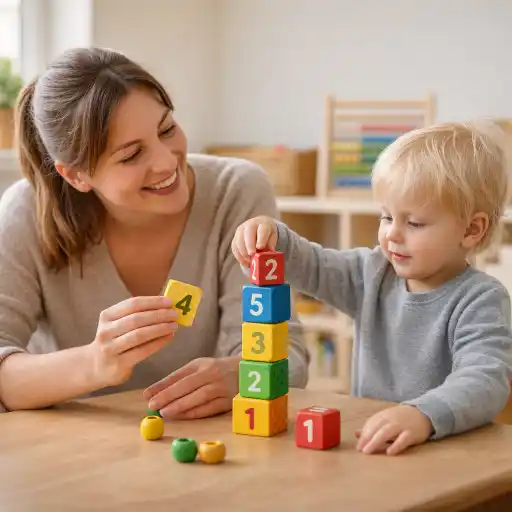
Why it matters:
Math talk during routines strengthens language, social skills, and problem-solving. See examples and research from the Math Talk e-clip. For practical prompts and sample phrases to use during routines, see ChildCareEd's Math Talk, It’s as Easy as 1…2…3!.
How can everyday routines build #number learning in my North Dakota child care?
- 🍎 Snack time: Count crackers or apple slices aloud. Ask, "How many do we need for four children?" Use real objects; children connect numbers to things (Counting Fun for Preschoolers).
- 🧦 Dressing/cubbies: Sort mittens or shoes by size or color. Ask which group has more or fewer to compare quantities.
- 🚶 Lining up / transitions: Count steps to the door or compare who is first and last. Use position words (first, next, last) to build sequence sense.
- 🧺 Clean-up time: Give a target: "Put 5 blocks in the box." Children practice 1:1 counting and following a number plan.
- 🧊 Water/sensory play: Pouring is great for measuring language—more, less, full, empty.
Short, frequent routines like these create repeated practice. For printable games and seasonal ideas, check ChildCareEd's free PDFs like Pumpkin Number Puzzles Buy Now $0.00 and Winter Number Puzzles Buy Now $0.00.
What activities work best for infants, toddlers, and preschoolers during routines?
- 👶 Infants (0–18 months):
- Tap items in a sensory bin and say "one, two" while you move them. Use big, safe pieces to compare size and amount.
- Sing counting rhymes at diaper changes or during feeding—math talk starts early (see simple math every day).
- 👶👧 Toddlers (18–36 months):
- Line up blocks and count together. Use words like more/fewer and big/small.
- Sort toys or socks during clean-up—children practice matching and grouping.
- 👦 Preschool (3–5 years):
- Use ten-frames, roll-and-graph games, or number puzzles like those at ChildCareEd (Turkey Roll & Build Buy Now $0.00).
- During snack, ask simple addition questions: "You have 2 crackers, and I give you 1 more—how many?"
Rotate materials weekly so activities feel fresh. For age-appropriate lesson plans, see ChildCareEd’s place value and Math Foundations resources.
How can I plan, observe, and document number sense without extra paperwork?
Keep records short and meaningful. Use quick observations in natural play instead of long tests. This respects classroom time and aligns with teacher-led observation models like Wyoming’s collaborative approach to readiness (Instructional Foundations for Kindergarten).
- 🔎 Observe: Watch children during routines. Note 1–2 specific skills (example: "counts to 7 with 1:1 correspondence").
- 📝 Plan tiny goals: Pick one weekly goal per group (e.g., count to 10). Choose 2–3 routine activities to reach it.
- 📸 Use play-based checks: Ask a child to show the number on a card or place that many objects in a cup. Record a one-line note.
- 📚 Use training and resources: Short courses like No Such Thing as Boring Math
 Buy Now $24.00 offer approaches you can use in real time; this training is approved in North Dakota and other states (check course page). See the Making Math Count overview for additional course options and practical classroom strategies.
 - ⚠️ Remember: state requirements vary - check your state licensing agency.
Keep documentation practical: one-line observations, a sample work photo, and a copy of the weekly goal. These show progress and keep systems manageable.
How can families and staff partner to keep math playful and consistent?
Families are your best allies. Share easy activities and show them how math talk happens during routine care. Research and practice suggest families who see how to play with math will continue the learning at home (Family Engagement).
- 📣 Send 1 simple home activity each week (e.g., count stairs or sort socks). Keep it one step so families can do it in 5 minutes.
- 👪 Host a math play night: use roll-and-graph games or number puzzles from ChildCareEd, so parents watch play-based math in action (Pumpkin Number Puzzles Buy Now $0.00).
- 💬 Share language: Encourage parents to use number words and questions—"How many?" "Which has more?" This simple math talk boosts learning (Math Talk).
Common mistakes and how to avoid them
- ⚠️ Too many worksheets. Fix: Use one hands-on moment instead of a worksheet-heavy plan (ChildCareEd resources favor play-based learning).
- ⚠️ New words all at once. Fix: Teach 2–3 math words and use them repeatedly in routines.
- ⚠️ Skipping observation. Fix: Watch free play to set the right next step for each child.
Quick FAQ
- Q: When should we start? A: Now—math talk works in infancy. See everyday math ideas at ChildCareEd.
- Q: How often to check skills? A: Brief play-based checks every 2–4 weeks work well.
- Q: Where to get printables? A: ChildCareEd’s free activity library has many seasonal PDFs and lesson plans.
- Q: Need training? A: ChildCareEd courses like No Such Thing as Boring Math Buy Now $24.00 and Math Foundations offer practical tips.
Conclusion
Small, frequent math moments in routines add up. Plan tiny goals, observe during play, use real objects, and invite families to join the fun. With simple strategies and free ChildCareEd tools, you can strengthen children’s #number learning every day in your #NorthDakota program. State-level rules change—state requirements vary - check your state licensing agency—and short, playful practice will help children build confidence for kindergarten and beyond.
- How Can North Dakota Educators Stay Current and Advance Their Careers?
- ⏰📘 How Many Training Hours Do Childcare Staff in North Dakota Need Each Year?
- 👶 What Child-to-Staff Ratios and Group Sizes Are Required in North Dakota Childcare? 🏫
- 👶 ¿Cuáles son las proporciones y grupos requeridos en Dakota del Norte? 🏫
- Child Growth and Development Training North Dakota
- Proporciones de Cuidado Infantil y Tamaños de Grupo por Edad en Maryland (Guía Rápida para Centros y Hogares)
- Proporciones de Cuidado Infantil y Tamaños de Grupo por Edad en Virginia (Guía Rápida para Centros y Hogares)
- Lista para Abrir una Guardería en Casa en Dakota del Norte: Cómo Empezar
- Cómo Ser Maestra de Preescolar en Dakota del Norte
- Capacitación Previa al Servicio para Proveedores de Cuidado Infantil en Dakota del Norte
- Las Mejores Ideas de Excursiones para Guarderías en Dakota del Norte
- How do I become a licensed child care provider in North Dakota?
- How does ChildCareEd support family childcare providers in small North Dakota towns?
- How can North Dakota childcare programs best support Dual Language Learners?
- What Does the Free School Meals Debate Mean for Child Nutrition in North Dakota?
- How can North Dakota child care programs protect young skin with simple sun-safety routines?
- How can we turn playtime into learning time in North Dakota child care?
- How can North Dakota child care programs lay reading foundations the right way?
- How can North Dakota child care providers build number sense in everyday routines?
- How can everyday play build number sense in young children?
