Action words become meaningful when children can connect them to something they are doing right now. By weaving movement, simple modeling, and visual cues into familiar preschool routines, providers can build vocabulary without adding another formal lesson to a busy day. For a deeper foundation in practical strategies for supporting children’s verbal and nonverbal communication, explore ChildCareEd’s Language Development in Early Childhood  Buy Now $16.00 course, a focused professional-learning option that can strengthen your everyday classroom practice.
Why are action words such a natural fit for preschool routines?
Action words—also called verbs—describe what people, animals, or objects do: pour, wash, climb, carry, stir, and rest. Because these words refer to visible events, young children can connect a spoken label with a movement and its outcome. When an educator says, “You are pouring water,” while a child tips a small pitcher, the word is not an abstract item to memorize; it explains a meaningful experience.
Routines offer repeated, predictable contexts for this kind of learning. Arrival, handwashing, meals, dressing for outdoors, and cleanup happen often, creating natural chances to hear and use the same vocabulary in different moments.
This approach can also support comprehension and participation. A child who hears “push the chair in” while doing the action can link the direction to its meaning; another may show understanding by pointing, gesturing, or watching closely before saying the word. Action vocabulary can help children describe their choices, follow directions, tell what happened, and move from naming an object—“ball”—to expressing an idea—“kick the ball.” These small connections build confidence in the #classroom and create a stronger foundation for communication.
How can providers teach verbs through movement and modeling?
Start with a small set of useful words connected to the children’s current experiences. Choose two or three verbs for a routine or short activity, such as open, wash, and dry at the sink or scoop, pour, and stir at snack. Say the word as the action happens, demonstrate it clearly, and give children a moment to notice or respond. The goal is meaningful exposure—not a rapid-fire vocabulary test.
Model short, natural sentences that make the action easy to understand: “I am opening the lid,” “You are wiping the table,” or “The doll is sleeping.” Then invite children to participate. The Resources for Early Learning activity Word Play: Action Words uses a similar principle: children hear an action word, connect it with what it means, and act it out.
- During cleanup, narrate: “You are carrying the blocks. Now you are placing them in the basket.”
- During outdoor play, pair words with safe movements: “Reach up,” “bend down,” or “walk around the cone.”
- Use a playful imitation game: “I am tapping my knees. Would you like to tap, point, or watch?”
- 💃 Add a familiar action song, then pause so children can choose a movement or suggest another verb.
Some children may participate by looking, pointing, signing, using an AAC system, or moving a toy rather than performing the action themselves. Treat these as valid ways to join in, and let the child’s comfort and abilities guide the activity.
Where can action vocabulary fit into the preschool day?
Routines already have a sequence of actions, making them an easy place to revisit vocabulary. During handwashing, you might say, “Turn on the water, rub your hands, rinse, and dry.” At meals, describe real actions: “You are scooping yogurt,” “I am cutting the pear,” or “We are passing the bowl.” Dressing can bring in pull, zip, fasten, and take off. During transitions, words such as walk, line up, carry, and put away connect language to what children need to do next.
Keep narration warm and conversational. Instead of asking a child to name every action, comment on what you notice and leave space for a reply. If a child says “wash,” you can expand naturally: “Yes, you are washing your hands with soap.” This acknowledges the child’s message while modeling a fuller phrase.
- Arrival: greet, hang, unpack, choose.
- Snack and meals: pour, scoop, stir, taste, pass.
- Outdoor play: climb, slide, dig, roll, chase—adjusting activities for safe access.
- Art and building: draw, press, fold, stack, connect.
- Rest and transitions: choose, lie down, cover, wake, return.
Repeat key words across different contexts over days, not just once. A child who hears “carry” while moving a book basket and later while carrying a jacket can begin to understand the word beyond one activity. Keep the daily flow child-centered: routines are learning opportunities, not reasons to hurry a child through care.
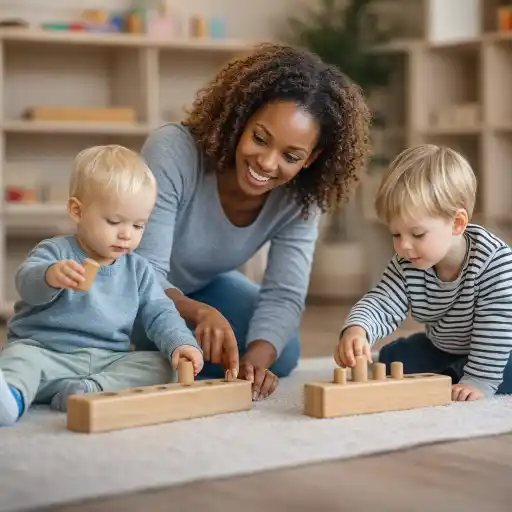
How do visuals and simple activities make action words clearer?
Visuals give children another route to meaning, especially when a new word is unfamiliar, a spoken direction is hard to process, or a child is learning more than one language. Pair a clear photograph, drawing, or picture symbol with the spoken word and a gesture. For example, show a picture of someone washing, say “wash,” demonstrate the motion, and then connect the word to handwashing at the sink.
ChildCareEd’s Language Development in Early Childhood resources include communication and observation materials that can help educators think about different ways children express understanding. For a simple classroom game, place picture cards showing familiar actions in a basket. A child can select a card, name or point to the action, act it out, move a toy to represent it, or invite a peer to guess. Keep the image uncluttered and the number of choices manageable.
The featured ChildCareEd resource Human Body Parts is relevant when action words involve body movement. Picture-based prompts can help children connect words such as bend, stretch, clap, and wiggle with a body part or movement. Use the resource as a visual prompt alongside real movement or a doll—not as a substitute for conversation. (Confirm the current resource listing and availability on ChildCareEd’s site.)
- Make a “verb of the day” picture-and-action card for a familiar routine.
- Use a first-then visual: “First wash, then dry.”
- Match an action picture to a real-life moment, such as “pour” at snack.
- Invite children to choose between two pictures, gestures, or actions.
in a way that is safe, dignified, and developmentally appropriate.
How can educators notice progress and avoid common pitfalls?
Observe what children understand and communicate across several routines. A child may first follow “stir” by moving a spoon, later point to a picture of stirring, and eventually use the word during pretend cooking. Note the context and the response rather than making broad conclusions from a single activity. For example: “At snack, Kai stirred the cup after the educator said ‘stir’” is more useful than “Kai knows all the action words.”
Choose one or two indicators to notice during a week: Does the child follow a one-step action direction? Point to the picture that matches a word? Use a new verb spontaneously or after a model? Participate through a gesture, sign, or AAC? Brief, objective notes can help a team decide whether to repeat a familiar word, add a new one, or change the visual support. The ChildCareEd course Language Development in Early Childhood Buy Now $16.00 offers broader professional learning about supporting communication and language growth.
Common pitfalls are easy to avoid with a few intentional adjustments:
- Too many words at once: Focus on a handful of relevant verbs and revisit them.
- Quizzing throughout the routine: Balance questions with comments, demonstrations, and wait time.
- One-time practice: Reuse the same words in play, care routines, songs, and picture activities.
- Expecting everyone to move or speak alike: Accept different communication modes and participation choices.
- Correcting every attempt: Respond to the child’s meaning and model the word naturally.
If your program uses training toward a professional-development requirement, state requirements vary - check your state licensing agency. Keep the emphasis on practical application: select a routine, model a few verbs, pair language with action or visuals, and notice how children respond.
Conclusion: How can you make action words part of everyday learning?
Teaching action words through everyday preschool routines does not require a separate, lengthy lesson. Children can hear, see, and explore verbs as they wash, pour, carry, build, and play. Choose a few meaningful words; model them while actions happen; use movement, pictures, and gestures; repeat vocabulary across the day; and welcome each child’s way of participating.
This week, try one small plan: choose a routine such as snack or cleanup, select two action words, pair each with a gesture or visual, and make a brief note about how children respond. Use ChildCareEd’s Language Development in Early Childhood Buy Now $16.00 course to explore communication-support strategies in greater depth, and consider the Human Body Parts visual resource when body movement makes a useful connection. With steady, responsive repetition, the ordinary moments of the day can become meaningful opportunities to grow vocabulary and connection.
Five relevant English-language ChildCareEd courses
- CDA Preschool Credential
- Moving About the Classroom: Effective Transitions for Everyday
- Birth to Five CDA Credential with Portfolio Review
- Pediatric RSV First Aid & CPR/AED
- CDA Bridge Bundle: Family Child Care without Portfolio Review
- CDA Bridge Bundle: Infant/Toddler without Portfolio Review
- CDA Bridge Bundle: Preschool without Portfolio Review
- Texas Director Credential
- Wellness in Action: Teaching Healthy Habits to Children
- Cómo Trabajar en el Cuidado Infantil en Carolina del Norte: Requisitos y Pasos
- Celebrando la amistad en el cuidado infantil durante el Día de los Mejores Amigos
- How can we encourage scientific thinking through hands-on exploration?
- How can everyday routines be turned into intentional learning opportunities?
- How can we build strong vocabulary through everyday conversations in child care?
- Preschool Classroom Rules: How to Teach Expectations Without Constant Reminders
- From Mealtime to Manners: How Cultural Influences Show Up in Everyday Child Care
- Social Studies Activities for Toddlers: Start With Home, Helpers, and Their Little World
- How Can Child Care Providers Support Language Development in Young Children?
- How Can Child Care Providers Support Healthy Toddler Development?
- How Can STEM Activities Turn Everyday Preschool Play Into Powerful Learning?
- What Toddler Activities Encourage Language and Communication?
- How Can Providers Build Strong Routines That Reduce Challenging Behavior?
- How Can Early Math Activities Build Young Children’s Mathematical Thinking?
- How Can Preschoolers Learn to Make Safer Classroom Decisions?
- How Do Classroom Labels Support Toddler Independence and Vocabulary?
- How Can Providers Notice Developmental Progress Hidden in an Infant’s Daily Routine?
- Can Every Toddler Reach and Recognize Their Own Storage Space?
- How Can Family Knowledge Enrich a Montessori Toddler Classroom?
- How Can You Teach Action Words Through Everyday Preschool Routines?
