Every day in a childcare program is full of small, repeatable moments that, with intention, become powerful teaching opportunities. This article helps directors and providers notice, plan, and embed learning into daily loops — from diapering and snack to arrival and clean-up. Why it matters: predictable #routines reduce stress, increase children’s sense of safety, and multiply chances for language, social, and cognitive learning when staff pause, observe, and respond with purpose. For practical grounding, see ChildCareEd’s guide on Creating Meaningful Learning Moments in Childcare and examples of room rhythms in Child Care Daily Routine Examples. State requirements vary - check your state licensing agency.
What exactly counts as a "learning moment" and how do I spot one?
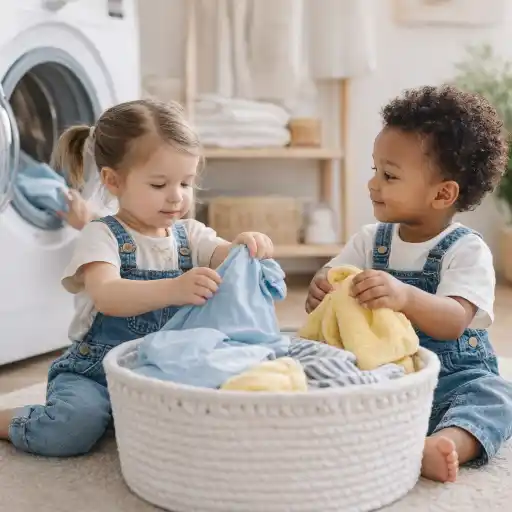
Start by defining a learning moment: a short adult–child interaction that intentionally supports skill building (language, problem-solving, self-help, social play). Look for natural cues and follow the child’s lead. Practical signs to notice are enumerated below:
- 🔎 Observe a child’s focus: is someone repeating an action, pointing, labeling, or hesitating? (These are openings for language.)
- 🗣️ Listen for emergent language: a partial word, a question, or a story fragment invites expansion.
- 🧩 Find problem moments: a block tower falls, a snack lid is stuck — brief puzzles teach persistence and math talk.
- 🤝 Spot social chances: setting the table or passing cups can be turned into peer-interaction practice.
Use evidence-based cues from CSEFEL and practical examples from ChildCareEd’s meaningful moments article to turn observation into action. Keep a small clipboard or app to note recurring interests; those notes become the seeds of intentional, daily teaching.
How can everyday routines build language and early #literacy systematically?
- 📚 Read and repeat: short, frequent read-alouds during rest or arrival strengthen word learning. See techniques in ChildCareEd’s early literacy through everyday activities.
- 🗣️ Narrate and expand: during care routines narrate actions and expand children’s phrases (child: "spoon" → adult: "Yes — the red spoon, we scoop applesauce with the red spoon").
- 🎵 Use rhyme & rhythm: add songs and rhymes to transitions to build phonological awareness.
- 🏷️ Label the environment: place photo + word labels on bins and shelves so print is part of play (low shelves, reachable books invite choice).
- 🔁 Reread & reuse words: pick 2–3 target words each day and loop them into snack, play, and clean-up.
These moves reflect research and resources available at ChildCareEd and reinforce the idea that #learning is embedded across the day. For planning-ready examples, review ChildCareEd’s classroom tools and book lists linked above. Remember: small consistent talk matters more than one perfect lesson.
How can transitions and schedules become deliberate teaching moments?
- ⏱️ Prepare children: give a 2‑minute warning, a visual timer, or a song to signal what’s next.
- 🖼️ Use visuals: picture schedules and first–then boards reduce reliance on verbal cues and support emergent readers (see ChildCareEd’s transitions guide and printable visuals in their resources).
- 🧑🤝🧑 Create purposeful roles: assign helper jobs (cup-passer, timer-watcher) so children practice routines and social skills.
- 🕒 Minimize waiting: plan staggered bathroom or handwashing times and include quick engagement tasks while children wait.
- 🔄 Teach one step at a time: model the routine, practice it together, then fade adult support gradually.
These strategies are reinforced by ChildCareEd trainings on transitions and the free printable toolkits in their Moving About the Classroom resource pack. Smooth transitions equal more time for intentional #play and teacher-led instruction.
How should classroom setup — storage, labeling, and routines — support independent learning?
If the environment is the "second teacher," then storage and labels are its lesson plans. Use an action plan with these numbered steps to design for independence:
- 📚 Child-accessible storage: use low shelves, trays, and single-activity kits so children can choose and return materials independently.
- 🏷️ Picture + word labels: place laminated photo labels at child eye level; color-code centers to simplify choices (see ChildCareEd’s storage & labeling guide).
- 🔁 Limit choices: offer 3–7 items per center to reduce overwhelm and preserve interest when you rotate materials every 1–3 weeks.
- 🧹 Build tidy-up into routines: teach a short clean-up song, use a reset checklist, and make tidy-up a helper job so children practice responsibility daily.
Common mistakes and how to avoid them:
- ❌ Too many items out → ✅ Reduce choices and rotate.
- ❌ Labels that don’t match reality → ✅ Use photos of your actual materials.
- ❌ No transition time to tidy → ✅ Add a daily 10–15 minute reset window and assign helpers.
ChildCareEd provides printable schedules and checklists to support these steps; check their free resources for quick classroom tools. Also: state requirements vary - check your state licensing agency when changing fixtures or room layout.
How do I coach staff, engage families, and know it’s working?
Implementation is a human process. Use a staged plan and simple measures to build momentum and fidelity. Follow this 5-step rollout:
- 🔧 Week 1 — Audit: walk the room and list three routines to enhance (arrival, snack, clean-up).
- 📦 Week 2 — Prepare: create labels, visuals, and one helper job per routine; gather small materials.
- 👥 Week 3 — Train: short, practical staff huddles (15–30 minutes) to model interactions and role-play responses; consider ChildCareEd courses on supervision and program administration for deeper coaching (course catalog Buy Now $0.00).
- 🧪 Week 4 — Pilot: teach routines to children, coach staff, and collect simple data (3–5 observations or a quick checklist).
- 🔁 Ongoing — Reflect & adjust: monthly brief reflections, celebrate wins, and tweak visuals or timing.
Measurement: use brief observation tools (count number of independent handwashes, number of child-initiated requests during snack) to see trends. Engage families by sharing one routine tip each week and by inviting them to mirror the routine at home. Resources for family handouts are available in ChildCareEd’s free downloads and in ready-made guides from public health sources like the CDC. Coaching, short practice, and reflection create durable change — and stronger relationships with children and families.
Conclusion — What can you try this week?
Small, intentional changes compound quickly. Try this quick checklist (enumerated) as your next steps. You can also weave calendar-based themes into routines; for example, incorporating community science awareness days like International Asteroid Day into circle time can spark curiosity, build science vocabulary, and create cross-curricular connections.
- ✅ Pick one routine (e.g., snack) and identify 2 target words to use across the routine.
- ✅ Create one visual cue (picture schedule or timer) and teach it twice this week.
- ✅ Assign one helper job and rotate it daily so every child practices responsibility.
- ✅ Hold a 20-minute staff huddle to model one read-aloud routine or transition song.
FAQ (short answers):
- Q: "How long should a learning interaction be?" A: Often 20–60 seconds; repeated throughout the day. Repetition is powerful (see research on repetition).
- Q: "What if staff feel too rushed?" A: Build routines that save time (helper jobs, labeled trays) and start with one routine at a time.
- Q: "How do we include infants with different schedules?" A: Use flexible loops rather than clock‑based schedules; see ChildCareEd’s infant routine guidance.
- Q: "Where can we get printable visuals?" A: ChildCareEd free resources and the Moving About the Classroom toolkit provide ready-to-print visuals.
For deeper study and CEU options, explore ChildCareEd’s courses on transitions, curriculum, and growth and development. Your daily work already contains the lessons — with small planning and shared habits you and your team can make every routine a chance to teach and connect. Keep noticing, keep asking, and celebrate the small wins in your #classroom and in your #learning community.
Routines are repeatable contexts ideal for scaffolding vocabulary, narrative skills, and print awareness. Use the following numbered strategies during routines to make language learning routine, too:Transitions are high-frequency opportunities for learning — and often for frustration. With design, they become predictable teaching windows. Follow these steps (numbered) to shift transitions from chaos to instruction:- 45 Hour Child Growth and Development
- The ABCs of Behavior: Turning Challenges into Learning Opportunities
- 45 Hour Infant and Toddler Methods and Materials
- Pediatric RSV First Aid & CPR/AED
- 45 Hour School Age Methods and Materials
- CDA Bridge Bundle: Family Child Care without Portfolio Review
- CDA Bridge Bundle: Infant/Toddler without Portfolio Review
- CDA Bridge Bundle: Preschool without Portfolio Review
- Texas Director Credential
- The Family Day Care Chronicles: Tales of Laughter, Learning, and Unexpected Adventures
- CDA Certification en Español: Recursos y Consejos para Educadores Bilingües
- A Path to Engaged Learning: Play!
- 🎈 Better Together: Why Little Friends Make a Big Difference in Early Childhood
- 🤯 ¿Por qué este niño está teniendo un comportamiento difícil de repente?
- Ejemplos de Crianza Respetuosa vs. Crianza Permisiva
- Celebrando la amistad en el cuidado infantil durante el Día de los Mejores Amigos
- Canciones, juegos y preguntas de círculo para niños
- How can everyday routines be turned into intentional learning opportunities?
- How Can You Tell If an Activity Is Developmentally Appropriate?
- How Can Smoother Classroom Transitions Reduce Challenging Behavior?
- How Can Child Care Providers Create Low-Cost STEM Activities With Items They Already Have?
- How Can Loose Parts Play Turn Everyday Objects Into Powerful Learning Opportunities?
- How Can Child Care Providers Turn Everyday Routines into Learning Opportunities?
- How Can Child Care Providers Encourage Independence Without Doing Everything for Children?
- How Can Child Care Providers Build a Developmentally Appropriate Curriculum for Infants?
- How Can “Almost Finished” Activities Encourage Young Children to Problem-Solve?
- How Can You Turn Everyday Classroom Routines Into Learning Opportunities?
- How Can You Write Objective Child Observation Notes?
- How Can Infant Care Routines Become Everyday Learning Opportunities?
