An infant’s newest skill may appear while you are changing a diaper, offering a bottle, or preparing for a nap. Using the Infant Daily Report: Feeding, Diaper & Nap Tracker Buy Now $1.49 to organize routine care records, alongside brief observations of what a child does during those moments, can help you share a fuller picture of their day with families. Baby Steps to Milestones ONLINE  Buy Now $24.00 offers focused learning about infant and toddler development to help you recognize emerging skills and areas that may need support. For a broader foundation in documenting and interpreting what you notice, Tracking Progress, Shaping Futures: Observation & Assessment Skills Buy Now $55.00 explores objective observation and using that information to plan meaningful goals.
Care routines give providers daily opportunities to notice children’s changing abilities, preferences, and relationships. A calm, observant approach can help you capture those small signs of progress and use them to guide responsive care.
Why can daily routines reveal so much about an infant’s development?
Infants are not expected to demonstrate skills on demand. A baby who does not reach for a toy during a group activity may show increasing coordination while grasping a caregiver’s finger during dressing. A child who is quiet in a busy room may communicate clearly through gaze, gestures, or sounds during a familiar feeding routine. Familiar care sequences can offer time, repetition, and close interaction—conditions that make subtle progress easier to notice.
Routines also bring several developmental domains together. During feeding, a baby may track a spoon, bring hands toward a bottle, vocalize in response to a caregiver, and signal fullness by turning away. During diapering, an infant may anticipate a familiar step, lift the legs, reach for a cloth, or take turns through eye contact and sounds. Rest transitions can reveal sensory preferences, emerging self-regulation, and responses to predictable cues.
These observations are useful not because every action should be treated as a milestone, but because they help adults understand the child’s current abilities in context. Head Start describes observation as central to individualizing responsive care: providers use what they notice to adapt interactions, routines, environments, and learning opportunities.
- Look for changes in how the infant participates, communicates, moves, and responds.
- Notice what supports success: familiar people, time, positioning, materials, or a quieter setting.
- Consider development as a pattern over time, not a single performance.
When providers see the learning embedded in caregiving, routine moments become part of the daily curriculum—supporting connection as well as emerging #development.
What signs of progress can providers notice during care routines?
Caregivers can observe multiple aspects of development without turning care into a test. The key is to attend to what the infant actually does and how the child responds to the people and materials nearby. A single moment may offer clues across more than one area.
- Communication: Does the infant look toward a familiar voice, babble, gesture, make sounds to continue an exchange, or respond when a caregiver names an action?
- Social and emotional development: Does the child seek a familiar adult, relax when comforted, share attention through gaze, or show anticipation during a known routine?
- Motor development: Does the infant reach, grasp, bring hands together, shift posture, kick, roll, or help move an arm or leg during dressing?
- Cognition and problem-solving: Does the child explore how an object feels, follow a moving item, repeat an action, or adjust a reach after an object shifts?
- Self-help and participation: Does the infant hold a cloth, help bring hands to the bottle, or show increasing involvement in a familiar sequence?
For example, a provider may notice that an infant turns toward the bottle, grasps it with both hands when supported, and pauses or turns away when full. That brief feeding offers information about attention, motor coordination, communication, and emerging participation. It is not a diagnosis; it is a meaningful observation that can guide responsive care.
Developmental milestone resources can help educators know what skills to watch for, but checklists are guides rather than verdicts. Children develop at different rates, and the CDC’s six-month milestone resource reminds adults to consider how children play, learn, communicate, act, and move. A balanced record captures both a child’s strengths and what they are still practicing.
How can providers document observations without interrupting care?
Documentation does not need to be long to be valuable. A brief, factual note written soon after a moment can preserve details that memory may blur during a busy shift. Include the date, context, what the infant did or communicated, and any relevant adult response. Keep description separate from interpretation: “During dressing, Mina lifted both legs when I said, ‘Let’s put on your pants,’” is more useful than “Mina is very advanced.”
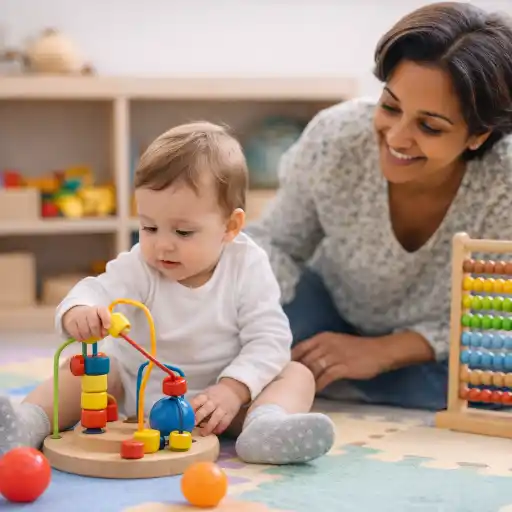
To make observation practical and safe, embed it into normal practice and plan additional observation time when needed. Supervision remains the priority; do not step away from required supervision or ratios to write a record. Programs can make the process manageable by agreeing on a shared note format, keeping approved materials readily available, and setting aside regular time to file and review observations.
- Record the routine and circumstances—for example, feeding with a familiar caregiver after outdoor time.
- Use the child’s exact sounds, gestures, or words when relevant.
- Note what happened before and after the action, including support offered and the infant’s response.
- Look for repeated examples across days and contexts before drawing conclusions.
- Store notes, photographs, and recordings securely and follow program consent and confidentiality policies.
Head Start recommends observing infants and toddlers across different times, settings, routines, and interactions, then reviewing information regularly. This helps prevent a single unusually tired, hungry, or unsettled moment from being mistaken for a stable pattern. Keep documentation concise enough to use, while still specific enough to inform decisions and conversations with families.
Accurate notes help teams communicate clearly and make a child’s progress visible, even when the most important evidence was a quiet exchange during a routine.
How can providers turn observations into responsive support?
An observation matters most when it helps adults decide what to do next. Begin with a reflective question: What might the infant be communicating, exploring, or practicing? Then consider whether the routine, adult response, or environment could offer a helpful next opportunity without rushing or pressuring the child.
If a baby repeatedly reaches toward a washcloth during diapering, for example, a caregiver might pause, place a safe, light cloth within reach, and allow time for the infant to grasp it. If a child vocalizes during feeding and looks toward the caregiver, the adult can respond warmly, name the moment, and wait to see whether the child continues the exchange. These small adjustments follow the infant’s lead while enriching movement, language, and connection.
Use a simple observe–reflect–respond cycle:
- 👀 Notice: Identify a specific action, signal, or change during a routine.
- Reflect: Consider possible meaning, context, and what the infant can do independently or with support.
- Respond: Adjust pace, positioning, materials, language, or comfort in a safe and developmentally appropriate way.
- Revisit: Observe again later to see whether the support was helpful and whether new skills appear.
This is not about adding a formal lesson to every diaper change. It is about making room for participation, reciprocal communication, and practice while respecting the infant’s cues. Responsive routines can support physical development as well as emotional security; the Virtual Lab School lesson on physical development in routines offers examples across feeding, diapering, and rest.
When a child’s needs or interests change, adapt the routine with the family and team. Predictable sequences can provide comfort, while flexible timing and individualized support make care responsive to the infant in front of you.
How can programs partner with families and address concerns thoughtfully?
Families know their children across contexts that providers may never see. Their knowledge of a baby’s temperament, home language, preferences, health history, and familiar routines can help educators interpret what they observe more accurately. Invite families to share what the child is trying at home and offer specific examples from the program in return.
Use strengths-based, descriptive language. Rather than saying, “She is behind in communication,” try: “During diapering today, she looked toward me, vocalized after I spoke, and repeated the sound when I paused. Do you notice similar back-and-forth sounds at home?” This opens a conversation without labeling or alarming the family. Whenever possible, communicate in the family’s preferred language and provide time for questions.
Providers contribute valuable observations, but they do not diagnose. If a concern persists, document specific examples across time and settings, follow program procedures, and speak with the family respectfully. Encourage families to discuss concerns with the child’s health care provider or learn about appropriate early intervention resources. Formal developmental screening is distinct from everyday monitoring and should be completed only according to program policy, training, and applicable requirements.
- Share a child’s strengths and new attempts, not only concerns.
- Ask families what they see at home and what support feels useful.
- Discuss observations privately, with concrete examples and neutral language.
- Protect records and follow consent and confidentiality procedures.
Family partnership helps providers understand the fuller story behind a routine moment. It also supports continuity between home and care, making it easier to honor a child’s individual rhythm while responding to emerging needs.
Conclusion: How can providers make everyday progress easier to see?
Infant development often appears in small, repeated actions woven through feeding, diapering, dressing, soothing, and rest. Providers can notice communication, relationships, movement, exploration, and participation by observing carefully in familiar routines rather than expecting infants to perform skills on cue.
Make observations objective and concise: record what the child did, the context, and the support offered. Review patterns over time, use what you learn to adapt routines and interactions, and invite families to contribute their perspectives. A milestone checklist may help organize what to watch for, but it does not replace knowledge of the individual child or professional screening when appropriate.
Most of all, remember that routine care is meaningful relationship-based work. A warm pause, a moment of eye contact, a reaching hand, or a newly anticipated step can reveal growth that might otherwise pass unnoticed. Your attentive, respectful responses help make that progress visible and support each infant’s next steps.
References and further reading
- How Do Infants Learn Through Everyday Caregiving Routines? — ChildCareEd
- Setting Up Systems for Ongoing Observations — Head Start
- Documenting Observations — Head Start
- Child Observation: The Heart of Individualizing Responsive Care — Head Start
- Rocking and Rolling: Bringing Observation and Documentation to Life — NAEYC
- Supporting Physical Development: Routines — Virtual Lab School
- Positive Attention: Interactions and Supervision of Infants and Toddlers: For Workforce Solutions
- CDA Infant/Toddler Credential
- CDA Infants/Toddlers: Abuse and Neglect Reporting Requisites
- Pediatric RSV First Aid & CPR/AED
- CDA Infants/Toddlers: Individualized Learning and Inclusion
- 45-Hour Infant and Toddler Curriculum
- Positive Attention: Interactions & Supervision for Infants & Toddlers
- Texas Director Credential
- CDA: Stand With Respect and Professionalism
- CDA Infants/Toddlers: Smart Nutrition & Feeding
- CDA Certification en Español: Recursos y Consejos para Educadores Bilingües
- 🔍 ¿Qué ves cuando observas a un niño aprender?
- 10 Ejemplos de Cómo la Cultura Influye en el Desarrollo Infantil
- Capacitación en Salud y Seguridad Preventiva en Línea para Proveedores de Cuidado Infantil
- Regulaciones de Licenciamiento de Cuidado Infantil en California para Centros y Hogares de Cuidado Infantil Familiar
- Proporciones de Cuidado Infantil y Tamaños de Grupo por Edad en Maryland (Guía Rápida para Centros y Hogares)
- Proporciones de Cuidado Infantil y Tamaños de Grupo por Edad en Virginia (Guía Rápida para Centros y Hogares)
- Lista para Abrir una Guardería en Casa en Dakota del Norte: Cómo Empezar
- Apoyo en Preescolar para Retrasos del Habla: Estrategias Simples que Ayudan
- Retraso del Habla en la Guardería: Cómo Pueden Ayudar los Proveedores
- Cómo Trabajar en el Cuidado Infantil en Carolina del Norte: Requisitos y Pasos
- Cómo Trabajar en el Cuidado Infantil en California: Requisitos y Pasos
- Celebrando la amistad en el cuidado infantil durante el Día de los Mejores Amigos
- Cómo simplificar la capacitación para sus empleados de daycare
- How Can Child Care Providers Understand and Support Infant Milestones?
- How Can Child Care Providers Support Infant Development?
- How Can Child Care Providers Plan Infant Activities Around Developmental Milestones?
- How Can Providers Notice Developmental Progress Hidden in an Infant’s Daily Routine?
- How Can Providers Notice Emerging Infant Skills Before They Become Reliable?
- How Can Child Care Teams Track an Infant’s Individual Support Goal Across Staff Shifts?
