When a toddler can find a place for a cup, coat, or favorite book, the room becomes easier to navigate—and the child gets a meaningful chance to participate. Explore Toddler Room Labels Buy Now $0.75 as a practical starting point, and deepen your approach with A Better Space for All  Buy Now $24.00, an online course about individualizing learning environments for children with different needs. Thoughtful storage cues can support daily routines, belonging, and emerging independence without asking toddlers to do everything on their own.
Why does accessible storage matter for toddlers?
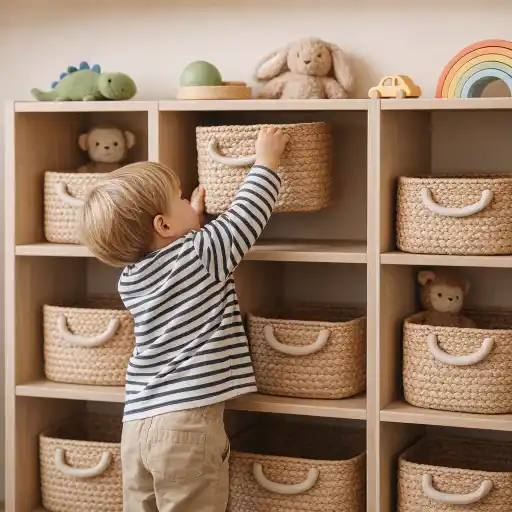
A toddler’s storage space is more than a shelf or basket; it is part of how the child understands and participates in the classroom. When personal belongings and commonly used materials are visible, reachable when appropriate, and consistently stored, toddlers have clearer opportunities to make choices and take part in familiar routines. Head Start’s guidance on designing classroom and socialization environments for infants and toddlers emphasizes environments that are safe, developmentally appropriate, and responsive to children’s needs.
Accessibility does not mean expecting every child to manage belongings independently. Toddlers are developing motor coordination, communication, memory, and confidence at different rates. A child may recognize a picture but need help reaching a bin; another may carry one item with an adult nearby. These are valid steps in participation.
Well-planned storage can also reduce repeated adult directions. Picture cues help children understand where an item belongs, while familiar words used by educators connect the visual cue to language. A calm, organized room makes those cues easier to notice.
- Support participation in arrival, care routines, play, and cleanup.
- Make the environment more predictable and easier to understand.
- Communicate that children’s needs and belongings have a place.
How can you tell whether each child can reach and recognize a space?
Start by viewing the room from a toddler’s perspective. Sit, kneel, or move through the space at a child’s height. Ask whether a child can see the label, identify the familiar object or photograph, approach the storage area safely, and use the container without unnecessary effort. A spot that works for one child may be inaccessible to another because of height, mobility, vision, sensory preferences, or familiarity.
Observe actual routines rather than relying only on how the room looks to adults. At arrival, does the child look toward a familiar symbol or need an adult to point? During cleanup, can the child match a toy to the right basket? These observations can show whether storage cues are useful—or whether they need adjustment. Visual supports can provide meaningful information about routines and expectations, as described in the University of North Carolina’s Visual Supports for Toddlers resource.
Consider access as a combination of visibility, reach, recognition, and safe movement. Keep frequently used, age-appropriate materials within reach, but store hazardous or adult-controlled items securely. Maintain open paths and adult sight lines. Head Start’s infant-toddler environment guidance recommends safe traffic patterns and layouts that support both exploration and supervision.
- Check whether labels are visible from sitting and standing positions.
- Notice whether a child can approach and use the area without obstacles.
- Ask families which names, images, or symbols are familiar to the child.
What makes a label or storage cue easy for toddlers to understand?
Use a clear picture paired with a short, familiar word. Whenever possible, choose a photograph of the actual object or materials in the room: a picture of the child’s cup on a personal shelf, or a photo of the classroom’s blocks on the block basket. The closer the image is to the real object, the easier it may be for a toddler to connect the two.
Place the cue on the front of the container or beside the designated space, at a height children can see. Keep the design uncluttered, use readable print, and avoid relying on written words alone. ChildCareEd’s guidance on classroom labels and toddler independence recommends pairing images and words with consistent adult modeling and meaningful practice.
Labels can also support language and identity. Say the object’s name as you point to the picture and use it: “Your shoes go by the shoe picture.” Invite families to share accurate home-language words and familiar names. Some children may benefit from larger images, tactile cues, or individualized visual supports; use observation and family collaboration to determine what helps.
- Choose sturdy, simple visuals that match the current contents.
- Use consistent words across the teaching team.
- Include home-language labels when useful and appropriate.
- 🧺 Start with a few high-use places, such as cubbies, cups, books, or toy baskets.
How can you balance access, inclusion, and safety?
Plan storage for the children who actually use the room, not for an imagined “average” toddler. A child who uses a mobility aid may need a clear approach and a shelf positioned for easy access. A child who has difficulty interpreting spoken directions may benefit from an image or object cue. A child who is still learning to recognize personal belongings may need a photo, name, or adult-supported routine. Accommodations should support participation while respecting each child’s pace.
Accessibility and safety work together. Choose stable furniture and containers that children can manage without tipping or pinching fingers. Keep small items that may present choking hazards, cleaning products, medications, and other unsafe materials out of children’s reach. Low shelves can make materials accessible while still preserving sight lines for active supervision. Head Start’s overview of visual supports notes that visuals can help children understand and participate across classroom routines and activities.
Ask families and, when appropriate, specialists for insight into effective cues and adaptations. Avoid treating a child’s need for assistance as a failure of independence. The aim is to make participation possible, not to require identical performance from every child. State requirements vary - check your state licensing agency, particularly before changing furniture placement, storage, exits, or safety procedures.
- Keep paths clear and storage units stable.
- Secure hazardous and adult-only supplies.
- Offer an alternative cue or adult assistance when needed.
What common mistakes should providers avoid?
One common mistake is designing storage for adult convenience alone. A label may be attractive but still sit too high, use an abstract image, or be hidden behind a door. Another is labeling every surface at once. Too many competing visuals can make it harder for toddlers to notice the few cues that matter most.
Storage systems can also become unreliable when labels no longer match their contents. If the classroom changes materials but leaves old pictures in place, children receive confusing information. Team inconsistency can create the same problem: one educator calls an item a “truck,” another says “car,” and the label shows a different object. Use shared, simple vocabulary and update cues when the environment changes.
Most importantly, avoid treating labels as a test. Some toddlers will need repeated demonstrations, reminders, physical assistance, or a different cue. Model the action, pause, and invite a manageable contribution. Praise effort with specific language—“You found your book space”—rather than expecting perfect cleanup or immediate independence.
- Too high: move key cues into the child’s line of sight.
- Picture mismatch: replace labels when contents change.
- Too much visual information: prioritize essential storage locations.
- Unrealistic expectations: teach, support, and allow time for practice.
How can your team put a toddler-accessible storage plan into practice?
Begin with one routine where children regularly need help finding or returning something. Choose a shelf, cubby, or basket and check it from each toddler’s perspective. Decide which children’s belongings or materials should be independently accessible, what adult supervision is needed, and which visual cue is most meaningful. Then teach the system during the real routine, not just by pointing to a new label once.
Model a single action and use concise language: “The book goes beside the book picture.” Give the child time to look, reach, point, or try. If the child does not respond, demonstrate again or offer help without pressure. Observe whether the cue supports participation and make adjustments with families and colleagues. A small, consistent change is more useful than a large redesign that staff cannot maintain.
For continued professional learning, these English-language ChildCareEd courses connect well to the topic:
- A Better Space for All Buy Now $24.00 — inclusive environments and individualized learning needs.
- Playful Spaces for Infants & Toddlers Buy Now $24.00 — age-appropriate, inclusive environments for exploration.
- Environments That Inspire Independence and Exploration Buy Now $55.00 — practical approaches to nurturing inclusive spaces.
- Classroom Setup for Child Care Buy Now $24.00 — intentional, welcoming classroom arrangement.
- Classroom Tools for Emergent Literacy Buy Now $25.00 — includes labeling as an everyday literacy strategy.
Conclusion: Can every toddler reach and recognize their own storage space?
Every toddler deserves a storage system designed to make personal belongings and classroom materials as visible, understandable, and accessible as possible. That does not mean every child will reach, recognize, or use a space independently right away. Development, communication, mobility, sensory needs, and experience all shape how a child participates.
Use clear picture-and-word labels, place cues where toddlers can see them, keep appropriate materials safely reachable, and teach the routine with warm, consistent modeling. Observe what works for each child and adapt with families and colleagues. When storage spaces communicate “this belongs here, and you belong here,” they become more than organizational tools: they become everyday supports for access, participation, and growing confidence.
Frequently asked questions
Should every toddler’s belongings be within reach?
Personal items used in daily routines should be accessible when safe and appropriate. Items that must be controlled by adults should remain securely stored.
Should labels use pictures, words, or both?
For toddlers, a clear picture paired with a short word is often a helpful starting point. Real photographs and familiar terms can make the connection clearer.
What if a toddler does not respond to a label?
Model the action, use the same words consistently, and allow time. Try another image, placement, or individualized cue if observation suggests the current one is not useful.
Can labels include home languages?
Yes. Families can help provide familiar words and accurate translations, supporting communication and a sense of belonging.
How often should storage labels be reviewed?
Review them whenever materials, routines, or children’s needs change, and check periodically that pictures still match what is stored.
- CDA Certification en Español: Recursos y Consejos para Educadores Bilingües
- ⏰ Cómo puedo facilitar las transiciones y las rutinas diarias en mi aula?
- ❄️ ¿Qué actividades al aire libre funcionan bien para los niños de Illinois en cada estación? 🌷🍂
- Cómo usar tu certificación de 90 horas en Maryland para completar tu CDA
- 45 horas para infantes y niños pequeños: cómo certificarse en línea
- ¿Cuáles son las mejores actividades del Día de la Tierra para niños en casa o en el aula?
- ¿Cuáles son los pasos, requisitos y opciones en línea para la certificación de 90 horas en cuidado de Infantes/Toddlers en Maryland?
- Normas de Licenciamiento de Cuidado Infantil en Virginia para Centros Diurnos Infantiles y Hogares Diurnos Familiares
- Celebrando la amistad en el cuidado infantil durante el Día de los Mejores Amigos
- ¿Todos los niños deben participar en el tiempo de círculo?
- How Should Providers Review Loose Parts Before They Enter a Toddler Play Area?
- Can Every Toddler Reach and Recognize Their Own Storage Space?
- What Makes an Infant Play Area Easy for Staff to Supervise?
- How Can Order Help Children Become Independent During a Montessori Arrival Routine?
- How Can You Make a Calm Corner Accessible to Children Who Communicate Differently?
- What Does a Toddler Block Area Need for Real Experimentation?
- How Can One Material Spark Different Discoveries for Infants and Toddlers?
- How Can You Help Children Recognize and Find Classroom Supplies?
- How Can You Help Children Recognize and Find Classroom Supplies?
