When children can name what they feel and notice the care others offer, everyday classroom moments become opportunities for connection and growth. The Brighter Futures: Social Emotional Development  Buy Now $16.00 course explores emotional development and responsive interactions, giving educators practical ways to strengthen classroom practice and deepen professional knowledge. Pair that learning with Opportunity for Growth: Emotional Development Buy Now $16.00 for another focused perspective, then use the strategies below to make gratitude and emotional expression part of daily care.
Children do not develop gratitude by memorizing a polite phrase, and they do not learn to manage emotions by being told to “calm down.” These capacities grow through warm relationships, repeated modeling, age-appropriate language, and opportunities to express themselves in different ways. For providers and directors, the aim is not to demand cheerful feelings or perfect manners; it is to help children notice emotions, communicate needs, recognize kindness, and respond safely and authentically.
Why are gratitude and emotional understanding connected?
Gratitude involves more than saying “thank you.” Children gradually learn to recognize that someone has helped, identify how that action affected them, and communicate appreciation. These steps draw on emotional awareness and perspective-taking: a child needs some understanding of their own feelings and another person’s actions to make appreciation meaningful. A study of parent-child interactions found that more frequent everyday gratitude-socialization practices were associated with more frequent displays of gratitude in children, supporting the value of small, repeated moments rather than occasional special lessons (Raising Grateful Children One Day at a Time).
Emotional understanding also helps children express gratitude in ways that are genuine rather than merely compliant. A child might feel glad when a friend shares a toy, disappointed that playtime is ending, or both at once. Validating that complexity teaches children that feelings are acceptable and that they can communicate them safely. Gratitude should never be used to dismiss sadness, frustration, or a child’s unmet need.
These skills support everyday relationships and group participation. When children can identify feelings, notice helpful actions, and ask for support, educators have more opportunities to guide cooperation, empathy, and repair after conflict. Each small interaction contributes to a more trusting classroom culture.
How can educators teach emotional language in everyday moments?
Use brief, specific language throughout the day, not only during a difficult moment. Describe what you observe without claiming certainty about a child’s inner experience. “You’re looking at the broken tower. You might feel frustrated” leaves room for the child to confirm, correct, point, gesture, or choose another word. Use a few familiar words first—happy, sad, mad, worried, calm—and add nuance as children are ready.
- Model your own feelings appropriately: “I feel a little rushed, so I’m going to take a slow breath.”
- Offer simple choices: “Do you feel worried or excited?” Avoid turning a prompt into a test.
- Use faces, photographs, mirrors, stories, puppets, and songs as visual and playful supports.
- Connect emotion with a safe next step: “You’re angry. I won’t let you hit. You can say ‘stop’ or ask me for help.”
- Accept words, home languages, signs, gestures, drawings, and pointing as valid communication.
During intense distress, prioritize safety and co-regulation over lengthy explanations. Get near the child, speak calmly, acknowledge what you see, and offer one familiar support. Return to reflection once the child is settled. This approach gives children the message that their #feelings matter while helping them practice communication and self-regulation.
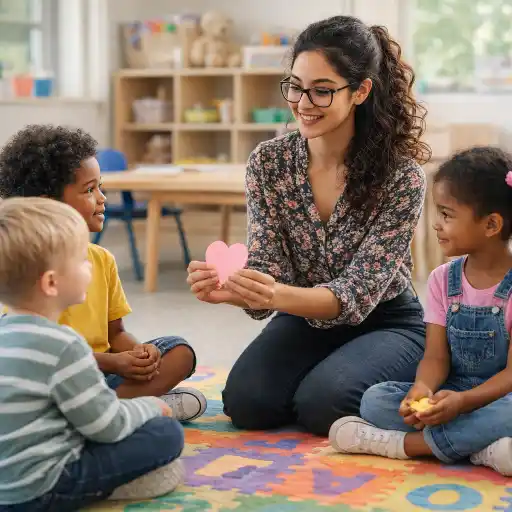
What age-appropriate activities help children express gratitude?
Activities work best when they are concrete, brief, repeatable, and optional in their mode of expression. Infants experience appreciation through responsive care, warm voices, and predictable relationships; adults can narrate care without expecting a verbal response. Toddlers can notice a real action—“Ari passed you the cup”—and participate through a look, gesture, sound, or emerging words. Preschoolers may connect an action to a person and feeling, draw a picture, dictate a message, or reflect on a story character’s experience.
- Gratitude tree or wall: Invite children to add a leaf, drawing, photo, or dictated phrase about a person, activity, place, or helpful moment.
- Kindness noticing: Name a specific action and its effect: “You moved over so Noor could join. That helped her feel included.”
- Story and puppet play: Pause to ask what a character might feel, who helped, and what the character could do next.
- Appreciation art: Offer open-ended materials and invite children to create something meaningful, without prescribing a single finished product.
- Short reflection ritual: At snack or departure, ask, “What was one kind or fun thing you noticed today?” Allow children to pass.
Drawing on everyday classroom ideas such as the Thankfulness Tree, teachers can make appreciation visible while keeping it personal. A child may appreciate a friend, a familiar song, outdoor play, or an adult’s help—not only gifts or possessions. Let children decide whether to share publicly, take work home, or keep a reflection private.
How can teachers support children during big emotions?
Children often express feelings through behavior before they have words for them. Crying, grabbing, withdrawing, or throwing materials may signal frustration, fatigue, sensory overload, worry, or difficulty with a transition. Consider what the behavior may communicate and what environmental adjustment or missing skill could help. This perspective avoids treating a child’s distress as a character flaw.
A steady, predictable response can be simple:
- Move close and get to the child’s level, while maintaining safety.
- Name the observable feeling tentatively: “You seem upset that the blocks fell.”
- Set a clear, respectful limit: “I won’t let you throw the blocks.”
- Offer one or two familiar choices: “Would you like help rebuilding or a quiet minute?”
- When calm returns, practice a replacement phrase such as “help me,” “my turn,” or “I need space.”
Keep a calm-down area welcoming and available—not a punishment or forced isolation space. Children may need an adult to stay nearby and help them use a strategy. Staff can build a shared set of brief phrases so children hear consistent guidance across the classroom. The ChildCareEd guide to recognizing and expressing feelings offers additional routine-based ideas; providers can also explore the focused course From Tantrums to Triumphs: Equipping Preschoolers with Self-Regulation Skills Buy Now $25.00 for more professional learning around regulation and classroom practice.
How can programs make gratitude and emotional learning inclusive?
Families and children express appreciation and emotion in many ways. Some children may speak quietly, use a home language, communicate nonverbally, or prefer not to share personal reflections in a group. Invite families to share words and practices that feel meaningful to them, and offer a range of participation options. Do not ask one child to speak for an entire culture, or assume all families celebrate the same holidays.
Keep classroom activities centered on relationships, kindness, care, and belonging rather than a single seasonal tradition. Use books and images that reflect varied family structures, abilities, cultures, and ways of communicating. If a child has a complicated or painful relationship with a person, never require them to create a thankful message for that person; they can choose a friend, educator, pet, place, or experience instead.
Partnership is strongest when communication is reciprocal and strengths-based. Briefly describe the classroom practice, invite caregiver perspectives, and share observations without judgment. Directors can support staff by discussing inclusive language in team meetings and providing time to reflect on what children’s expressions may be communicating. For targeted professional learning about family partnerships, explore Family Connections: Creating Inclusive Relationships Buy Now $55.00.
Common pitfalls to avoid include forcing children to say thank you, treating gratitude as obedience, praising only verbal participation, and demanding that children be positive when they are upset. Offer choice, model the skill, and welcome genuine responses. State requirements vary - check your state licensing agency when planning staff training or program practices.
Conclusion: What can teachers start doing this week?
Teachers help children express gratitude and understand emotions by making both skills concrete, relational, and part of everyday life. Name feelings without judgment, model appreciation for specific actions, use play and art to widen the ways children can communicate, and support regulation before expecting reflection. Respect each child’s pace and each family’s language, culture, and circumstances.
Choose one manageable next step: add a brief feelings check-in, use a specific appreciation phrase during cleanup, or introduce an optional gratitude drawing. Observe how children respond and adjust the routine with your team. The goal is not scripted politeness or constant positivity; it is a classroom where children can communicate honestly, notice care, and build meaningful connections. For further training, the courses linked above offer focused professional learning on emotional development, relationships, regulation, and inclusive practice.
- Open Heart, Open Art
- Opportunity for Growth: Emotional Development
- CDA Bridge Bundle: Family Child Care without Portfolio Review
- CDA Bridge Bundle: Infant/Toddler without Portfolio Review
- CDA Bridge Bundle: Preschool without Portfolio Review
- Emergent Learning & Development
- 45-Hour Infant and Toddler Curriculum
- Brighter Futures: Social Emotional Development
- Creating Environments that Nurture Growth and Community
- Texas Director Credential
- Gift of Gratitude: Fostering Emotional Intelligence in Children through Acts of Kindness
- Deck the Halls with Emotional Wellness: Family Traditions That Foster Connection
- CDA Certification en Español: Recursos y Consejos para Educadores Bilingües
- Proporciones de Cuidado Infantil y Tamaños de Grupo por Edad en Nueva Jersey (Guía Rápida para Centros y Hogares)
- Proporciones de Cuidado Infantil y Tamaños de Grupo por Edad en Virginia (Guía Rápida para Centros y Hogares)
- Cómo Trabajar en el Cuidado Infantil en Carolina del Norte: Requisitos y Pasos
- Celebrando la amistad en el cuidado infantil durante el Día de los Mejores Amigos
- Canciones, juegos y preguntas de círculo para niños
- How Can Early Childhood Educators Teach Gratitude in Authentic, Age‑Appropriate Ways?
- What Are Age-Appropriate Ways to Teach Gratitude Before Thanksgiving?
- How Can Child Care Providers Support Kindergarten Emotions on the First Day of School?
- How Can Writing and Art Activities Help Children Name What They Appreciate?
- How Can Children Recognize and Appreciate the Supportive Adults in Their Lives?
- How Can Cooperative Play Help Young Children Learn Gratitude?
- How Can You Plan a November Preschool Curriculum Around Gratitude and Community?
- How Can Gratitude Activities Teach Kindness and Positive Behavior?
- How Can Teachers Help Children Express Gratitude and Understand Their Emotions?
- How Can Gratitude Activities Build Kindness and Teamwork in School-Age Children?
- How Can Gratitude Activities Support Kindergarten Readiness?
