Want kinder interactions without adding another lesson to your week? You can build a classroom culture that practices empathy and cooperation through intentional routines, environmental cues, and adult language—not just formal lessons. A practical next step is to deepen your team’s understanding of emotional development with Opportunity for Growth: Emotional Development  Buy Now $16.00 and reinforce that work with Brighter Futures: Social Emotional Development Buy Now $16.00 from ChildCareEd—both offer concrete strategies you can apply to daily practice and help staff earn professional training hours.
How can a classroom teach kindness every day without a scripted lesson?
Kindness becomes a habit when it is embedded in the regular rhythm of the day rather than treated as an occasional topic. Start by identifying brief, repeatable moments—greeting at the door, snack, transitions, clean-up, and small jobs—where adults can model, narrate, and reinforce prosocial choices. Use short scripts (e.g., “You look sad; can I help?”) and consistent language across staff so expectations are predictable. Adults act as the curriculum: when teachers label emotions, coach repairs, and praise specific acts, children get many short practice trials that teach perspective-taking and cooperation.
Design your physical space to nudge helpful behavior: low shelving for shared materials, a visible kindness wall, and labeled helper jobs that rotate. Make kindness visible—capture it on a chart or in a daily reflection—so the class learns that these behaviors matter. Integrating this approach aligns with evidence on social-emotional learning and makes kindness part of the learning environment rather than an add-on.
Practical supports: If you want guidance on managing behaviors that block prosocial learning, consider the ChildCareEd course The ABCs of Behavior Buy Now $55.00 to turn challenging moments into teaching opportunities as part of emotional development work Buy Now $16.00.
This section introduces five focus words for your planning: in your #classroom the shift is intentional; we teach #kindness by example, build #empathy through routines, create predictable #routines, and center the experience of #children in every design choice.
What daily routines create the richest teachable moments for kindness?
Routines are natural scaffolds—brief, consistent, and repeatable. Choose 2–3 routines to focus on so staff can practice the same language and steps each day. Examples that reliably produce teachable moments include:
- Morning greeting: Use a warm check-in and a short feeling prompt to model noticing others.
- Snack and mealtime: Practice passing, offering, and saying “thank you” as cooperative acts.
- 😄 Clean-up and transitions: Turn them into team tasks—assign helper jobs and use a timer for turn-taking.
- Circle time reflections: Invite one quick story of a kind act—student or adult—and name what made it helpful.
- Job rotations: Rotate simple classroom roles (line leader, materials helper, plant-watering) so every child practices helpfulness and responsibility.
For each routine, define a 3–4 step script: (1) Notice and name the feeling/behavior, (2) Prompt a prosocial response, (3) Support the child to act, and (4) Praise the repair or effort. Keep scripts short so they are usable in the moment. Rehearse them at staff meetings and role-play with substitutes or new hires.
How do adults model and scaffold prosocial behavior without long lessons?
Adults model kindness through action and consistent language. That means narrating what you do (“I’m going to help Mia clean up so she can finish her puzzle”) and using short coaching phrases at moments of conflict. Scaffolding moves from adult-led modeling to guided practice to independent child action:
- Model: Show calm problem-solving and repair language (apology + fix).
- Guide: Provide scripts and role-play during quiet moments or in small groups.
- Practice: Create low-stakes opportunities for children to use phrases—invitation scripts, comfort prompts, or trade language.
- Reinforce: Give specific praise that names the prosocial skill—“You offered your blocks to Sam; that helped him keep playing.”
Use short, research-supported coaching tools: emotion charts, puppets for conflict role-play, and micro-reflections after incidents. For staff development that ties these techniques into a broader SEL approach, Brighter Futures: Social Emotional Development Buy Now $16.00 and Opportunity for Growth Buy Now $16.00 provide frameworks to build consistent adult responses and to document progress.
How should the environment and materials be designed to encourage kindness?
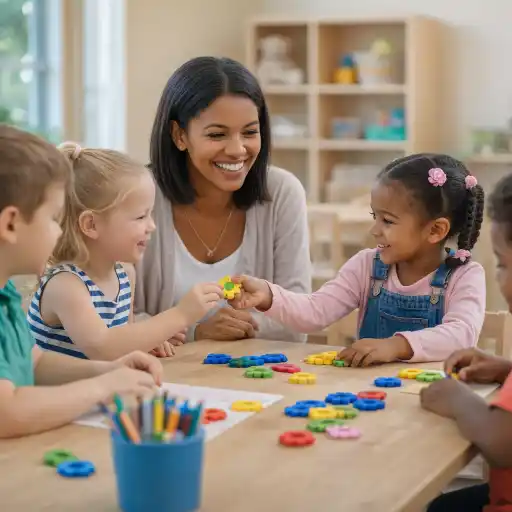
Intentional classroom design reduces friction and creates moments where kindness is the obvious choice. Key elements include:
- Accessible materials and duplicate popular toys to lower conflict.
- Clear visual cues—job charts, feeling faces, and social scripts near centers.
- Cozy inclusion zones for quiet repair and regulated emotions.
- Books and posters that reflect diverse cultures and model helping and inclusion.
- Mixed-age or buddy pairings when possible—older children often mentor younger ones and prosocial skills increase in mixed-age settings (research supports cross-age benefits).
Make kindness visible with a wall, jar, or daily note home that highlights specific acts. Use art and open-ended projects to encourage perspective-taking—courses such as Open Heart, Open Art Buy Now $16.00 and The Best Promotion is Play Buy Now $24.00 show how play and creative experiences support emotional growth and provide natural contexts for cooperative behavior.
What common mistakes undermine efforts to teach kindness, and how can we avoid them?
Well-meaning programs sometimes stall because of predictable pitfalls. Common mistakes and fixes include:
- ❌ Mistake: Praising vaguely (“Good job!”) without naming the skill. Fix: Use specific praise—“You waited and asked for a turn; that was kind.”
- ❌ Mistake: Inconsistent language across staff. Fix: Create a short set of agreed scripts and practice them in team meetings.
- ❌ Mistake: Treating kindness as an extra project. Fix: Embed practice in routines; make it quick and repeatable.
- ❌ Mistake: Forcing sharing. Fix: Teach offers, trades, timers, and problem-solving scripts so children learn fair ways to negotiate.
Also remember: state requirements vary - check your state licensing agency when you adjust curricula, staff training, or documentation of professional development. If specific behaviors persist, use observational tools (ABCs), try targeted coaching, and seek courses like The ABCs of Behavior Buy Now $55.00 to better understand function and design teaching-based responses.
Conclusion — What should you try this week?
Start small and stay consistent. Choose one routine to embed kindness prompts, teach one short script to the team, and pick one visible way to celebrate kind acts. Track progress with a simple daily log and review it in staff huddles. These small, repeated practices create a classroom where prosocial choices become automatic.
Courses to consider for next steps: Opportunity for Growth: Emotional Development Buy Now $16.00, Brighter Futures: Social Emotional Development Buy Now $16.00, The ABCs of Behavior Buy Now $55.00, The Best Promotion is Play Buy Now $24.00, and Open Heart, Open Art Buy Now $16.00. These courses provide practical tools, staff coaching strategies, and ways to earn continuing education hours while strengthening classroom practice.
Quick FAQ:
- Q: How quickly will I see change? A: Small improvements in weeks; a sustained culture shift in months with consistent practice.
- Q: What if staff resist new scripts? A: Use short role-plays, pick one script to start, and celebrate small wins—practice breeds habit.
- Q: Can infants show empathy? A: Yes—through modeling, naming feelings, and supporting comforting actions; adapt scripts for developmental level.
- Q: Where do I document progress? A: Keep brief daily notes or a one-line log per child and review monthly at staff meetings.
Teaching kindness without a formal lesson plan is a strategic, sustainable approach: use routines, consistent adult language, environment design, and ongoing staff learning to make kindness the classroom default.
- Lesson Planning for Preschoolers
- Designing Your School Age Classroom
- 45 Hour Preschool Methods and Materials
- CDA Infants/Toddlers: Lesson Planning Made Easy
- CDA Bridge Bundle: Preschool
- Pediatric RSV First Aid & CPR/AED
- CDA Bridge Bundle: Family Child Care
- CDA Bridge Bundle: Infant/Toddler
- Texas Director Credential
- Every Moment Matters: Schedules and Transitions
- Gift of Gratitude: Fostering Emotional Intelligence in Children through Acts of Kindness
- Labor Day Activities for Kids at Home or in the Classroom
- Teaching Kids About Juneteenth Through Activities and Crafts
- How can Georgia preschool teachers use positive guidance to help preschoolers share during indoor play?
- How can rainy day indoor activities help preschoolers learn kindness and cooperation in Georgia?
- Best Friends Day: Helping Children Learn Kindness and Friendship
- Celebrando la amistad en el cuidado infantil durante el Día de los Mejores Amigos
- Canciones, juegos y preguntas de círculo para niños
- Nurturing Hearts: Helping Children Grow with Kindness and Care
- How can we teach kindness and friendship in our classroom?
- How can child care providers teach sharing and turn-taking without forcing it?
- How Can We Teach Children the Value of Kindness Through Everyday Moments?
- How Can You Create a Classroom That Teaches Kindness Without a Lesson Plan?
- After School Lesson Plans That Don’t Feel Like More School
- Mawlid Around the World: How Kids Can Explore Different Traditions and Celebrations
- Common After School Activities Kids Get Bored With—and What to Try Instead
- Rosh Hashanah Kindergarten Lesson Plans: 5 Days of Apples, Kindness, and New Beginnings
- What Does Compassion Look Like in Child Care? 10 Everyday Moments That Matter
- How Can Kindness Challenges Strengthen Classroom Community?
- How Can Child Care Providers Teach Empathy and Kindness in the Classroom?
