Every day in a child care setting is full of small opportunities to grow big social-emotional skills. This article offers practical, evidence-informed steps for directors and providers who want to weave #kindness into routines, relationships, and the rhythm of the day. You’ll find strategies you can use immediately, research that explains why these moments work, common pitfalls and how to avoid them, and simple ways to measure and sustain progress. For program-level learning you can also explore professional development options offered by ChildCareEd  Buy Now $16.00 and related resources on teaching empathy through routines. Remember that state requirements vary - check your state licensing agency as you adapt practices.
How can everyday #routines teach children #kindness and #empathy?
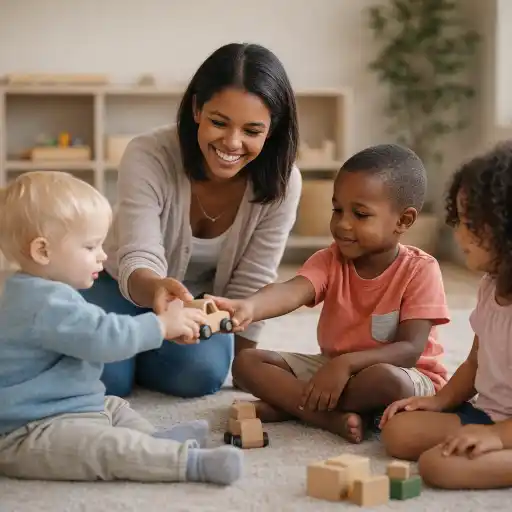
Routines are predictable scaffolds that create many short, teachable moments. When you intentionally name social actions inside routine tasks—like passing napkins, lining up, or cleaning up—you transform chores into prosocial practice. ChildCareEd shows how integrating empathy-building language into mealtime, transitions, and cleanup changes behavior over time and makes social skills routine rather than a special lesson (ChildCareEd: Empathy, Kindness & Cooperation).
Use these routine-based strategies:
- 😊 Model: Narrate kind actions (“I see Ana helping Miguel—what a helpful choice”).
- 🎯 Prompt: Ask, “How do you think she feels?” during a transition.
- 👏 Reinforce: Catch and name kind acts immediately.
- 🔁 Repeat: Make the same social prompt part of the routine so it becomes habit.
Over time, these micro-teaching moments build perspective-taking and automatic prosocial responses in #children. For practical lists of routine activities and printable tools, see ChildCareEd free resources.
What specific strategies can caregivers use during meals, transitions, and play?
- 😊 Use emotion labels: During snack say, “You look proud—what did you do?” This builds emotional literacy (Emotions in Motion).
- 🧩 Turn tasks into teamwork: Clean-up becomes a timed team challenge—children learn cooperation and shared responsibility (Teaching Kindness in the Classroom).
- ✨ Role-play: Practice offering comfort or sharing during circle time; scripted social stories reduce confusion in real conflicts (CSEFEL strategies).
- 🎉 Celebrate small wins: Use a Kindness Wall or Jar to make prosocial acts visible (World Kindness Day ideas). You can also tie activities to calendar events—celebrating National Random Acts of Kindness Day on February 17th is an effective, family-friendly way to highlight small everyday gestures.
- 📚 Read and reflect: Select books about empathy; pause to ask perspective-taking questions (Scholastic: Culture of Kindness).
- 🤝 Partner with families: Send home simple kindness challenges and reflections to align home and program expectations.
Training staff to use consistent phrases and routines reduces mixed messages and gives children repeated practice in real contexts—this is how everyday moments become social learning lessons. For formal staff training look at Opportunity for Growth: Emotional Development Buy Now $16.00 and similar courses. For practical examples of structuring adult-child talk during routines and using short conversational scaffolds to foster empathy, see teacher-student conversations.
Why does this approach work — what does research and theory tell us and why does it matter?
Research shows that structured, school-based social-emotional curricula can increase prosocial behavior and reduce aggression when embedded into everyday practice. Programs that combine modeling, explicit instruction, and reinforcement show measurable gains in kindness, cooperation, and even academic outcomes (Science.gov: promote prosocial behavior).
Why it matters: 1. Children who learn empathy early have improved relationships and fewer behavioral challenges. 2. Prosocial classrooms lower staff stress and create safer learning environments. Embedding kindness into routines is efficient—no extra lesson plan needed, just intentional prompts and follow-through.
How do we avoid common mistakes and engage families effectively?
Common mistakes are predictable but fixable. Below are pitfalls and prevention tactics:
- 🚫 Mistake: Praising alone (e.g., “Good job!”) without naming the prosocial skill. Fix: Name the behavior—“You offered your toy—what a kind choice.”
- 🚫 Mistake: Inconsistent language across staff. Fix: Create a short set of phrases caregivers use everywhere; practice them in staff meetings (CSEFEL).
- 🚫 Mistake: Treating SEL as an add-on. Fix: Embed prompts into transitions and routines so children get repeated practice (How to Support SEL).
Family partnership tips: 1. Share quick weekly notes about social goals. 2. Send home small, doable kindness challenges. 3. Offer one simple workshop or resource list—ChildCareEd’s family resources and free PDFs are helpful starting points (ChildCareEd resources; Gift of Gratitude).
Remember: state requirements vary - check your state licensing agency when adjusting policies or family communications.
How can programs measure progress and build a sustainable culture of kindness?
Measuring social growth doesn’t need to be complex. Use simple, program-level tools plus staff routines to track change and keep momentum.
- 📈 Set 3 clear indicators: frequency of named kind acts, number of peer-helping incidents, and use of emotion language during routines.
- 📝 Use brief daily data: staff mark 1–2 items per day on a simple chart (e.g., “helping, comforting, sharing”).
- 🎯 Monthly reflection: review data at staff meetings and set one small coaching goal.
- 😊 Recognize consistently: adult-led celebrations (Kindness Jar full = class reward) reinforce behavior.
- 📚 Professional learning: enroll staff in targeted SEL courses (e.g., Brighter Futures: Social Emotional Development Buy Now $16.00) to deepen practice.
FAQ (quick): 1. How long to see change? Small improvements within weeks; sustained culture shift in months. 2. What if a child resists? Use scripts and small steps; teach through play and stories. 3. How to involve families? Share simple challenges and celebrate stories. 4. Where to find lesson materials? See ChildCareEd free PDFs and CSEFEL book nooks.
Conclusion
Teaching #kindness is most powerful when it is routine, explicit in language, and reinforced by adults who model empathy. Small actions—naming feelings, inviting cooperation during clean-up, role-playing comforting language—add up to meaningful social-emotional growth. Programs that measure simple indicators, train staff to use consistent language, and partner with families can build a sustainable culture of care. For next steps: pick one routine this week (snack, line-up, or clean-up), choose 1–2 scripted phrases for staff, and start recording kind acts daily. For more tools and training, explore ChildCareEd’s courses and free resources linked throughout this article. Your consistent, compassionate choices matter—one small moment at a time.
Concrete, replicable strategies help staff stay consistent. Below are 6 actionable steps you can train staff to use immediately; each step maps to common parts of the day.Two core mechanisms explain success: (1) perspective-taking development (Theory of Mind) and (2) reinforcement of prosocial norms. Between ages 3–5 children develop the ability to recognize others’ thoughts and feelings; routine prompts accelerate that skill by creating many short practice trials (Theory of Mind overview).- 45 Hour Child Growth and Development
- 45 Hour Preschool Methods and Materials
- Bienvenido! Welcoming All Families
- 45 Hour Infant and Toddler Methods and Materials
- Pediatric RSV First Aid & CPR/AED
- CDA Bridge Bundle: Family Child Care without Portfolio Review
- Texas Director Credential
- Brighter Futures: Social Emotional Development
- The Right Kind of Influence for Young Children
- Gift of Gratitude: Fostering Emotional Intelligence in Children through Acts of Kindness
- CDA Certification en Español: Recursos y Consejos para Educadores Bilingües
- Cómo Abrir Una Quardería En Casa Sin Dinero?
- Proporciones de Cuidado Infantil y Tamaños de Grupo por Edad en Nueva Jersey (Guía Rápida para Centros y Hogares)
- Proporciones de Cuidado Infantil y Tamaños de Grupo por Edad en Virginia (Guía Rápida para Centros y Hogares)
- Cómo Trabajar en el Cuidado Infantil en Carolina del Norte: Requisitos y Pasos
- Cómo Ser Maestra de Preescolar en Illinois
- How can rainy day indoor activities help preschoolers learn kindness and cooperation in Georgia?
- How can we build strong teacher-child relationships?
- How can we build strong teacher–child relationships?
- “Remember the Alamo: Teaching Texas Young Children Courage, Teamwork, and Classroom Community”
- Canciones, juegos y preguntas de círculo para niños
- Superhero Theme Activities for Preschool and Child Care
- How can we teach kindness and friendship in our classroom?
- How Can We Teach Children the Value of Kindness Through Everyday Moments?
- How can early childhood educators effectively teach digital citizenship to young children?
- How Can You Create a Classroom That Teaches Kindness Without a Lesson Plan?
- How Can Child Care Providers Teach Friendship Skills Through Everyday Classroom Activities?
- How Can Child Care Providers Teach Empathy and Kindness in the Classroom?
- What Is the Difference Between Discipline and Guidance in Child Care?
