Introduction
Teaching children to share is one of those everyday jobs in child care that feels simple — until you are in the middle of a meltdown. You want children to be kind, but you also don’t want to take away their choice. This article gives practical, gentle steps child care providers and directors can use to teach #sharing without forcing it. You will find short scr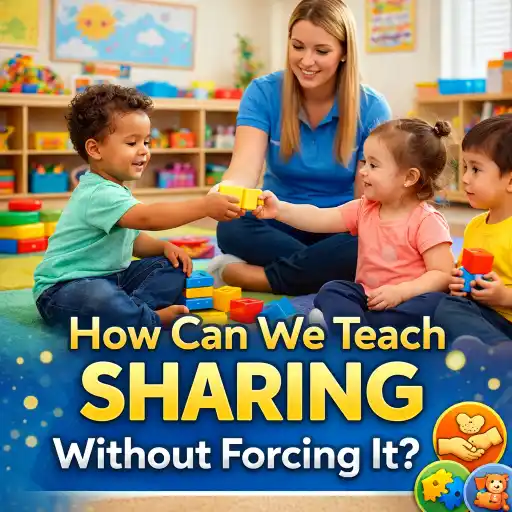 ipts, routines, and ways to coach kids so they learn to use words, take #turns, and show #empathy while they #play with others.
Why it matters: strong social skills help children make friends, calm down, and stay engaged in learning. Small wins add up — children who practice sharing and turn-taking feel safer and more included in the classroom. For quick classroom-ready ideas, see this sample lesson plan on social skills from ChildCareEd Buy Now $0.00. Also remember: state requirements vary - check your state licensing agency.
How can I teach sharing without forcing it?
Goal: teach choice and cooperation, not compliance. Start with these steps you can use today.
- Model short scripts and actions.
- Say lines often: "Can I have a turn?" "You go next." Practice these during calm moments so children learn the words. See simple scripts and role-play ideas in Teaching kids to solve problems with words.
- Set up clear, fair choices.
- Offer options like timers, swaps, or play-alongs: "You can have it when the timer dings" or "Would you like to trade for the blue car?" Visual timers help non-readers trust the turn system.
- Use social stories and short role-play.
- Social stories give words and steps for situations. Free story ideas and scripts are available at And Next Comes L and ChildCareEd resources on sharing and turn-taking.
- Notice and praise the small moments.
- Be specific: "You handed the truck to Mia when she asked—thank you for sharing." Specific praise makes the behavior repeat. CSEFEL research supports this kind of feedback; see CSEFEL What Works Brief.
- Teach alternatives to forcing.
- Instead of “Give it back now,” try "I will play with this part while you play with that part" or offer a parallel role: "You be the driver, I’ll be the fixer." This helps children keep control while learning to cooperate; ChildCareEd explains ways to guide play in How to Foster Friendship Skills Through Guided Play.
Common mistakes to avoid:
- Forcing sharing by taking toys away — this teaches compliance, not cooperation.
- Long lectures — children remember short scripts and actions, not long talks.
- Missing small wins — if you don’t notice tiny helping actions, they won’t grow.
What classroom routines help children practice sharing and empathy?
Routines give repeated, predictable practice. Use short daily moments so children get many tries each day.
- 😊 Morning greetings and buddy jobs
- Let children choose a greeting and give simple jobs (snack helper, plant waterer). Jobs invite cooperation; see daily routines for empathy on ChildCareEd.
- 🧩 Guided small groups
- Plan 5–10 minute guided play sessions that require teamwork—building a track or group collage. Your coaching during these times helps children try scripts and practice #play cooperation. Guidance ideas live at Social Skills Lesson Plan Buy Now $0.00.
- 📚 Read-and-reflect
- Stop in the middle of a story and ask: "How does that character feel? What could a friend do?" Books model caring behavior; Scholastic offers book lists about caring and helping others at Scholastic.
- 🏷️ Kindness spotting
- Keep a board or jar to note kind acts: "Lina shared blocks" or "Jamal invited a friend." Small recognition builds more kind acts.
- Timers & visuals
- Use sand timers, picture cards, or concrete countdowns so children can see when a turn ends. Visuals support children who are still learning language.
Why routines work: repetition turns one-off lessons into habits. If you plan short, frequent practice moments, children build confidence and trust in the turn system. For more on embedding social routines, see the CSEFEL guidance and ChildCareEd resources linked above.
How do I handle conflicts so children learn repair and keep friendships?
Conflict is a learning chance. Use a short, calm script and teach repair steps. Keep coaching under one minute when possible.
- 🛑 Stop and keep safe
- Use a short limit statement: "Hands down, safe bodies." This slows the moment so children can think.
- 🔍 Name the feeling and the problem
- Say: "You look upset because you both want the red truck." Labeling helps children understand the moment and gives them words (see Teaching empathy).
- 💬 Offer short choices and scripts
- Give 2 or 3 simple options: "Use the timer, trade, or find a second toy." Teach short phrases: "Can I have a turn after you?" Practice these during calm times so children can try them when upset; see problem-solving with words.
- 🔧 Repair the relationship
- Ask for a small fix: "Can you help put the blocks back?" or invite an apology script: "I’m sorry. Are you okay?" Repairing helps friendship return.
Use immediate praise when a child uses a helpful solution: "You said, ‘Can I have a turn after you?’ That was helpful." If a child repeats the same issue often, collect notes and plan targeted practice with families. For persistent challenging behavior, consider Positive Behavior Support methods and functional assessment from CSEFEL at What Works Brief #10.
How do I support children who need extra help joining in?
Some children need more time and tools to join peers. Use simple adaptations and partner with families for steady progress.
- Priming and scripts before play
- Tell the child who to ask and what to say: "Ask Ana: ‘Can I play with you when you’re done?’" This small step boosts success; it’s a core idea in the CSEFEL briefs and ChildCareEd’s priming suggestions.
- Role-play and rehearsal
- Practice short scenes with puppets or peers for 2–3 minutes. Rehearsal builds the language and confidence kids need to try it live. ChildCareEd’s guided play article has many role-play tips (Guided Play).
- Peer buddies and structured invitations
- Assign a friendly peer to help invite the child in or set up a "Friendship Helper" job. This encourages acceptance and repeated practice.
- Adapt the environment
- Make play easier to join: larger blocks, quieter corners, or visual step-cards for how to play a game. Small environmental changes can make a big difference.
- Use social stories and visuals
- Short social stories show step-by-step choices and language children can use. For free story lists see And Next Comes L.
Work closely with families: share quick home scripts and short notes about successes. Family partnership amplifies practice and helps children generalize skills to home. For more classroom ideas and step-by-step plans, ChildCareEd has lessons and trainings that support this work.
Providers who want practical ways to teach cooperation, empathy, and problem-solving during play may benefit from Supporting Social Learning: Creating Classrooms that Care  Buy Now $24.00. This training focuses on building caring classroom relationships and using supportive social learning strategies to handle behavior challenges, making it a strong fit for teaching sharing and friendship skills. (ChildcareEd)
For teachers who want gentle, effective guidance strategies they can use during conflicts and daily routines, Viewing Guidance in a Positive Light Buy Now $24.00 is a strong choice. This course helps providers use positive guidance to support children’s social-emotional development, which connects well to turn-taking, empathy, and helping children learn better ways to interact with others. (ChildcareEd)
Conclusion and FAQ
Quick checklist to use daily:
- Model short phrases and role-play regularly.
- Use timers and visuals for #turns.
- Plan short guided practice sessions (5–10 minutes).
- Praise specific helpful actions right away.
- Partner with families and note progress.
Common pitfalls: forcing sharing, giving long lectures, and ignoring small wins. Avoid these by offering choices, practicing scripts, and celebrating small steps.
FAQ
- Q: How long before I see change?
A: Expect small gains in weeks with daily practice; stronger change over months. - Q: What if a child refuses even with scripts?
A: Use priming, role-play, and a peer buddy. Collect notes and work with families for consistent practice. - Q: Should I ever remove a toy to stop problems?
A: Remove only if safety is at risk. Otherwise teach alternatives and offer choices so sharing is learned, not forced. See gentle approaches at free social stories. - Q: Can children with special needs learn to share?
A: Yes. Use visual supports, repetition, smaller steps, and individualized strategies (see CSEFEL resources). - Q: How do I involve families?
A: Send short notes like “empathy moments” and one-line home scripts to practice. Family partnership makes progress faster; ChildCareEd has guides on family engagement (How can preschoolers learn to share...).
You are building lifelong skills. Small, consistent steps, short scripts, and lots of encouragement help children learn that sharing can be fair and kind. Thank you for the care and patience you offer every day to support young #children in growing their social hearts.
- 45 Hour Child Growth and Development
- 45 Hour Preschool Methods and Materials
- 45 Hour Infant and Toddler Methods and Materials
- CDA Bridge Bundle: Preschool
- Pediatric RSV First Aid & CPR/AED
- 45 Hour School Age Methods and Materials
- CDA Bridge Bundle: Family Child Care
- Classroom Setup for Child Care
- CDA Bridge Bundle: Infant/Toddler
- Texas Director Credential
- How can Georgia preschool teachers use positive guidance to help preschoolers share during indoor play?
- How can rainy day indoor activities help preschoolers learn kindness and cooperation in Georgia?
- Helping Children Learn Kindness, Empathy, and Belonging
- Celebrating Friendship in Child Care on Best Friends Day
- Celebrando la amistad en el cuidado infantil durante el Día de los Mejores Amigos
- How can we use team activities to help preschoolers learn and cooperate?
- How can New York child care programs teach conflict resolution and sharing?
- How can child care providers teach sharing and turn-taking without forcing it?
- How can we effectively teach children to wait, share, and take turns?
- How can we help children learn to wait, take turns, and manage frustration?
- How Can Child Care Providers Teach Children to Share and Take Turns Without Forcing Them?
- How Can Child Care Leaders Help Staff Feel Heard Beyond the Suggestion Box?
- How Can Child Care Providers Teach Children to Solve Conflicts With Each Other?
- How Can Teachers Encourage Sharing Without Forcing It?
- How Can Child Care Providers Teach Young Children to Take Turns?
- How Can Child Care Providers Teach Sharing Without Forcing It?
- How Can Child Care Providers Teach Preschoolers to Wait Their Turn?
- What Should Child Care Providers Do When a Child Refuses to Share?
- What Should Child Care Providers Do When a Child Refuses to Share?
- What Are the Best Ways to Support Children Who Struggle with Sharing?
