Introduction
This article helps child care providers and directors learn simple, real steps to work with families so every child can succeed. When teachers and #families and caregivers work together, children feel safe, loved, and ready to learn. Strong family partnerships make a big difference for children who speak more than one language, have different cultural traditions, or need extra support.
Why it matters: 1) children learn better when home and school match, and 2) families know the child best. Research and practice show that working together improves behavior, school readiness, and social skills — see practical ideas from ChildCareEd and outcomes research like the RWJF summary on parent engagement here.
In this article you will find four main questions answered: how to start partnerships, how to include culture and language, how to support children with extra needs, and how to measure success. You will also see common mistakes to avoid and quick FAQs.
Note: state requirements vary - check your state licensing agency.
1) How do I start a trusting partnership with families?
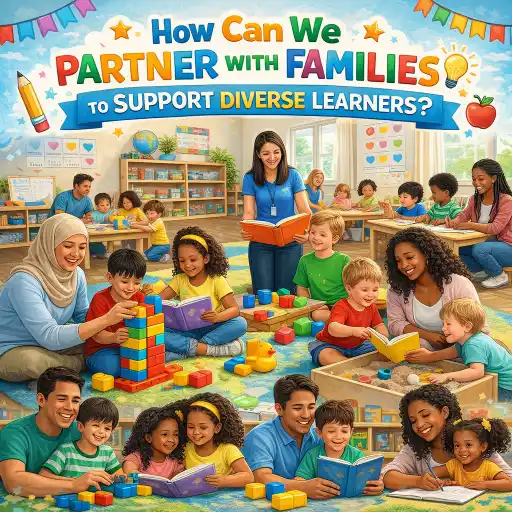
Start with small, friendly steps. Families need to feel welcome and heard. Use these numbered actions to begin:
- 👋 Greet each family warmly at drop-off and pick-up. A smile and a short update build trust. See tips from ChildCareEd.
- 📣 Offer many ways to communicate: quick notes, phone calls, text, or apps. Ask families which way they prefer.
- 📝 Share one clear goal for their child and ask the family to name one goal. Co-create the plan together.
- 💬 Listen more than you talk. Ask open questions like, “What helps your child feel calm?”
- 🔁 Keep these steps regular. Small, steady contact beats rare long meetings.
Practical tools: use a simple family communication note or a short weekly update. ChildCareEd has a ready form you can adapt: Family Communication Note Buy Now $0.00.
Why this works: families are the child’s first teachers and have important knowledge about routines, culture, and strengths (ChildCareEd). When educators start with respect and clear communication, families join as partners.
2) How can we honor culture and language while teaching?
Honoring culture and language makes children feel proud and improves learning. Use these steps to include family culture every day:
- 🌍 Invite families to share one meaningful thing: a song, a photo, a special food description, or a routine. Make sharing optional and simple.
- 📚 Add books, dolls, and pictures that reflect the children and families in your program. ChildCareEd gives many activity ideas in articles like Celebrate Every Family and Creating Inclusive Events.
- 🗣️ Use greetings and labels in home languages. For dual language learners, supporting the home language helps the child learn English better, too — see the Indiana Univ. resource on multilingual access here.
- 🤝 Co-plan cultural activities with families to avoid stereotypes. Ask, “Would you like to share this?”
- 📅 Schedule events at times families can attend and provide translated materials when needed.
Why it matters: children build identity when their culture is seen in the classroom. The OECD report explains how inclusive practice supports belonging and learning (OECD). Also see training like ChildCareEd’s Bridging Cultures  Buy Now $55.00 for deeper skills.
3) How do we support children with extra needs and make transitions smooth?
Many children need extra help or are moving from early intervention to preschool. Families need clear, caring support. Follow these steps:
- 🧩 Start early planning. For children moving from early intervention to preschool, begin transition talks at least 6 months in advance when possible. Hands & Voices explains helpful transition steps here.
- 📋 Use simple written plans. Share a short goal sheet that families and teachers update together. Include who will do each step and when.
- 👂 Listen to family priorities. Families know what works at home; build on that.
- 🔗 Connect to community services and specialists. Share resources and make warm handoffs when families want extra help.
- 🔄 Keep communication steady and positive — celebrate progress, not only problems.
Common mistakes & how to avoid them:
- ⚠️ Mistake: Only telling families about a problem. Fix: Always start with strengths and then offer next steps. See Pyramid Model family engagement ideas (NCPMI).
- ⚠️ Mistake: Asking families to do all the work. Fix: Co-create goals and share responsibilities.
Why it helps: When families and providers share clear plans, children get consistent support across home and school. Research shows stronger child outcomes when parent engagement is supported RWJF.
4) How do we know our family partnerships are working?
Measure progress with simple, doable steps. You do not need complex data — quick checks work well.
- 📈 Track communication frequency: count brief updates, calls, or messages per family each month.
- 🗣️ Ask families one short survey twice a year: “Do you feel heard?” and “What helped your child most?”
- 🎯 Watch child outcomes: note improvements in routines, social play, or language skills tied to family strategies.
- 🤝 Hold a short team reflection every month: what worked? what to try next? Family Engagement Lab offers tools for building teacher-family learning links here.
- 📌 Keep a small portfolio: one goal and examples of child progress (photos, notes) to share with families.
Why it matters: Regular reflection helps you improve practices. The CDC also recommends using partnerships and local data to guide program changes CDC. Small wins build trust and better learning.
Conclusion and Quick FAQ
Working with families to support diverse learners is practical and powerful. Start small, listen, honor culture and language, plan together for children with extra needs, and check progress often. Training and coaching help staff gain skills — consider ChildCareEd courses like Bridging Cultures Buy Now $55.00 or coaching guidance from the research on culturally relevant coaching (Kruse).
Short FAQ:
- Q: How often should we communicate with families? A: Aim for at least one positive contact every week, plus updates when goals change.
- Q: What if families don’t respond? A: Try different methods, times, or a short home-language message; ask what works for them.
- Q: How do we include families who work nights? A: Offer flexible meeting times, recorded videos, or short texts they can read when ready.
- Q: Who pays for translation or supports? A: Look for local grants, community volunteers, or free translation tools; some programs include funds for family engagement.
Final tips: 1) Keep respect first, 2) build on family strengths, and 3) celebrate small steps. For more ideas and printable tools, explore ChildCareEd resources like Family Engagement Strategies and classroom activities that build belonging here.
- 45 Hour Child Growth and Development
- Roots & Resilience: Understanding What Shapes a Child
- CDA Family Child Care Credential
- Bienvenido! Welcoming All Families
- CDA Family Child Care Credential with Portfolio Review
- Collaboration for the Win
- Texas Director Credential
- Families, Communities, and Classrooms: Working Together for Children
- Bridging Cultures: Family Communication & Collaboration
- Supporting Families and Caregivers in Language and Literacy
- CDA Certification en Español: Recursos y Consejos para Educadores Bilingües
- 💛🧩 ¿Cómo puedo hacer que mi enseñanza sea inclusiva para los niños con autismo?
- How can Michigan early educators use culturally responsive teaching in their classrooms?
- How can early childhood programs best support diverse families?
- How can I build cultural awareness in my classroom?
- How can we adapt activities for diverse learners?
- How do I create meaningful individual learning goals for young children?
- How can child care programs use culturally responsive activities to support young children?
- How can I teach Black history to young children year-round?
- How Can Your Program Welcome All Family Structures?
- How Can We Support the Quiet Child's Strengths in Early Childhood?
- Beyond “How Are You?” Circle Time Questions Kids Actually Want to Answer
- How Can Child Care Providers Support Individual Differences in Development?
- How Can Bingo Games Support Turn-Taking and Social Skills?
- How Can Child Care Providers Use Learning Styles Responsibly in Early Childhood Classrooms?
- How Can Providers Create an Inclusive Classroom for Every Child?
- How Can Child Care Providers Prepare for a Family Meeting When a Child May Need Additional Support?
- How Can You Show Families Their Child’s Progress in Classroom Participation?
