Can a simple habit like handwashing become both enjoyable and automatic in your program? If you’re a director or provider who wants fewer sick days, more independent children, and smoother transitions at snack and toileting times, practical classroom strategies make that possible. A useful next step is ChildCareEd’s Shoo, Germs! Don’t Bother Me!  Buy Now $24.00, which gives staff classroom-ready activities and helps you document training hours while strengthening infection-prevention practices; another short option is Prevention and Control of Infectious Diseases Buy Now $16.00. Both courses offer practical coaching language and examples you can use immediately.
Why does making handwashing fun and routine matter?
In group care, hand hygiene is one of the highest-impact, low-cost strategies to reduce respiratory and gastrointestinal illnesses. Teaching the five simple steps—wet, lather, scrub (20 seconds), rinse, dry—builds children's lifelong #handwashing skills and #independence while protecting staff and families. Effective routines also reduce classroom interruptions and save time across the day: fewer sick children means steadier attendance and more predictable staffing. For classroom tools and simple scripts, see Handwashing for kids: fun ways to teach it as part of practical classroom guidance.
Key hashtags to remember in this article: #handwashing #children #classroom #hygiene #germs.
When and how should we build handwashing into the daily schedule?
Pick 5–7 predictable moments that already fit your flow and post them near sinks. Typical key times include arrival, before meals or food prep, after toileting/diapering, after outdoor or sensory play, and after coughing/sneezing. Keep language short and consistent: a five‑step script (wet • soap • scrub 20s • rinse • dry) is easy for staff and children to repeat. State requirements vary - check your state licensing agency when you set official policies or count training hours.
Design the environment to reduce barriers: step stools, pump soap at child height, paper towels or dryers within reach, clear trash placement, and visual step posters. The CDC recommends supervision and accessible supplies for young children; make a short sink checklist for staff: supplies present, step stool stable, poster visible. When sinks are limited, a supervised sanitizer (60%+ alcohol) can be used as a backup—but remember it does not replace soap and water for visibly soiled hands (per CDC guidance).
What low‑cost activities make handwashing engaging and memorable?
Children learn routines faster when lessons are playful, concrete, and repeatable. These demonstrations and games are classroom-ready and require minimal materials.
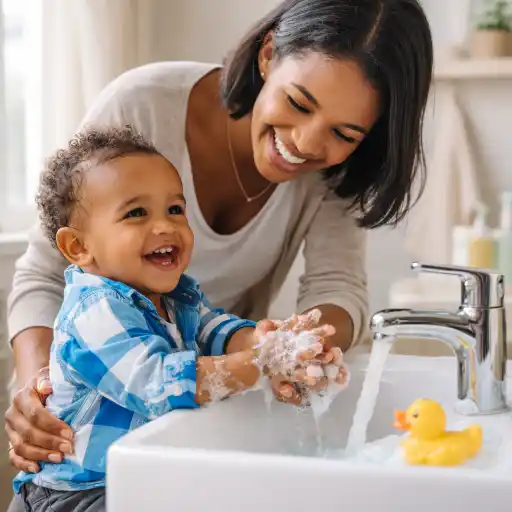
- 🔬 Glitter/GloGerm demo: Put a tiny amount of glitter lotion or GloGerm on one child’s hands, let them touch a few objects, then wash once quickly and again for the full routine so children see the difference.
- 🧪 Pepper + soap experiment: A shallow bowl with water and ground pepper shows how soap makes 'germs' scatter—perfect for a short science moment that explains why soap matters.
- 📚 Step‑card sequencing: Make five picture cards (Wet, Soap, Scrub, Rinse, Dry); mix and reorder them, then practice at the sink.
- 🎵 Handwashing song or micro‑story: Use a 20‑second song (or a short sink‑side story) to time scrubbing. Two rounds of “Happy Birthday” work reliably for many ages.
- 🏅 Job roles & celebration: Rotate simple jobs—"Soap Captain," "Rinse Helper"—and praise effort: "I see you scrubbing between fingers—great!"
Hands-on demos (GloGerm, glitter) make the invisible visible and reinforce proper technique. GloGerm materials and directions are classroom-tested and can be incorporated into a safety lesson that families will notice at pick up.
How can staff coach technique, timing, and independence so habits stick?
Good coaching combines modeling, brief scripting, and supervised practice. Staff should visibly wash their hands and narrate steps (“Wet, soap, scrub to the song”) so children learn by imitation. Keep feedback short and specific: praise the action you want repeated ("Nice job getting between your fingers!").
For timing, pick one consistent cue—song, timer, or a 20‑second micro‑story—and use it every time. Use visual supports: posters, step cards, and a sink schedule reduce repeated verbal prompts and help staff save time. For younger children or those with motor challenges, scaffold with hand-over-hand help and fade support as the child gains competence. Supervision is essential for children under 6 using hand sanitizer—place it where staff can monitor use.
Train staff with brief role‑plays and include handwashing coaching in orientation refreshers; ChildCareEd’s How To Keep A Healthy Class: Six Tips for Germ Control Buy Now $24.00 and Shoo, Germs! Buy Now $24.00 provide coaching scripts and short activities staff can practice together.
How do programs partner with families and avoid common pitfalls?
Consistent messaging between home and program accelerates habit formation. Send a short card with the five steps and your class handwashing song; encourage families to practice at home using the same words. Invite caregivers to wash with their child at drop‑off when feasible, or send a quick two‑line script they can use at home to reinforce timing.
Common mistakes and fixes:
- 🔸 Rushing the scrub step — Fix: use the same song/timer every time and make the cue visible.
- 🔸 Treating sanitizer as a full substitute — Fix: keep sanitizer as a backup and prioritize soap/water after toileting or when hands are dirty.
- 🔸 Making handwashing a punishment — Fix: make it neutral or celebratory: "First wash, then snack!"
- 🔸 Changing the routine too often — Fix: pick one set of words and one timing cue and stick with it.
Keep family conversations brief and respectful: acknowledge concern, state the observation, and point to the policy or the short handout you use. For staff training that includes family communication strategies, consider ChildCareEd’s Bridging Cultures: Family Communication & Collaboration Buy Now $55.00.
Conclusion: What should you do first?
Make handwashing a reliable, positive part of your daily routine by choosing a short set of times to wash, using one consistent five‑step script, and adding one repeatable timing cue (song or short story). Use low‑cost demonstrations (glitter, pepper, GloGerm), set up sink areas for success (step stools, reachable soap, posters), and train staff in brief coaching language. Partner with families using the same words and a take‑home reminder so habits travel beyond the classroom. These small, sustainable changes reduce illness, build children’s independence, and make your day flow more smoothly—turning handwashing from a chore into a classroom habit everyone understands.
For immediate staff training and printable materials, explore ChildCareEd courses referenced above and the Wash Your Hands Poster available through ChildCareEd; state requirements vary - check your state licensing agency.
- 45 Hour Child Growth and Development
- 45 Hours Director-Administration ONLINE
- Bienvenido! Welcoming All Families
- 45 Hour Infant and Toddler Methods and Materials
- 45 Hour School Age Methods and Materials
- Texas Director Credential Renewal
- Texas Director Credential
- Every Moment Matters: Schedules and Transitions
- How can Nevada early childhood educators help preschoolers follow routines and directions?
- How Can We Create a Healthy Childcare Environment?
- Canciones, juegos y preguntas de círculo para niños
- Cómo simplificar la capacitación para sus empleados de daycare
- How can child care programs stop germs and keep children healthy?
- How Can Minnesota Child Care Programs Build A Strong Handwashing And Hygiene Routine?
- How can childcare settings prevent the spread of illness?
- Which Handwashing Activities Best Help Young Children Build Healthy Habits?
- How can child care programs use safe diapering and toileting procedures to protect children and stay compliant?
- How should childcare programs clean, sanitize, and disinfect spaces to keep children and staff safe?
- How can we explore sand, space, and science with young children in preschool settings?
- How do I build a fall routine that actually sticks in my classroom?
- How can child care programs build healthy hygiene habits?
- How should I prepare my classroom for cold and flu season beyond cleaning?
- How Can We Make Handwashing Fun and a Reliable Daily Routine?
- How Can You Prepare Your Classroom for Fall While Prioritizing Safety, Health, and Learning?
- Home Daycare Ideas That Make Your Space Feel Safe, Fun, and Professional
- How Can You Create Daily Classroom Schedules That Prevent Behavior Disruptions?
- What Should Be Included in a Toddler Daily Schedule?
- How Can Child Care Programs Make Handwashing Possible During the Busiest Part of the Day?
