Safe diapering and toileting procedures are essential daily practices that protect children’s health, preserve their dignity, and help child care programs remain compliant. This guide translates evidence-based recommendations into practical workflows for preparing the changing or toileting area, using gloves correctly, preventing cross-contamination, cleaning and disinfecting surfaces, washing hands, documenting care, and supervising children at every step. It also explains how directors can use clear policies, staff training, posted procedures, and routine monitoring to promote consistency across classrooms. To strengthen these practices, explore ChildCareEd’s Prevention and Control of Infectious Diseases  Buy Now $16.00, a self-paced online course that covers hygiene policies and strategies for reducing the spread of germs, along with the free Diapering Practices Buy Now $0.00 resource for practical infant and toddler diapering guidance. Programs can also use ChildCareEd’s cleaning checklists to support reliable sanitation routines. Remember that state requirements vary, so always check with your state licensing agency.
What are the step-by-step safe diapering procedures I should follow?
- 🔹 Prepare: gather a clean diaper, wipes, gloves (if used by your policy), diaper cream on tissue, a waterproof liner, and a sealed bag for soiled clothing. See CDC guidance for the recommended order: CDC diapering steps.
- 🧴 Clean the child: place the child on the changing surface, unfasten the diaper, wipe front-to-back, and place soiled items inside the diaper or in the trash designed for diaper disposal.
- ♻️ Remove trash: fold and discard the diaper and wipes in a covered, no-touch receptacle; remove gloves and secure them in a sealed bag if contaminated.
- 🩹 Replace: slide a clean diaper under the child, apply cream from a tissue or freshly gloved finger if needed, secure the diaper, and redress the child.
- 👶 Child handwashing: wash the child's hands with soap and water; always supervise this for young children.
- 🧽 Clean & disinfect: remove the liner, clean visible soil, then apply an appropriate disinfectant and follow the product's contact time (CDC cleaning & disinfecting).
- 🧼 Staff handwashing: wash hands thoroughly for 20 seconds as part of your final step; if sinks are unavailable, use a 60%+ alcohol sanitizer per supervision policy.
Why follow this order? Research and standards (for example Caring for Our Children) stress that cleaning before disinfecting and washing hands after glove removal are essential infection-control steps. Your written diapering policy should mirror these steps and be posted or included in staff orientation materials (see ChildCareEd: Diapering & Toileting Standards).
How should we handle toileting, potty training, and supporting children’s independence?
- 🔸 Assess readiness: look for cues such as the ability to follow simple directions, awareness of a wet or soiled diaper, and ability to pull clothing up/down. Resources like Nemours Potty Training describe common readiness signs.
- 😊 Create predictable routines: schedule short, regular potty sits (e.g., after meals or naps), provide accessible seating and a step stool, and ensure staff and families use consistent language and expectations — consistency accelerates learning (ChildCareEd: building routines). For practical, classroom-ready potty-training ideas and family-facing strategies, see Ideas and Suggestions for Parents and Providers in Potty Training.
- 🚼 Respect privacy and dignity: allow children to attempt independently when safe, but supervise closely for safety. For children with special needs, tailor supports and document plans in the child’s file according to licensing and IEP/IFSP guidance.
- 🗂️ Communicate with families: share successes, setbacks, and your in-class routine. Align strategies so children receive the same signals at home and at the center (ChildCareEd).
- 🔁 Transition plan: for children moving from diapers to underwear, plan extra clothing on-site and an agreed timeline with parents. If soiled clothing is returned, seal it in a plastic bag per CCDBG guidance (CCDBG hazardous materials overview).
Potty training timelines vary; patience matters. Encourage staff to celebrate attempts and avoid punishment for accident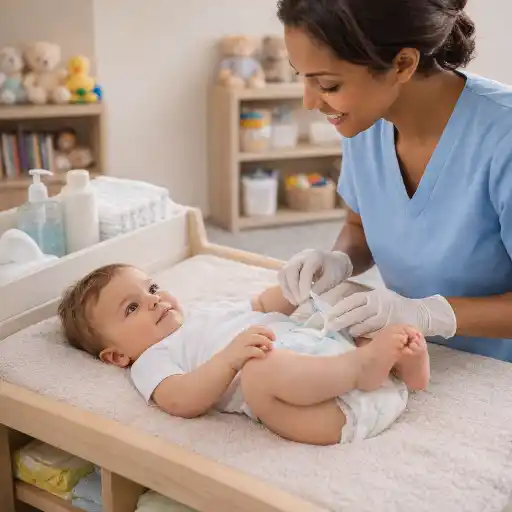 s — this supports self-regulation and trust.
How do #handwashing, #cleaning, sanitizing, and disinfecting fit into diapering and toileting routines?
- 🧽 Clean = soap + water to remove soil. Always clean visibly soiled surfaces first.
- 🔬 Sanitize = reduce germs on objects like plates or mouthed toys to safe levels; use a dishwasher or an approved sanitizer per label.
- ⚠️ Disinfect = use an EPA-registered product (or diluted bleach per label) after cleaning when someone is sick or for diapering surfaces and bathrooms; follow contact time exactly (ChildCareEd: cleaning vs. disinfecting, CDC).
Practical daily checklist items (copy or adapt):
- 🧾 Opening: stock diapering station, check supplies, and review the daily cleaning log.
- 🧴 During the day: place mouthed toys in a labelled bin for immediate cleaning; wipe the diapering surface after each change and disinfect at regular intervals.
- 🧹 Closing: deep-clean floor areas, sanitize sleep linens per policy, and log completed tasks. Consider using the ChildCareEd Daily Cleaning Checklist Buy Now $0.00 as a template.
Remember: read and follow product labels for dilution, contact time, and proper storage. CCDBG and many state rules now require following manufacturer instructions for hazardous cleaning products (CCDBG guidance).
Why does safe diapering and toileting matter for child health, licensing, and family trust?
Why it matters:
- Public health: Proper routines reduce gastrointestinal and respiratory illnesses, lowering absenteeism for children and staff. The CDC emphasizes handwashing and cleaning as central prevention strategies (CDC hand hygiene).
- Regulatory compliance: National standards such as Caring for Our Children and your state licensing regulations require documented hygiene procedures, staff training, and proper handling of contaminated materials.
- Family confidence: Clear policies and consistent practice build parent trust. Sharing your protocol and checklist shows transparency and care; ChildCareEd articles offer parent communication language and sample policies (ChildCareEd).
In short: safe routines protect health, reduce liability, and strengthen your program’s reputation.
What common mistakes occur and what questions do directors ask?
Common mistakes and how to avoid them:
- 🚫 Mistake: skipping the cleaning step and going straight to disinfecting. Fix: always clean first to remove organic soil so disinfectants work properly (ChildCareEd).
- 🚫 Mistake: not following contact time on disinfectant labels. Fix: train staff to keep surfaces visibly wet for the required time; use timers or visible stickers.
- 🚫 Mistake: returning soiled clothing without sealing. Fix: place soiled garments directly in a sealed plastic bag and send home with parents, per CCDBG recommendations (CCDBG).
- 🚫 Mistake: inconsistent potty-training approaches across caregivers. Fix: create a one-page communication plan for families that lists language, rewards, and routines to be used by all caregivers.
FAQ (quick answers for directors):
- Q: Do staff always have to wear gloves when diapering? A: Policies vary; gloves are required for handling blood or body fluids containing blood. Whether to glove for routine diapering is set by your program policy and state rules—train for proper glove use and handwashing regardless (guidance).
- Q: Can hand sanitizer replace handwashing after diapering? A: No. Soap and water are preferred after toileting or diapering. Use hand sanitizer only when sinks are unavailable and with supervision for young children (CDC handwashing).
- Q: How should we document compliance? A: Use daily logs for diapering stations, a cleaning checklist for the day, and keep staff training records; sample forms are available from ChildCareEd Buy Now $0.00.
- Q: Who enforces rules? A: Your state licensing agency enforces diapering, toileting, and sanitary measures. State requirements vary - check your state licensing agency and local health department for specifics.
Conclusion
Safe #hygiene in diapering and #toileting rests on five practical pillars:
- Standardized, posted procedures for diapering that your team follows every time.
- Intentional potty-training plans that respect child readiness and family partnerships.
- Clear understanding of cleaning vs. sanitizing vs. disinfecting and a daily checklist to make it routine.
- Consistent staff training, documentation, and communication with families.
- Regular review of state rules and national guidance; state requirements vary - check your state licensing agency.
Start tomorrow by reviewing your diapering station checklist, posting the step sequence, and scheduling a 10–15 minute staff huddle to rehearse glove removal and handwashing. Small, repeated improvements protect health and build family trust. For ready-to-print tools and templates, see ChildCareEd resources, including the Daily Cleaning Checklist Buy Now $0.00 and guidance on diapering and toileting standards (ChildCareEd), and consult the CDC for technical details on cleaning and hand hygiene (CDC hand hygiene).
Toileting practices balance hygiene, developmental readiness, and family partnership. Use a child-centered, stepwise approach: Understanding the difference between cleaning, sanitizing, and disinfecting keeps your practices efficient and compliant. Use this quick decision guide:Follow a consistent sequence every time you change a diaper. Consistency reduces contamination, protects staff, and models professionalism for auditors and families. Use these numbered steps as your standard operating procedure:
- Safe and Sound: Creating Healthy Environments for Every Child
- BBP (Bloodborne Pathogens)
- How To Keep A Healthy Class: Six Tips for Germ Control
- Pillars of Health and Safety in Child Care
- Pediatric RSV First Aid & CPR/AED
- Family Child Care Health Essentials
- Texas Director Credential
- Preventative Health and Safety
- CDA Subject Area 5
- CDA Certification en Español: Recursos y Consejos para Educadores Bilingües
- Recursos en Español sobre el Sueño Seguro del Bebé
- ¿Cómo pueden los equipos de cuidado infantil practicar habilidades rápidas de primeros auxilios en situaciones reales?
- Capacitación en Salud y Seguridad Preventiva en Línea para Proveedores de Cuidado Infantil
- Cómo Iniciar el Proceso de Obtención de la Licencia de Cuidado Infantil
- Proporciones de Cuidado Infantil y Tamaños de Grupo por Edad en Maryland (Guía Rápida para Centros y Hogares)
- Proporciones de Cuidado Infantil y Tamaños de Grupo por Edad en Nueva Jersey (Guía Rápida para Centros y Hogares)
- Proporciones de Cuidado Infantil y Tamaños de Grupo por Edad en Virginia (Guía Rápida para Centros y Hogares)
- Lista para Guardería en Casa en Illinois: Cómo Iniciar una Guardería en el Hogar
- Consejos de Supervisión Activa para Salones de Preescolar y el Juego al Aire Libre
- Capacitación Previa al Servicio para Proveedores de Cuidado Infantil en Nevada
- How can Oklahoma child care programs use daily routines to stay safe and compliant?
- How can childcare centers use simple health and safety best practices every day?
- Canciones, juegos y preguntas de círculo para niños
- Cómo simplificar la capacitación para sus empleados de daycare
- How can child care programs use safe diapering and toileting procedures to protect children and stay compliant?
- What Does Illinois DCFS Check Most Often During a Day Care Center Licensing Visit?
- How Can Daycare Programs Prevent the Spread of Common Illnesses?
- What Are the Best Practices for Diapering and Handwashing Procedures in Child Care?
- What Do Child Care Licensing Inspectors Look For?
