Building a consistent handwashing and hygiene routine helps protect the health of both children and staff. This article provides Minnesota child care directors and providers with practical steps for teaching proper handwashing, maintaining clean environments, following safe diapering practices, and avoiding common hygiene mistakes. Providers can strengthen these practices through ChildCareEd’s Family Child Care Health Essentials  Buy Now $16.00, a Minnesota-approved course covering infectious disease prevention, biological contaminants, food safety, and environmental health risks. Programs can also use the printable Wash Your Hands Poster Buy Now $0.00 to reinforce the routine in the classroom. Remember that requirements may vary, so always consult your state licensing agency for current guidance.
Why does handwashing matter in my program?
1) Handwashing stops germs. When children wash their hands the right way, fewer kids get sick and miss days. The CDC says clean hands lower stomach and breathing illnesses in group settings.
2) Young children need help learning. Young kids touch their faces and put toys in their mouths. Minnesota health guidance explains that young children are at greater risk and that teaching handwashing early helps protect everyone; see Hand Washing and Young Children from MDH.
3) Routines build independence. When children practice the same steps every day, they get better at washing and caring for themselves. For fun activities and games that help learning, try ChildCareEd’s teaching ideas.
Quick links: Minnesota provides posters and curricula for child care programs at the MN Dept. of Health Hand Hygiene. The CDC also has free posters and resources you can print and use (CDC Clean Hands materials).
How do I build a daily handwashing #routine that staff will follow?
- 🔹 When children arrive
- 🧼 Before eating or helping with food
- 🚽 After toileting or diaper changes
- 🌳 After outdoor play or sensory play
- 🤧 After coughing, sneezing, or wiping a nose
1) Make the steps the same each time. Teach the 5 steps: wet, lather, scrub (20 seconds), rinse, dry. The CDC’s simple steps are a good model (CDC Clean Hands).
2) Add visual cues and timing: place a poster at sinks, use a 20-second song, and have step stools ready so children can reach the sink easily. ChildCareEd suggests easy visuals and games to make the steps stick (Handwashing for kids).
3) Build the routine into schedules: list handwashing in the daily plan (arrival, snack, after messy play). Use short reminders for staff in the morning checklist.
4) Supplies and placement: keep liquid soap, paper towels, and safe hand sanitizer (60%+ alcohol) where allowed. The CDC recommends supervised sanitizer use for young children, and MDH guides soap and sanitizer choices (MN Dept. of Health).
- 🌿 Everyday safety and healthy environments: To help staff build the consistent daily habits that keep handwashing and hygiene routines running smoothly, ChildCareEd's Everyday Safety: Creating Healthy Environments Buy Now $55.00 is a 6-hour online course covering how to maintain safe environments and consistent health routines — a direct match for the key-times schedule, visual cue posting, and supply placement steps outlined in this guide.
How can I teach children and coach staff so that handwashing is easy and fun?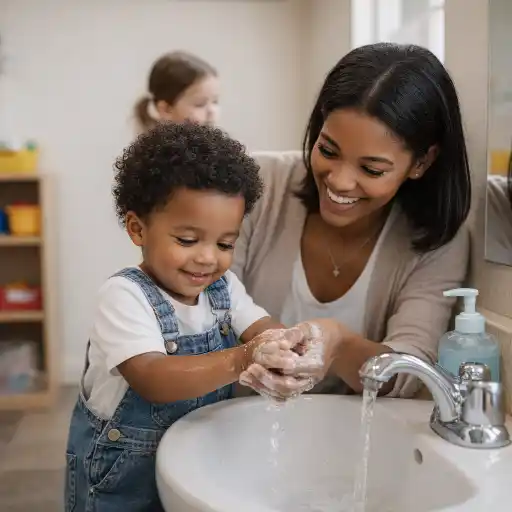
1) Use roles and praise. Let children be the Soap Captain or Rinse Helper. Praise effort: "I see you scrubbing between fingers—nice work!" Little rewards and celebrations help form habits.
2) Train staff with clear steps and checklists. Include handwashing practice during staff orientation. Minnesota’s teaching materials and curricula help staff learn age-appropriate methods (MDH Teaching Hand Hygiene).
3) Partner with families. Send home the class handwashing song and a simple list of key times to wash. ChildCareEd suggests sharing the same language and visuals, so children get the same message at home (family tips).
4) Supervise younger children. Children under 6 or those with special needs may need help. The CDC notes that hand sanitizer should be used with adult supervision for young children (CDC).
How should I handle diapering, cleaning, and illness so handwashing works with other safety steps?
1) Diapering steps: follow a standard order each time. Prepare supplies first, clean the child, remove trash, clean the child’s hands, disinfect the changing surface, then wash your hands. The CDC provides a clear step-by-step diapering guide (CDC diapering steps).
2) Cleaning vs. sanitizing vs. disinfecting: clean with soap and water first; then sanitize items that go in mouths; disinfect toilets and diaper areas, or when someone is sick. Follow product labels for safe use. The CDC’s cleaning guidance explains when and how to use each method (CDC cleaning & disinfecting).
3) Mouthed toys: keep a "mouthed toy" bin. Clean and sanitize these toys before returning them to shelves. ChildCareEd and CDC both recommend this as best practice (ChildCareEd infection control).
4) Illness routines: use daily health checks and a clear illness policy, so families know when to keep kids home. Track symptoms and follow exclusion guidance from your local health department. Minnesota materials and the CDC explain common exclusion reasons and return rules; see the MDH infectious disease manual (Infectious Diseases in Child Care Manual) and CDC prevention pages (CDC Preventing Infectious Diseases). For broader, practical strategies—such as nutrition, seasonal illness prevention, and age-appropriate physical activity—that support overall child health and help reduce absenteeism, see Keeping kids healthy! Tips and tricks.
5) After cleaning or caring for a sick child, staff must wash their hands. Always wash after glove removal. For more cleaning tips and checklists, ChildCareEd’s hygiene articles are practical and ready to use (Health and safety refreshers).
- 🩺 Healthy classroom routines for infants and toddlers: For staff who want to strengthen diapering, cleaning, and illness prevention practices, ChildCareEd's How To Keep A Healthy Class for Infants/Toddlers Buy Now $32.00 is a 4-hour online course covering hygiene, illness prevention, and healthy daily routines — directly supporting the diapering step order, mouthed-toy bin, and illness exclusion steps described in this article.
Common mistakes and how to avoid them
- 🔸 Thinking quick rinses are enough — remind staff and children to scrub for 20 seconds.
- 🔸 Not supervising sanitizer for young children — use adult oversight and place dispensers out of reach when needed.
- 🔸 Missing handwashing times — post a short visual schedule near the sink and include times in daily routines.
- 🔸 Letting mouthed toys return to shelves without cleaning — have a sealed bin and a cleaning plan.
FAQ
- Q: Can hand sanitizer replace soap and water? A: No. Use sanitizer only when sinks aren’t available. Soap and water are best, especially after toileting or when hands are dirty (CDC).
- Q: How long should children scrub? A: About 20 seconds — two rounds of "Happy Birthday" work well. ChildCareEd shares songs and stories to time scrubbing (ChildCareEd).
- Q: What products are OK? A: Use plain liquid soap. For hand sanitizer, choose 60%+ alcohol. Minnesota MDH offers guidance on soap and sanitizer options (MN Dept. of Health).
- Q: Who enforces rules? A: Licensing rules come from state agencies. State requirements vary - check your state licensing agency for exact rules.
Conclusion
1) Build a short, consistent plan: pick key times, teach the 5 steps, and make sinks easy to use.
2) Use fun teaching ideas from ChildCareEd and posters from MDH and CDC, so staff and families stay on the same page (ChildCareEd, MN Dept. of Health, CDC).
3) Keep cleaning, diapering, and illness plans aligned so handwashing works with other safety steps. You are creating a healthier space for children, families, and staff—one short routine at a time. #childcare #routine
- Professional Presence in Early Childhood
- Safe and Sound: Creating Healthy Environments for Every Child
- Basic Health & Safety and Breastfeeding Awareness
- Pillars of Health and Safety in Child Care
- Family Child Care Health Essentials
- Texas Director Credential
- Everyday Safety: Creating Healthy Environments
- Family Child Care: Building, Premises, and Outdoor Safety
- Shoo, Germs! Don't Bother Me!
- Ah-Choo!
- CDA Certification en Español: Recursos y Consejos para Educadores Bilingües
- 👶 ¿Cuáles son las proporciones y grupos requeridos en Dakota del Norte? 🏫
- Recursos en Español sobre el Sueño Seguro del Bebé
- Curso de Comunicación de 9 Horas de Maryland
- Proporciones de Cuidado Infantil y Tamaños de Grupo por Edad en Virginia (Guía Rápida para Centros y Hogares)
- Can Toddlers Do STEM in the Sandbox at Minnesota Daycares?
- How can childcare programs prevent the spread of illness?
- Cómo simplificar la capacitación para sus empleados de daycare
- How can child care programs stop germs and keep children healthy?
- How should Minnesota child care programs handle allergies and special diets?
- How Can Minnesota Child Care Programs Build A Strong Handwashing And Hygiene Routine?
- Which Handwashing Activities Best Help Young Children Build Healthy Habits?
- How can childcare programs effectively prevent lead exposure in their environments?
- How can child care programs build healthy hygiene habits?
- What Handwashing Rules Should Every Child Care Provider Teach?
- Why Doesn’t a Handwashing Reminder Alone Close Germ-Control Gaps in Child Care?
- How Can Child Care Programs Make Handwashing Possible During the Busiest Part of the Day?
- What Health Supplies Should Family Child Care Providers Keep Stocked?
- How Can You Teach Classroom Visitors Your Handwashing Routine?
