Winter brings more time indoors, close contact, and the familiar rush of sniffles moving through a classroom—but a consistent handwashing routine can help interrupt that spread. Explore Shoo, Germs! Don’t Bother Me!  Buy Now $24.00 for focused professional learning on hygiene practices and communicable-disease prevention, then use the practical steps below to strengthen your daily routine.
Why does handwashing deserve extra attention in winter?
When colder weather keeps groups inside, children and adults share more time and materials in close spaces. Hands move between toys, tables, faces, food, and door handles, creating frequent opportunities for germs to travel. Young children are still learning self-care skills and may touch their eyes, nose, or mouth without noticing. Consistent hand hygiene helps interrupt these everyday pathways.
The CDC notes that promoting hand hygiene in early care and education settings can help reduce gastrointestinal and respiratory illness and missed days. Handwashing is not a guarantee against infection, and it works best as part of a broader prevention plan. It is, however, a practical habit that providers can teach, model, and build into the schedule without making children feel that ordinary play is dangerous.
Predictable routines also support children’s growing independence. A familiar cue—“First wash, then snack”—helps children understand what comes next and why. Providers can frame the habit positively: we wash to care for our own bodies and the people around us. This strengths-based approach makes #handwashing part of a welcoming #classroom routine rather than a response to blame or fear.
- 🧼 Treat handwashing as a regular self-care skill, not only an illness-season reaction.
- Make time for the routine during transitions so it is not rushed or skipped.
- Model the same careful steps you expect children to practice.
When should children and staff wash their hands?
General reminders like “wash often” are easy to overlook during busy transitions. Instead, connect handwashing to specific moments already present in the daily schedule.
- At arrival, before joining shared classroom activities.
- Before preparing, serving, or eating food—and after meals when hands need cleaning.
- After using the toilet, helping a child toilet, or completing a diaper change.
- After blowing a nose, wiping mucus, coughing or sneezing into hands, or contact with body fluids.
- After outdoor play, sand or sensory activities, animal contact, or touching garbage.
Staff should follow the same key moments and wash after tasks such as diapering, assisting with toileting, cleaning, and handling body fluids. Gloves do not replace handwashing; wash after glove removal when the task calls for it. During winter, it can help to add a handwashing opportunity after nose-wiping routines or before children move from shared play to meals.
Post the key moments near sinks and include them in staff procedures. Requirements may differ by jurisdiction: state requirements vary - check your state licensing agency for applicable rules and current procedures.
What steps make handwashing effective and child-friendly?
Teach one sequence consistently: wet, soap, scrub, rinse, and dry. The CDC recommends washing with soap and water for at least 20 seconds. Children should rub palms, the backs of hands, between fingers, thumbs, and around nails. Thorough drying matters too; provide clean paper towels or an appropriate hand dryer and make sure children can reach them safely.
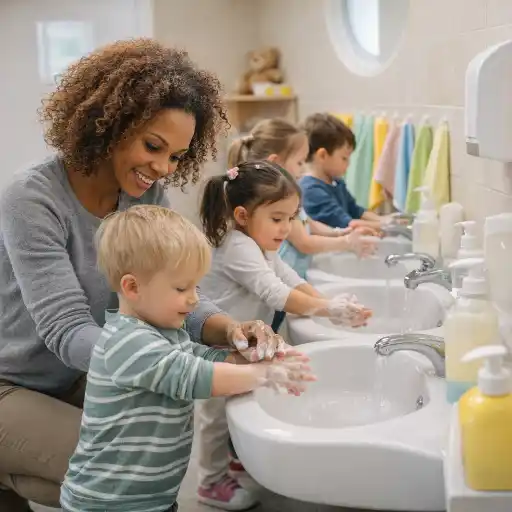
- Wet: Wet hands with clean, running water.
- Soap: Apply soap and make a lather.
- Scrub: Rub all hand surfaces for at least 20 seconds.
- Rinse: Rinse thoroughly under running water.
- Dry: Dry hands completely with a clean towel or hand dryer.
A short song or rhyme can make 20 seconds easier to understand. Use the same cue each time, and demonstrate rather than calling instructions across the room. Helpful language is brief and specific: “Let’s get between our fingers,” or “You remembered your thumbs.” Visual steps at children’s eye level can support children who benefit from pictures, predictable sequences, or additional language support.
Expect children to need different levels of help. Some may require a stable step stool, an easy-to-operate soap dispenser, extra time, or direct adult assistance. Offer calm support and gradually encourage independence as each child’s skills grow. Playful practice—sequencing picture cards or singing at the sink—can make the routine engaging without turning washing into a competition.
How can directors make the routine reliable during a busy day?
Consistency depends on an environment and staffing plan that make the right action possible. A reminder cannot compensate for an empty soap dispenser, a crowded sink, or a teacher who must supervise several children in different areas at once. Before winter illness rates rise, walk through the routine from a child’s perspective and identify practical barriers.
- Check sinks, running water, soap, and drying supplies at opening and during the day.
- Keep step stools stable, floors clear, and visual instructions easy to see.
- Schedule handwashing at predictable transitions, such as arrival, before meals, and after outdoor play.
- When sink access is limited, stagger small groups and clearly assign adult supervision roles.
- Review the routine at staff meetings and coach with brief, respectful feedback.
The CDC recommends making supplies accessible, supervising and assisting children as needed, and using visual reminders in visible locations. Its hand hygiene guidance for schools and ECE settings also emphasizes time in the schedule and complete hand drying. Wet hands can transfer germs more readily, so drying is a meaningful part of the routine, not an optional final flourish.
Hand sanitizer containing at least 60% alcohol can be a backup when soap and water are not readily available. It is not a substitute after toileting or when hands are visibly dirty or greasy, and it does not remove every type of germ or harmful chemical. Supervise young children and store sanitizer out of their reach when not in use.
What common winter handwashing pitfalls can programs prevent?
Busy winter days can make shortcuts tempting. A quick rinse, rushed transition, or missing supply may seem minor, but repeated gaps weaken a routine and frustrate both children and staff. Focus on systems and coaching rather than expecting individuals to compensate for barriers.
- Rushing the scrub: Use a familiar 20-second song or rhyme instead of asking children to hurry.
- Running out of supplies: Add soap and towels to a simple opening and mid-day checklist.
- Using sanitizer for every situation: Prioritize soap and water after toileting and whenever hands are visibly dirty.
- Assuming children can manage without help: Offer visual cues, accessible equipment, supervision, and individualized assistance.
- Treating washing as punishment: Use neutral, caring language and predictable cues.
When a child resists or rushes, first look for the reason. Is the sink crowded or noisy? Is the pump hard to use? Does the child need a picture sequence, a demonstration, or more time? Small adjustments can make the routine more inclusive and sustainable.
Directors can check patterns for a week: which times create a queue, which supplies run out, or which steps children regularly miss. Use these observations to adjust staffing, placement, or scheduling. A brief, supportive review is more useful than repeated reminders that do not address the cause.
Conclusion: How can daycare handwashing routines improve this winter?
Daycare programs can strengthen winter handwashing by planning for key moments, teaching the same five steps, providing accessible supplies, and supervising children at the level they need. Build handwashing into arrival, meals, toileting and diapering, outdoor play, and nose-wiping routines; teach a full 20-second scrub; and ensure hands dry completely.
Reliable routines grow from supportive systems: staff know their roles, children receive patient guidance, and directors identify supply or scheduling barriers before they become habits. Use soap and water whenever appropriate, keep sanitizer as a safely supervised backup, and check local rules as you review written procedures. These small, steady practices help protect children and staff while supporting children’s confidence and independence.
For additional professional learning on classroom hygiene and communicable-disease prevention, explore Prevention and Control of Infectious Diseases Buy Now $16.00, How To Keep A Healthy Class: Six Tips for Germ Control Buy Now $24.00, How To Keep A Healthy Class for Infants/Toddlers Buy Now $32.00, and CDA Infants/Toddlers: Health and Safety Buy Now $24.00. Confirm whether a course meets your specific training needs with your licensing agency.
- 45 Hour Child Growth and Development
- Moving About the Classroom: Effective Transitions for Everyday
- Positive Attention: Interactions and Supervision of Infants and Toddlers: For Workforce Solutions
- 45 Hour School Age Methods and Materials
- Positive Attention: Interactions & Supervision for Infants & Toddlers
- Self-Regulation & Change: Helping Children Cope
- Creating Environments that Nurture Growth and Community
- Texas Director Credential
- Everyday Safety: Creating Healthy Environments
- Shoo, Germs! Don't Bother Me!
- CDA Certification en Español: Recursos y Consejos para Educadores Bilingües
- Recursos en Español sobre el Sueño Seguro del Bebé
- 10 Ejemplos de Cómo la Cultura Influye en el Desarrollo Infantil
- Normas de Licenciamiento de Cuidado Infantil en Virginia para Centros Diurnos Infantiles y Hogares Diurnos Familiares
- Proporciones de Cuidado Infantil y Tamaños de Grupo por Edad en Nueva Jersey (Guía Rápida para Centros y Hogares)
- Can Toddlers Do STEM in the Sandbox at Minnesota Daycares?
- How Do Minnesota Winters Affect Young Children's Mental Health?
- How can child care programs meet licensing and compliance requirements?
- Cómo simplificar la capacitación para sus empleados de daycare
- Mixed-Age Daycare Schedule: How to Plan a Day for Different Age Groups
- What Should You Say in a Daycare Interview If You Have No Experience?
- What Makes a Great Home Daycare? 10 Things Parents Notice First
- No Daycare Experience? What Do Directors Notice Before They Decide to Hire You?
- Cold, Flu, or RSV? How Can Child Care Providers Tell the Difference and Respond?
- When Should a Sick Child Stay Home? A Childcare Provider’s Guide to Winter Illness Policies
- How Can Daycare Programs Strengthen Handwashing Routines During Winter?
- How Can Child Care Programs Communicate Winter Illness Outbreaks to Parents Without Creating Panic?
- How Can Child Care Centers Create a Practical Winter Wellness Plan?
- How Can Child Care Providers Manage Dry Skin, Chapped Lips, and Eczema in Winter?
- How Can Child Care Providers Help Children with Asthma Stay Safe During Winter?
