Halloween celebrations, book parades, dress-up days, and themed events should invite every child to participate without causing discomfort or distress. For child care directors and providers, creating sensory-friendly #costumes supports inclusion, reduces overstimulation, and demonstrates practical accommodation for families and staff. For practical ideas on how neurodivergent children can be supported to participate and shine during holiday celebrations, see How Neurodivergent Kids Shine During the Holidays. Comfortable costume options may include soft, tag-free clothing, familiar garments with simple accessories, alternatives to masks and face paint, adjustable fasteners, noise-reducing supports, and decorations that can be safely attached to mobility devices. This guide provides evidence-informed, classroom-ready strategies, affordable adaptations, family communication ideas, accessibility considerations, and quick troubleshooting tips to help every #child participate safely and joyfully.
To strengthen your program’s inclusive practices, explore ChildCareEd’s self-paced online course Access for All: Inclusion and the ADA  Buy Now $16.00. The training addresses inclusionary practices, developmental disabilities, and how the Americans with Disabilities Act applies within child care environments. Providers can also take Inclusive Lessons for Preschoolers Buy Now $16.00 for practical guidance on choosing adaptable materials, modifying activities, and creating welcoming experiences that recognize each child’s abilities and needs. State requirements vary, so always check with your state licensing agency.
What is a "sensory-friendly" costume and why does it matter?
- Minimizes uncomfortable textures, tight seams, and scratchy tags.
- Avoids overwhelming lights/sounds or offers on/off options.
- Accommodates mobility devices, medical needs, or communication differences.
Why it matters:
- Promotes participation: Children with sensory differences can opt in without distress, improving social connection and learning opportunities (see inclusion tips at A Better Space For All).
- Reduces behavioral escalation: predictable, comfortable clothing supports regulation and smoother transitions.
- Signals respect: adaptive choices communicate that your program values #inclusion and #accessibility for #children.
What practical features make a costume sensory-friendly?
- Fabric and fit
- Choose soft, breathable fabrics (cotton, fleece). Wash new costumes to remove odors and stiff finishes (20 Tips for Sensory Friendly Costumes).
- Remove tags and trim seams that rub.
- Fast and flexible closures
- Prefer zippers, Velcro, or wide elastic to buttons or ties so children can dress/undress quickly.
- Optional accessories
- 🧢 Offer alternatives to masks/hats; practice wearing preferred items ahead of time.
- 🎨 Use non-toxic, gentle face paints when tolerated — or skip face paint and use character shirts instead (see DIY nontoxic recipes at DIY Non-Toxic Face Paint).
- Sensory supports
- Provide ear defenders, chewables, or fidgets as integrated costume pieces if helpful (sensory-friendly Halloween ideas). You can also offer supervised sensory play alternatives, such as a classroom-safe glitter slime activity, in a calm corner to provide predictable tactile input and support regulation.
How can costumes be adapted for mobility aids, medical devices, and accessibility?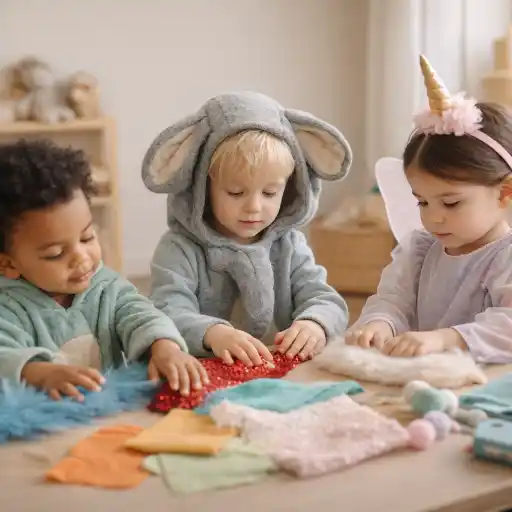
- Plan for modifications
- Measure equipment and design costume elements that attach to — not cover — critical controls. See adaptive costume ideas and tips for wheelchair users at BraunAbility and examples in the New York Times.
- Use removable panels and Velcro openings.
- Provide access points for feeding tubes, catheter ports, or wheelchair controls without removing the costume.
- Convert the mobility device into the costume
- 🎭 Turn a wheelchair into a race car or dragon with lightweight cardboard frames and secure attachments (examples and community stories in the NYT piece).
- Test safety and mobility
- Perform a dry run in the classroom or at a practice event (see sensory-friendly events like Build‑A‑Bear mornings and museum programs at Port Discovery and Build‑A‑Bear).
How do we implement sensory-friendly costume practices in classroom events and community activities?
Make inclusion operational with policies, zones, and communication.
- Designate a calm zone
- 🛋️ Create a staffed quiet corner where children can remove costume parts, use headphones, or regroup (ChildCareEd’s calm-corner ideas in Halloween Classroom Activities).
- Offer choice stations
- Provide 2–3 costume paths: full dress-up, partial costume (character shirt + prop), and cozy sensory option (no costume if preferred). Publicize these choices to families and staff.
- Host sensory-friendly sessions
- Run a low-stimulation hour or event before or after the main celebration (models: Port Discovery, Munroe‑Meyer Institute).
- Train staff and plan logistics
- 🧑🏫 Use checklists for costume-safety, quick changes, and medical access. Prep labeled bins with spare soft clothing, costume safety accessories, and wipes.
How should we communicate with families and avoid common mistakes?
Clear, compassionate communication prevents surprises and builds trust. Use a short family note that includes:
- Event schedule and arrival times.
- Costume guidance: safe shoes, no weapon props, soft fabrics, and alternatives to masks.
- Offer to collaborate on adaptations — invite photos or measurements for mobility-device customization.
Common mistakes & how to avoid them:
- ❌ Too many sensory elements at once — Fix: simplify decorations and turn off strobes and loud sounds during trick-or-treating (see neighborhood tips in sensory-friendly Halloween ideas).
- ❌ One-size-fits-all costumes — Fix: prepare options and respect a child’s choice to opt out (advice from Park Slope Parents and community sources: Reminders).
- ❌ Not testing mobility adaptations — Fix: do a supervised rehearsal with families before the event (BraunAbility and NYT guidance).
Quick provider checklist (do now):
- 📋 Create an inclusive costume policy and share it with families.
- 🧵 Stock one adaptive costume box with soft clothing, Velcro, and ear defenders.
- 🔁 Schedule a sensory-friendly practice session or quieter hour.
- 📞 Ask families about medical or mobility needs; coordinate modifications.
Conclusion
Sensory-friendly #costumes are an attainable inclusion practice that improves participation, reduces stress, and models respectful accommodations to families and staff. Start small: 1) add a labeled adaptive bin, 2) run a low‑stim hour, and 3) send a plain-language family note offering choices. For ready-made classroom activity plans and deeper inclusion training, prioritize ChildCareEd materials like Halloween Classroom Activities and free resources at Access for All. State requirements vary - check your state licensing agency.
FAQ (quick answers for busy providers):
- Q: Can kids skip costumes and still participate? A: Yes. Offer a "no-costume" or character-shirt option and include them fully.
- Q: What about face paint allergies? A: Use non-toxic recipes or skip face paint; offer stickers or character props instead (DIY face paint).
- Q: How do we manage community trick-or-treat safety? A: Encourage neighbors to offer non-food treats and keep pathways clear — resources: BraunAbility and Teal Pumpkin guidance in local press.
- Q: How do we evaluate success? A: Track participation, number of calm-break uses, and family feedback after the event.
Every child deserves a costume that fits their body, their needs, and their joy. Use the steps above as a living checklist you revisit each season — small changes create big inclusion wins.
- 45 Hour Child Growth and Development
- Family Connections: Creating Inclusive Relationships
- 45 Hour Infant and Toddler Methods and Materials
- Pediatric RSV First Aid & CPR/AED
- 45 Hour School Age Methods and Materials
- CDA Bridge Bundle: Family Child Care without Portfolio Review
- Effective Approaches for Autism and Inclusion
- Play with Purpose: Supporting Children with Autism
- Texas Director Credential
- DIY Snow Globes: The Fine Motor Craft That’ll Keep Kids (and Adults) Busy for Hours
- The power of Imagination: How to add it to your classroom
- ¿Cuáles son las mejores actividades del Día de la Tierra para niños en casa o en el aula?
- Proporciones de Cuidado Infantil y Tamaños de Grupo por Edad en Virginia (Guía Rápida para Centros y Hogares)
- Celebrando la amistad en el cuidado infantil durante el Día de los Mejores Amigos
- Canciones, juegos y preguntas de círculo para niños
- How to Teach Diversity to Preschoolers Through Play
- How Can I Bring the World Cup into a Multicultural Preschool Classroom in New York?
- Cultural Activities for Preschoolers: Fun Ways to Learn About the World
- How can North Dakota child care providers celebrate America’s 250th in simple, respectful ways?
- How can I integrate the World Cup into my daycare program in an inclusive, safe, and developmentally appropriate way?
- How can we create sensory-friendly costumes for every child?
- How can childcare programs celebrate the harvest season in ways that are inclusive, safe, and sensory-rich?
- What are safe, engaging non-candy Halloween ideas for daycares?
- How Can Child Care Providers Teach Día de los Muertos With Cultural Sensitivity?
- Dr. Seuss Book List for Teachers: Easy Ways to Use It for Story Time and Learning
- National Massachusetts Day for Kids: Explore the Bay State Through Play
- How Can We Celebrate Every Family and Create a Classroom Where Everyone Is Represented?
- How Can Halloween Fine-Motor Activities Be Fun Without Being Scary?
- What Should You Ask Families Before a Classroom Winter Celebration?
