Halloween’s costumes, surprises, and schedule changes can turn excitement into overwhelm for young children—and leave educators managing big feelings alongside classroom routines. The self-paced The ABCs of Behavior: Turning Challenges into Learning Opportunities  Buy Now $55.00 course helps providers understand what may be behind behavior and apply positive guidance, reinforcement, and sensory-aware strategies. Explore the course for a deeper learning experience, then use the practical steps below to make seasonal activities safer and more welcoming.
Why can Halloween bring out challenging behavior?
Halloween changes the ordinary rhythm of a child care day. Costumes may feel unfamiliar, decorations can flash or make sudden sounds, and special events may bring crowds, new expectations, or delayed routines. A child who is usually comfortable may become restless, withdrawn, tearful, impulsive, or reluctant to join. These responses are not automatically “bad behavior”; they can signal fear, fatigue, sensory overload, uncertainty, or a need for connection.
Young children are still developing communication, impulse control, and #selfregulation. They may not yet be able to explain that a mask feels frightening or that a loud activity is too much. Guidance begins with curiosity: observe what happened just before the behavior, what the child did, and how adults and peers responded. Resources on guidance and challenging behaviors emphasize the importance of understanding behavior in context rather than defining a child by a difficult moment.
This matters because a calm, respectful response protects trust and keeps the focus on learning. A predictable, supportive classroom helps children participate at their own pace—and helps staff handle seasonal disruptions without relying on shame or threats. Remember that each child’s temperament, development, culture, and sensory preferences shape how Halloween feels.
How can you prepare the classroom and prevent stress?
Prevention is easier than trying to restore calm after a child is overwhelmed. Keep familiar anchors—meals, rest, outdoor time, and key transitions—as steady as possible. Preview any special activity with simple language, pictures, or a short demonstration. Tell children what they can expect, what choices are available, and how they can take a break.
- Review decorations and activities in advance; reduce sudden sounds, jump scares, flashing lights, and frightening imagery.
- Use a picture schedule or visual countdown to show what is changing and what stays the same.
- Offer a quiet, supervised alternative with familiar books, toys, or drawing materials.
- Allow children to observe, join with an adult, participate briefly, or opt out without embarrassment.
- Check for crowding, costume discomfort, strong smells, and noisy or visually busy spaces.
Halloween can still be engaging without making every activity spooky. Pumpkin art, autumn stories, friendly character play, and feelings games offer seasonal fun with more predictable materials. ChildCareEd’s guidance for when a child finds a Halloween activity frightening also recommends previewing materials, respecting children’s reactions, and providing a non-Halloween alternative. If your program has a sensory-friendly space, make it available before children need it, not only after distress escalates.
What should you do when a child becomes upset?
First, make sure everyone is safe and lower the immediate demands. Move close without crowding, use a steady voice, and keep your words brief. Naming what you notice can help a child feel understood: “That sound surprised you. You look worried. I’m here.” Validation does not mean agreeing that a situation is dangerous; it means recognizing the child’s experience and offering support.
Then provide a small number of clear, realistic choices. For example: “Would you like to watch from here, sit with me, or choose the puzzle table?” If the child is highly distressed, prioritize a quieter setting and co-regulation before explaining rules or asking questions. A short pause can make later teaching more effective.
- Set a clear limit when safety is involved: “I won’t let you hit. I’ll help keep everyone safe.”
- Redirect toward a safe action: “You can stomp on this spot or squeeze the cushion.”
- Recognize communication in all forms, including gestures, pointing, moving away, or silence.
- 🧡 Thank the child for showing or telling you what they need, then help them choose a next step.
Once the child is calmer, briefly practice a useful replacement skill, such as asking for help, requesting a turn, or moving to the calm area. Positive discipline is not permissiveness: it combines empathy with clear boundaries and teaching. Avoid lectures during a meltdown, public correction, forced participation, or insisting that a child prove they are brave.
How can Halloween activities support participation and inclusion?
Plan for different ways to take part rather than expecting every child to do the same thing. Some children may love costumes and group games; others may prefer familiar clothing, a quiet craft, or watching before joining. A child should not have to wear a costume, touch a messy material, speak on demand, or finish an activity to belong in the group.
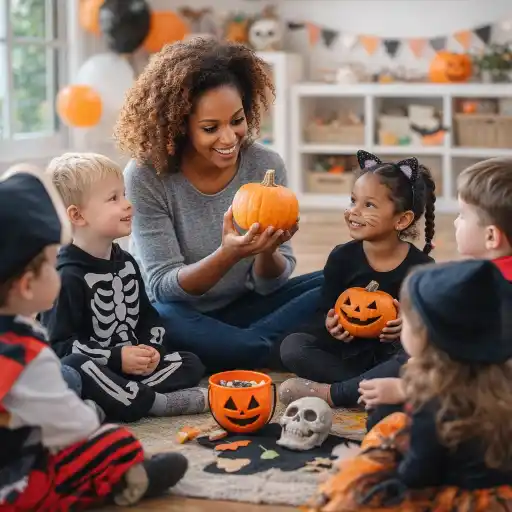
Offer simple choices within activities. Children can decorate a friendly pumpkin face, choose whether to use paint or crayons, or make a character silly rather than scary. Show materials before introducing them and let children handle props at their own pace. For group events, keep the route and sequence predictable, and identify an accessible place to take a break. Consider communication needs, mobility, food allergies, and family preferences while planning.
Visual supports, familiar routines, and flexible participation can help children anticipate what comes next. The National Association for the Education of Young Children’s resources on routines and transitions offer a useful reminder that transition timing and sequence matter. A well-planned Halloween event might include a short group activity, a clear transition cue, and an alternative available throughout. For emotional learning with a seasonal theme, the ChildCareEd Little Ghost Feelings activity pack Buy Now $2.49 includes flexible ways for children to identify and communicate emotions.
How can staff and families respond consistently?
Children benefit when the adults around them use a shared, respectful approach. Before Halloween events, directors can brief staff on the schedule, activity options, supervision responsibilities, and agreed-upon language for setting limits. A short team plan might include what to do when a child signals discomfort, who will support a quiet break, and how the child can rejoin if ready.
Use objective observations rather than labels. Record what happened before the behavior, what you observed, and what response helped. For example: “During the parade music, Jordan covered their ears and moved beside the bookcase; the noise was lowered and Jordan watched from the quiet area.” This is more useful than “Jordan was difficult.” Look for patterns across activities and note strengths, successful supports, and moments of comfortable participation.
- Share observations privately and begin family conversations with a child’s strengths.
- Ask families about preferences, traditions, sensory concerns, and strategies that work at home.
- Agree on one or two practical supports and review how they worked after the event.
- Consult program procedures and appropriate specialists when concerns are persistent or safety is affected.
Providers are not responsible for diagnosing a child. Their role is to observe, make reasonable classroom adjustments, communicate respectfully, and collaborate with families. State requirements vary - check your state licensing agency, especially regarding supervision, inclusion, and event policies.
Which common pitfalls should providers avoid?
Good intentions do not always prevent a stressful experience. Adults may be tempted to complete a planned craft, keep a parade moving, or encourage a child to “be brave.” But participation is not the only measure of success. A child who watches safely, chooses a different activity, or asks for support is communicating and learning too.
- Minimizing fear: Replace “There’s nothing to be scared of” with “That felt scary. I’m here with you.”
- Using surprise to entertain: Avoid jump scares and sudden sensory changes, particularly when children have not been prepared.
- Pressuring children: Offer choices and allow children to pause, leave, or decline without teasing or penalties.
- Using punishment for distress: Set limits for unsafe actions while teaching a safer replacement response.
- Assuming one activity suits everyone: Provide quieter, non-themed, or lower-sensory options as a normal part of planning.
Directors can help by reviewing plans and materials with staff, ensuring alternatives are ready, and creating time to reflect after the event. When a behavior is persistent, intense, or presents safety concerns, document patterns and work with the family and appropriate support team rather than relying on a one-size-fits-all response.
Conclusion: How can positive guidance make Halloween safer?
Positive guidance during Halloween starts with preparation and continues with empathy, clear limits, and flexible choices. Keep routines predictable, preview activities, reduce unnecessary sensory stress, and make participation voluntary. When a child becomes upset, focus first on safety and connection; after the child is calm, teach a practical skill for next time.
The central goal is not a perfect party or universal enthusiasm. It is a classroom where children’s signals are respected, staff respond consistently, and every child has a meaningful way to participate. Partner with families, notice what helps, and adjust plans with care. For deeper professional learning, explore the English courses The ABCs of Behavior: Turning Challenges into Learning Opportunities Buy Now $55.00, From Tantrums to Triumphs: Equipping Preschoolers with Self-Regulation Skills Buy Now $25.00, Self-Regulation & Change: Helping Children Cope Buy Now $16.00, Social Foundations and Responsive Classrooms Buy Now $24.00, and Effective Approaches for Autism and Inclusion Buy Now $55.00. These offer focused learning on behavior, regulation, responsive classrooms, and inclusive practice.
- Moving About the Classroom: Effective Transitions for Everyday
- What Makes Me Special: An Overview of Autism and ADHD
- The ABCs of Behavior: Turning Challenges into Learning Opportunities
- CDA Bridge Bundle: Family Child Care without Portfolio Review
- CDA Bridge Bundle: Infant/Toddler without Portfolio Review
- CDA Bridge Bundle: Preschool without Portfolio Review
- Self-Regulation & Change: Helping Children Cope
- Behind the Scenes: Baby Routines ONLINE
- Bienvenido! Welcoming All Families
- Every Moment Matters: Schedules and Transitions
- Halloween Classroom Activities Kids Will Go Batty For
- Proporciones de Cuidado Infantil y Tamaños de Grupo por Edad en Maryland (Guía Rápida para Centros y Hogares)
- Proporciones de Cuidado Infantil y Tamaños de Grupo por Edad en Virginia (Guía Rápida para Centros y Hogares)
- ¿Cuál es la Diferencia Entre la Crianza Respetuosa y la Crianza Permisiva?
- Ejemplos de Crianza Respetuosa vs. Crianza Permisiva
- Capacitación Previa al Servicio para Proveedores de Cuidado Infantil en Nevada
- Cómo simplificar la capacitación para sus empleados de daycare
- How can providers and families keep children safe while trick-or-treating?
- How Can Halloween Fine-Motor Activities Be Fun Without Being Scary?
- What Should You Do When a Child Finds a Halloween Activity Frightening?
- How Can Teachers Support Children’s Emotional Development During Halloween?
- How Can Preschool Teachers Encourage Sharing and Cooperation During Halloween?
- How Can Child Care Providers Use Positive Guidance During Halloween?
- How Can Child Care Providers Keep Classroom Routines Predictable When Halloween Excitement Takes Over?
- How Can Child Care Programs Plan a Halloween Celebration Where Food Is Optional?
- How Can Halloween Pretend Play Teach Children to Say “Stop” and “Ask First”?
- How Can You Help Children Return to Classroom Routines the Morning After Halloween?
- Why Does a Child Want the Same Halloween Story Every Day?
- When Does “Boo!” Become Too Much, and How Can Children Learn to Notice a Friend’s Discomfort?
- How Can Child Care Providers Build Halloween Math Around Children’s Play—Without Candy?
