Introduction
Feelings charts are simple pictures or words that help children name what they feel. Teachers and child care pr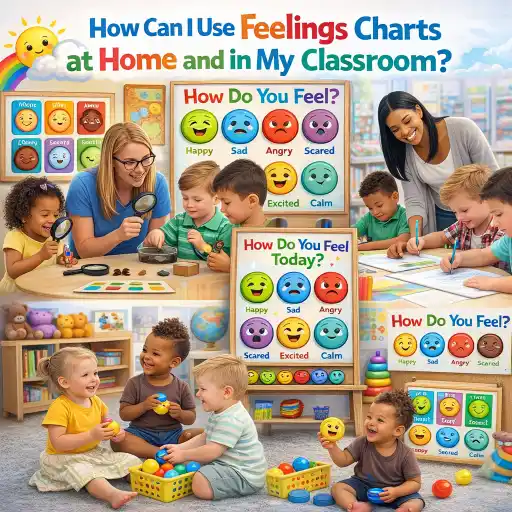 oviders use them every day to help kids calm down, say how they feel, and learn to solve problems. A good chart is low-cost, clear, and visible at children’s eye level. Using a chart supports #children as they learn words for their #emotions and build # self-control skills for the day.
Why it matters: When kids can point to or say a feeling, they are more likely to use words instead of hitting or crying. That helps friendships, learning time, and routines. For ready-to-use printables, try a ChildCareEd resource like Name Your Emotions Chart Buy Now $0.00 as a starting tool.
1. What is a feelings chart and why should I use one?
- 😊 Quick check-in: Children point or clip their name to the feeling when they arrive—this takes less than a minute and builds #routine.
- Use during a meltdown: Adults can say, “Point to how you feel,” which helps calm big feelings and starts co-regulation.
- Teach vocabulary: Point to the chart while reading a book or during play so children link words and faces. ChildCareEd has activity ideas in Emotions for Kids.
Charts matter because naming an emotion is the first step to managing it. The goal is not perfect language, but giving children a tool to be understood and to learn self-#regulation skills.
2. How do I set up a feelings chart at home or in the classroom?
Follow these steps to set up a chart that children will use:
- 🎨 Choose a style: Pictures, emoji faces, photos of your children, or color zones (green = calm, yellow = worried, red = upset). Many programs use color charts; see a child-created example at Every Star Is Different.
- Print or make it durable: Laminate or place in a frame so kids can use a clothespin or dry-erase marker. For low-tech, try the DIY clothespin idea from Growing Hands-On Kids.
- Place it where kids can reach: At child height near the classroom door, bathroom, or calm-down spot. This invites frequent, quick use.
- Decide the check-in method: Numbered choices work well—1) Point, 2) Clip, 3) Draw—so children can show how they feel even if they have few words.
- 📎 Add simple rules: Use the chart for sharing feelings, not for punishment. Explain it to families so that home and center match. The Pyramid Model and family-engagement ideas can guide this—see the National Center for Pyramid Model Innovations summary at NCPMI.
Remember: state requirements vary - check your state licensing agency about posting materials or privacy rules when using photos.
3. How do I teach children to use the chart so they learn self-regulation?
Teaching is short and routine. Practice when kids are calm so they can reuse skills when upset. Use these steps:
- 📚 Model it during circle time: Ask each child, “How do you feel?” and point to the chart. Make naming feelings a quick daily routine. ChildCareEd suggests short feelings check-ins and play activities in Emotions for Kids.
- Role-play with puppets: Act out a problem and ask children to find the face that matches the puppet. Use scripts from CSEFEL for social stories and simple scripts: CSEFEL resources.
- Teach 1–2 calm tools near the chart: e.g., breathe like blowing bubbles, squeeze a soft ball, or count to five. Link each tool to a feeling on the chart so kids can choose how to calm down.
- Use zones or toolboxes: If you use the Zones of Regulation language, the chart becomes part of a shared classroom vocabulary. See Zones of Regulation for ideas that work in school settings.
- 👏 Reinforce success: Notice when a child uses the chart and praise effort: “I saw you point to happy and choose to take a breath—great job!”
Over time, children link the word, the face, and the calm action. That builds independence and stronger peer relationships in your #classroom.
4. What are common mistakes and how do I fix problems?
Common mistakes are easy to fix. Here’s what to watch for:
- ❌ Mistake 1: Only use the chart when kids are upset. Fix: Practice every day when calm, so children know the routine before stress arrives.
- ❌ Mistake 2: Too many feeling words. Fix: Start with 4–6 core words or colors. Add more as children learn. Many free templates and printable charts help you choose a simple set (see feelings chart templates).
- ❌ Mistake 3: Using the chart as punishment. Fix: Use it as a help tool and explain that the calm-down spot is a safe place to feel better.
- ❌ Mistake 4: No adult follow-up. Fix: After a child checks in, ask one simple question and offer one calm choice: “Do you want a hug or a quiet corner?” Then teach a small next step for repair (say sorry, ask for help).
- 📈 How to measure success: Track short wins—fewer doc visits to the office, more children using words, shorter meltdown times. Use simple counting or the Roll & Graph activity idea from ChildCareEd to collect class data: Feelings Roll & Graph Activity Buy Now $0.00.
Sharing the chart with families is key. Give a short note home that explains how the chart works and invite parents to use the same words. Family partnership helps the child generalize skills across settings.
Self-Regulation & Change: Helping Children Cope
Course link: https://www.childcareed.com/courses-self-regulation-change-helping-children-cope.html
Heart-to-Heart Communication: Challenging Behaviors
Course link: https://www.childcareed.com/courses-heart-to-heart-communication-challenging-behaviors.html
Conclusion
Feelings charts are a small change that makes a big difference. They teach children to name #feelings, get calm, and ask for help. With a clear chart, a short routine, and consistent adult follow-up, children learn to handle big emotions more quickly. Try a printable from ChildCareEd to start, practice daily, and work with families. Over weeks, you will see more words, fewer hits, and more moments where children can calm and return to learning.
Quick reminder: state requirements vary - check your state licensing agency when posting materials or using photos of children.
- CDA Home Visitor Subject Area 3 Part 3 Birth to 5
- A Better Space for All
- Bienvenido! Welcoming All Families
- CDA Infants/Toddlers: Importance of Consistent Care
- CDA Bridge Bundle: Family Child Care without Portfolio Review
- CDA Bridge Bundle: Infant/Toddler without Portfolio Review
- CDA Bridge Bundle: Preschool without Portfolio Review
- Texas Director Credential
- Behind the Scenes: Baby Routines ONLINE
- Anxiety: Signs & Strategies
- CDA Certification en Español: Recursos y Consejos para Educadores Bilingües
- 👶 ¿Cuáles son las proporciones y grupos requeridos en Dakota del Norte? 🏫
- Recursos en Español sobre el Sueño Seguro del Bebé
- Proporciones de Cuidado Infantil y Tamaños de Grupo por Edad en Maryland (Guía Rápida para Centros y Hogares)
- Proporciones de Cuidado Infantil y Tamaños de Grupo por Edad en Virginia (Guía Rápida para Centros y Hogares)
- Lista para Guardería en Casa en Texas: Cómo Iniciar una Guardería en el Hogar
- Daycare Conflict Resolution: Helping Children Get Along
- Social and Cultural Functions of Emotion in Young Children
- What Social-Emotional Learning Activities Work Best for Toddlers in Minnesota Classrooms?
- How can child care teams help children manage big emotions?
- Celebrando la amistad en el cuidado infantil durante el Día de los Mejores Amigos
- Nurturing Hearts: Helping Children Grow with Kindness and Care
- Cómo simplificar la capacitación para sus empleados de daycare
- How can child care providers teach children to name and manage emotions?
- How can we create classrooms where every child feels represented?
- How Can Child Care Providers Teach Children What to Say During Conflict Beyond “Use Your Words”?
- How Can Teachers Support Children With Big Emotions?
- How Can a Feelings Chart Help Preschoolers Build Self-Regulation?
- How Can We Build an Emotion Vocabulary Children Can Actually Use?
