When children sort real objects, they are doing more than organizing a table—they are comparing attributes, building vocabulary, explaining ideas, and revising theories. To strengthen this integrated approach, explore Early Mathematics Through Play Buy Now $24.00 and Letter & Number Planning in Child Care  Buy Now $24.00; these courses can help providers plan purposeful, language-rich experiences and apply professional learning to everyday classroom practice.
Why does sorting matter for both mathematics and language?
Sorting is an early form of classification: children notice characteristics, decide which characteristics matter, and create groups according to a rule. A child may place smooth stones together, separate large and small buttons, or group toy animals by where they live. These actions lay groundwork for comparison, data organization, pattern recognition, and logical reasoning.
At the same time, sorting creates a natural reason to communicate. Children need words such as same, different, more, fewer, round, rough, larger, and belongs to describe what they notice. Illinois Early Learning Project guidance explains that children can classify objects, ideas, sounds, smells, and flavors according to shared traits. The educator’s role is to make that thinking visible through conversation.
This integration matters because mathematical ideas are often represented verbally. Research on preschool development identifies vocabulary, expressive grammar, and phonological processing as connected to mathematical learning. When children explain, “These go together because they are both shiny,” they are practicing reasoning and sentence construction simultaneously.
- Classification strengthens early mathematical reasoning.
- Describing attributes expands vocabulary and oral language.
- Explaining a rule supports grammar, sequencing, and confidence.
- Listening to peers develops comprehension and social communication.
How can providers design a language-rich sorting invitation?
Begin with a small collection of safe, interesting objects and one clear learning intention. Materials might include large shells, fabric squares, blocks, toy foods, paper shapes, natural objects, or classroom items. Offer trays, hoops, bowls, muffin tins, or paper mats to make groups visually clear. Picture labels and home-language words can support children who are learning English or communicating in multiple ways.
Model observation without prescribing a single answer: “I notice that these two pieces are both soft. I wonder what else could join this group.” Introduce only a few target words at a time, then repeat them across routines. The Building Vocabulary Buy Now $16.00 course offers additional guidance for intentionally supporting vocabulary through content areas such as mathematics.
Use open prompts rather than rapid testing:
- “What do you notice?”
- “How are these alike?”
- “What makes this one different?”
- “What rule did you use?”
- “Can you sort the same objects another way?”
Accept gestures, home-language responses, drawings, sign language, and partial sentences as meaningful communication. Recast children’s ideas naturally: “You said, ‘all fuzzy.’ Yes, this group is made of fuzzy pieces.” This approach honors children’s contributions while extending precision.
Which activities connect sorting to purposeful talk?
Everyday materials often produce the richest conversations because children understand their function. During cleanup, invite children to sort vehicles, blocks, or dramatic-play foods into labeled containers. Ask where each item belongs and why. During snack, children can group foods by color, texture, or taste while practicing descriptive language. Laundry, recycling, and setting the table offer similar opportunities.
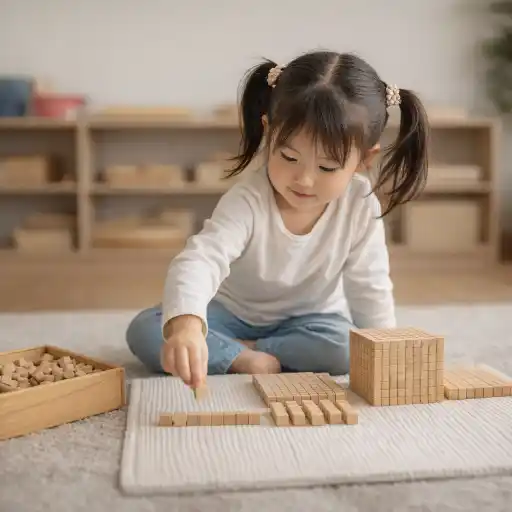
For a small-group activity, provide paper shapes in different colors and sizes. First, children sort by shape; next, they sort by color; finally, they count each group and compare quantities. PBS SoCal’s shape-sorting activity emphasizes that children can classify the same collection in several ways and identify shapes despite differences in size or orientation.
Try a sound sort for language and literacy. Place pictures or objects with familiar beginning sounds into two groups. Exaggerate the initial sound, invite children to repeat it, and ask which objects begin alike. This can connect phonological awareness with classification without turning the activity into a worksheet.
Other engaging variations include:
- Sort animals by land, air, or water, then dictate a sentence about each group.
- Sort fabric by texture and compare which group feels softer or rougher.
- Sort classroom photographs by location, such as indoors and outdoors.
- Sort story characters by actions, emotions, or roles, then retell the story.
- Collect leaves and sort them by color, size, edge, or shape.
Hands-on classification can also become a shared book: children glue or draw each category, dictate captions, and revisit the book during read-aloud time.
How should educators scaffold complexity and inclusion?
Effective scaffolding begins with children’s current strategies. For a child who is new to sorting, offer two highly contrasting categories and model one or two examples. As competence develops, add objects with less obvious differences, introduce a third category, or ask children to sort by two attributes. A child might first group red objects, then identify which red objects are also large.
Increase language demands gradually:
- Beginning: name and match attributes with gestures or pictures.
- Developing: complete a sentence such as “These belong together because they are ___.”
- Extending: explain a rule and compare it with a peer’s rule.
- Advanced: identify an exception, create category labels, or invent a new sorting rule.
Provide adaptive options for children with motor differences, including larger objects, nonslip mats, tongs, shallow containers, or pre-cut cards. Offer seated, standing, and floor-based arrangements. For dual language learners, use photographs, gestures, home-language labels, peer modeling, and repeated sentence frames. The Inclusive Lessons for Preschoolers Buy Now $16.00 course can support planning that adapts materials and participation pathways.
Avoid assuming that silence means a child lacks understanding. Observe how the child points, groups, moves, imitates, or seeks confirmation. Communication is broader than spoken English, and inclusive sorting experiences make room for every child’s way of showing thinking.
How can sorting support observation, assessment, and families?
Sorting is well suited to formative assessment because the process reveals children’s reasoning. Observe whether a child notices attributes, maintains a rule, changes strategies, compares groups, uses descriptive vocabulary, and responds to another child’s explanation. Document one concise observation rather than relying only on the finished arrangement.
- “Ari sorted eight objects by color and named three colors independently.”
- “Jamal changed from sorting by size to sorting by function and explained the new rule.”
- “Mina used gestures and the words ‘soft’ and ‘hard’ to compare fabrics.”
Use observations to plan the next invitation. If a child groups objects accurately but cannot explain the rule, model a sentence frame. If a child uses color consistently, offer shape or function as a new attribute. If a child counts groups inaccurately, place objects in rows and support one-to-one correspondence.
Families can extend the learning with low-preparation routines: matching socks, organizing utensils, sorting groceries, grouping recycling, or classifying books. Share the child’s reasoning, not merely the product: “Today, Elena sorted animals by where they live and then made a group for animals that can fly.” This gives families a practical way to continue mathematical and language talk at home.
Directors can support consistency by adding classification and math-language prompts to lesson plans, coaching notes, and center checklists. State requirements vary - check your state licensing agency when determining whether a course or training applies to local professional-development expectations.
What common mistakes should providers avoid?
One common mistake is treating sorting as a single-answer task. Children may identify a valid rule that differs from the educator’s intended rule. Instead of saying “That is wrong,” ask, “Tell me about your group,” and investigate the child’s reasoning.
Another mistake is introducing too many attributes or vocabulary terms at once. Start with concrete contrasts, repeat a few words, and gradually increase complexity. Worksheets may have a limited role, but they cannot replace the sensory, social, and linguistic richness of moving real objects. Likewise, avoid correcting pronunciation or grammar so quickly that children stop attempting to explain.
Watch for safety concerns. Use large materials with children who mouth objects, inspect natural materials, supervise closely, and follow program sanitation procedures. Make sure the activity remains playful rather than competitive; the objective is thoughtful classification and communication, not speed.
For continued professional learning, consider Math Foundations in Early Childhood Buy Now $16.00, which focuses on hands-on, play-based approaches to early mathematical thinking. Providers seeking stronger oral-language strategies may also explore Language Development in Early Childhood Buy Now $16.00. Together, these options can help staff connect intentional math experiences with responsive communication.
Conclusion: How can hands-on sorting support math and language together?
Hands-on sorting supports both domains because children must notice, compare, organize, name, explain, and sometimes revise their ideas. A collection of buttons, leaves, blocks, or pictures can become a mathematics investigation and a meaningful conversation when educators select purposeful materials and ask thoughtful questions.
The strongest practice is simple and consistent: begin with children’s observations, introduce precise vocabulary, invite multiple sorting rules, adapt materials for participation, and document the reasoning you see. When providers treat children’s explanations as valuable evidence of learning, sorting becomes more than cleanup or a craft. It becomes a joyful foundation for classification, vocabulary, reasoning, early literacy, and confident communication.
Key ideas to carry forward:
- Use real objects children can touch, move, and compare.
- Pair every sorting experience with rich, repeated language.
- Accept multiple valid rules and ask children to justify them.
- Differentiate the materials, categories, and language demands.
- Share simple sorting routines with families.
#sorting helps children become thoughtful #mathematical and #language learners through #play and purposeful #conversation.
- CDA Home Visitor Subject Area 3 Part 3 Birth to 5
- Language and Literacy Foundations in Pre-K
- TEAM: Together Everyone Achieves More
- CDA Bridge Bundle: Preschool
- CDA Bridge Bundle: Family Child Care
- CDA Bridge Bundle: Infant/Toddler
- Staff Supervision, Observation & Feedback
- Building Vocabulary
- Families, Communities, and Classrooms: Working Together for Children
- Theories on How I Grow
- CDA Certification en Español: Recursos y Consejos para Educadores Bilingües
- Proporciones de Cuidado Infantil y Tamaños de Grupo por Edad en Virginia (Guía Rápida para Centros y Hogares)
- Apoyo en Preescolar para Retrasos del Habla: Estrategias Simples que Ayudan
- Can Toddlers Do STEM in the Sandbox at Minnesota Daycares?
- How can I teach colors, shapes & numbers through play in Michigan classrooms?
- Canciones, juegos y preguntas de círculo para niños
- Emotion Sorting Activities for Social-Emotional Learning
- How can I teach early math through everyday routines?
- How Can You Turn a Superhero Theme Into a Full Week of Preschool Learning Centers?
- How Can Cut, Sort, and Glue Activities Strengthen Early Learners’ Development?
- How Can Even vs. Odd Sorting Introduce Early Number Sense?
- What Can Hot vs. Cold Sorting Teach Preschoolers About Safety?
- How Can Sorting Activities Strengthen Early Thinking Skills?
- How Can Hands-On Sorting Support Math and Language Together?
- How Can Cleanup Time Become a Lesson in Sorting, Counting, and Teamwork?
- How Can Preschool Sorting Activities Teach Temperature Concepts Safely?
- How Can a Fourth of July Activity Pack Blend Literacy and Math?
- How Do Color-Matching Activities Support Early Classification Skills?
- How Can Sorting Help Kindergarteners Understand Odd and Even Numbers?
- How Can You Plan a Food-Learning Activity for Children with Different Dietary Needs?
