As a director or lead provider you worry about keeping every child safe and learning. This guide gives clear steps you can use today. It explains simple rules about #ratios, active #supervision, staff support, and play time. It also tells you where to find trusted tools and trainings on ChildCareEd so your team can grow. Remember: state requirements vary - check your state licensing agency.
Why this matters
What are the right ratios and why do they matter?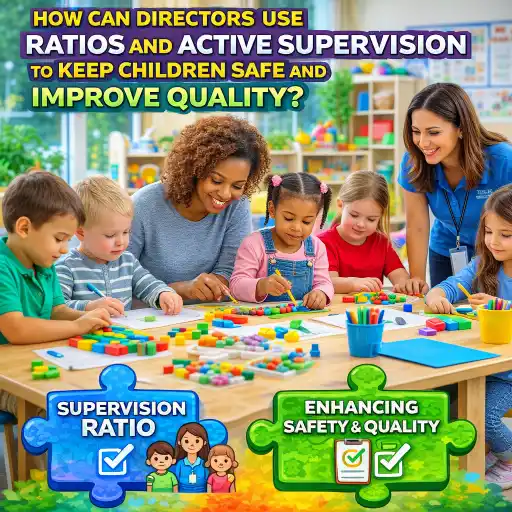
1. Ratios tell you how many adults are needed per child by age. Younger kids need more adults. 2. Ratios are a legal floor, not a goal. Good programs aim for better than the minimum when they can.
Why ratios matter:
- 🛡️ Safety: More adults means faster response to problems. See staff/child ratio charts at Staff/Child Ratio in Large Child Care Buy Now $0.00.
- 📚 Learning: Smaller groups let teachers tune into each child’s needs. Read Beyond the Ratios for why interactions matter more than numbers alone.
- 🔁 Stability: Better ratios reduce stress and staff turnover.
Practical steps for directors:
- 📌 Post ratio charts where staff can see them.
- 👀 Plan extra coverage for transitions (line up, bathroom, playground).
- 🔁 Use float staff or split groups during busy times.
- 📎 Keep ratio exceptions documented and short.
How do we train staff to use active supervision every day?
Try this simple coach plan for staff learning:
- 🧭 Model: Show staff how you position yourself and scan the room for 5 minutes.
- 🔍 Practice: Have staff practice counting and scanning during one transition.
- 💬 Feedback: Give short, kind feedback right after practice.
- 📅 Repeat: Add a 5-minute refresh to weekly staff meetings.
Use short tools and checklists from ChildCareEd like Guiding Questions for Active Supervision Buy Now $0.00 to make training quick and useful.
How should directors supervise and coach staff so quality improves?
Steps to supervise with intent:
- 📆 Schedule: Do short observations 1–2 times per week for 10–15 minutes.
- 🔎 Look for 3 things: safety (lines of sight), engagement (kids connected to adults), and routines (counts at transitions).
- 🗣️ Give feedback: 1 praise + 1 tip. Keep it kind and specific.
- 🔁 Follow up: Watch for improvement and celebrate wins.
Use coaching tools and mentoring to reduce turnover and raise classroom quality, as shown in leadership posts like The Role of Directors. State licensing may ask for staff files and supervision notes—remember to keep records tidy and current.
How do we manage mixed ages, outdoor play, and common pitfalls?
Mixed-age rooms and outdoor play are great but need careful planning. Use zones and age-appropriate materials. ChildCareEd has resources like Mixed Age Groups and Six strategies for active supervision of mixed ages Buy Now $0.00.
Outdoor safety ideas come from the CDC: plan shade, water, hats, and constant eyes on water play. See CDC Outdoor Play and Safety.
Common mistakes and how to avoid them:
- ❗ One adult trying to cover all zones. Fix: assign clear zones and a floater.
- ❗ Staff doing paperwork while supervising. Fix: schedule admin time away from active duty.
- ❗ Blind spots from tall shelves. Fix: lower shelves and move furniture to improve sightlines.
FAQ
- Q: How often should staff count? A: At every transition, doorway, and when groups change.
- Q: Can one adult supervise outdoors? A: It depends on ages and group size—use the CDC guidance and your state rules.
- Q: What if I am short-staffed? A: Reduce group size, tighten zones, and call subs or parents. State rules apply.
- Q: Where can staff get training? A: Try ChildCareEd courses like Active Supervision: A Strategy That Works Buy Now $35.00 and local trainings.
Conclusion
1) Keep simple ratio charts, practice active supervision, and coach staff often. 2) Use ChildCareEd tools and CDC guidance to plan outdoor time and mixed-age rooms. 3) Stay kind, steady, and clear. When directors lead with good systems, teams stay safe and children thrive.
Key ideas: #ratios #supervision #safety #staff #children
Directors lead by watching and helping. Observation and feedback help staff get better. ChildCareEd offers a course on staff supervision: Staff Supervision, Observation & Feedback Buy Now $10.00. Use short cycles so coaching is simple.1) When staff follow good ratios and supervise well, children get more attention and fewer injuries. 2) Strong supervision helps staff connect with children and improve learning. 3) Clear adult roles help your program stay calm and organized. For more on choosing quality beyond just numbers see Beyond the Ratios.Active supervision is more than watching. It is a plan with steps staff do again and again. The six parts are: position, scan, engage, anticipate, count, and listen. ChildCareEd explains this in Active Supervision in the Early Childhood Education Classroom and in the course A Watchful Eye Buy Now $16.00.
- 45 Hour Child Growth and Development
- Positive Attention: Interactions and Supervision of Infants and Toddlers: For Workforce Solutions
- 45 hour Growth and Development Birth-age 12 ONLINE
- Play Safe, Think Big: Literacy Through Play
- 45 Hour Infant and Toddler Methods and Materials
- 45 Hour School Age Methods and Materials
- Positive Attention: Interactions & Supervision for Infants & Toddlers
- Texas Director Credential
- Family Child Care: Building, Premises, and Outdoor Safety
- Proporciones de Cuidado Infantil y Tamaños de Grupo por Edad en Virginia (Guía Rápida para Centros y Hogares)
- How Can Nevada Child Care Providers Create Safe, Calm, and Well-Organized Learning Spaces?
- Daycare Infant Ratios: How Many Babies Are Allowed?
- What are the supervision basics for child care in Michigan?
- How Do We Create Safe and Supportive Learning Environments?
- How Many Preschoolers Per Teacher? Understanding Classroom Ratios
- Infant Room Ratios: Safety, Supervision, and Care
- Daycare Classroom Ratios: Safety, Supervision, and Care
- What are Oklahoma's safe temperature rules for daycares and how do we follow them?
- How can Oklahoma providers cut red tape without cutting safety and quality?
- 6 Ways to Improve Active Supervision in Preschool
- How can North Dakota fill the gap for school-age children before and after school?
- Idaho Child Care Ratios and Group Sizes by Age: Daycare Center Guide
- What are Oklahoma's child care ratios and group sizes by age for centers and homes?
- Why does investing in early educators matter?
- How can directors manage enrollment and classroom ratios to stay compliant and maximize program quality?
- How can staff schedules be designed to support quality care?
- What Massachusetts EEC Regulations Do Child Care Providers Need to Follow?
- What Do You Need to Open an After-School Program? Licensing, Training, and Staffing Explained
- DCFS Daycare Violations List: What Illinois Inspection Codes Actually Mean
