Keeping babies and young children safe is part skill, part planning, and part habit. This short guide helps California child care directors and providers make simple, smart choices to lower risk and build calm, #safe classrooms for #infants, #toddlers, #preschoolers, and staff. You will find clear steps, links to helpful ChildCareEd resources, and practical reminders like "state requirements vary - check your state licensing agency." Use these ideas as a checklist you can try today.
Why does classroom safety matter for children and staff?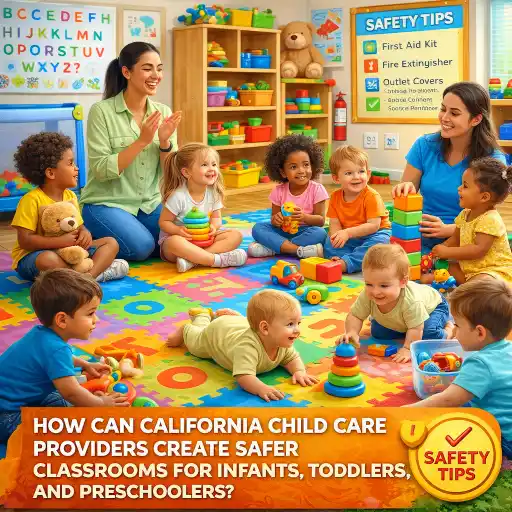
- Children learn best when they feel secure. Safe spaces let them explore without fear.
- Strong routines and design reduce accidents and interruptions to learning.
- Clear safety systems protect your license and build family trust.
Good safety is both physical and emotional. For ideas on how room layout works as a safety tool, see Classroom Arrangement on ChildCareEd. For daily supervising habits, start with Active Supervision Tips. If you're redesigning centers to improve both supervision and engagement, read Rethinking Your Classroom Arrangement for practical layouts and sample setups that balance visibility and learning centers.
How should we arrange the room and supervise so children stay safe?
- Place shelves low and keep paths clear so sightlines are open.
- Create separate activity zones (quiet, messy, gross motor) to limit crowding — see Classroom Arrangement.
- Post a simple zone map and staffing chart where everyone can see it.
2) Use active supervision habits every day (short list):
- 👀 Scan: count children often and scan each zone every minute.
- 🚶 Position: place adults where they can quickly reach every child.
- 😊 Engage: step into play to prevent problems and teach safe choices.
3) Teach quick cues so kids respond fast: try the "1,2,3, Eyes on Me" idea from ChildCareEd for transitions and safety moments. For training staff on supervision, consider the course 1,2,3, Eyes on Me: Classroom Safety  Buy Now
 $32.00$24.00.
4) Quick checks to run daily (enumerated):
- Do a 2-minute safety huddle before outside time.
- Count at every transition: door, restroom, playground.
- Check floors, outlets, and toy condition before children enter.
What sleep, feeding, and choking rules should infant/toddler rooms follow?
- Always place babies on their backs on a firm, approved crib mattress. See Safe Sleep Practices and the Safe Sleep poster Buy Now $0.00.
- Remove loose bedding, bumpers, toys, and pillows from cribs. Use sleep sacks when needed.
- Monitor and document checks. Follow your written safe-sleep policy and staff training.
2) Feeding and choking prevention:
- 🍽️ Prepare foods to development: cut grapes, avoid whole nuts, and soften veggies. See CDC choking tips: Choking Hazards.
- 🪑 Seat infants upright, keep meals calm, and watch every bite.
- Staff should have pediatric first aid for choking; practice drills so everyone knows how to respond.
3) Extra notes: follow SIDS guidance and keep the crib area smoke-free. Helpful checklist: Creating a SIDS-Safe Environment and CDC tips at Providing Care for Babies to Sleep Safely.
How do we reduce illness, clean safely, handle emergencies, and comply with California rules?
1) Infection control basics (daily actions):
- 🧼 Teach and model good handwashing: 20 seconds, before food and after diapering. See Infection Control Practices and CDC cleaning guidance: How To Clean and Disinfect ECE Settings.
- 🔁 Use "mouthed toy" bins. Clean and sanitize toys that go in mouths daily.
- 🧴 Follow correct cleaning vs. sanitizing vs. disinfecting steps and product directions.
2) Emergency plans, drills, and documentation:
- 📋 Keep written emergency plans for fire, earthquake, lockdown, and reunification. Practice age-appropriate drills regularly — ChildCareEd’s Emergency Preparedness has step-by-step ideas.
- 📞 Assign roles (who calls 911, who gathers records, who leads children) and keep contact lists updated.
- 🔁 After any incident or near-miss, document what happened and adjust procedures to prevent repeats.
3) California licensing and training:
- 📑 Know Title 22 basics for ratios, staffing, record-keeping, and health practices — read What Is Title 22 in California Childcare?. Note: state requirements vary - check your state licensing agency.
- 🎓 Use trainings like Intentional Safety for Infants/Toddlers Buy Now $24.00 to meet staff skill needs.
- 📚 Use national standards like Caring for Our Children as a reference for best practice.
Common mistakes and how to avoid them:
- ❌ Relying on one adult to cover too much space. ✅ Fix: assign zones or add a floater.
- ❌ Letting staff multitask on phones during supervision. ✅ Fix: build admin time outside child-contact hours.
- ❌ Re-using mouthed toys without sanitizing. ✅ Fix: keep a clear "yucky" bin and sanitize daily.
Conclusion
Creating safer classrooms is a mix of room design, strong routines, clear training, and calm practice. Start with these easy steps:
- 🔎 Do a walk-through and fix obvious hazards today.
- 🕒 Add short, repeated drills and a 2-minute huddle before outdoor play.
- 🎓 Pick one staff training from ChildCareEd and schedule it this month.
Use the linked ChildCareEd articles above for printable posters, checklists, and courses. When your team shares simple habits — counting at transitions, clean toys, safe sleep checks, and active supervision — your program becomes calmer and safer. Your next step: choose one change and try it for a week. Small changes add up to big protections for children, families, and staff.
1) Set the room to help staff see and move quickly:1) Safe sleep basics (every nap): Why it matters:
- 45 Hour Child Growth and Development
- How To Keep A Healthy Class for Infants/Toddlers
- CDA Infants/Toddlers: Health and Safety
- CDA Infants/Toddlers: Abuse and Neglect Reporting Requisites
- Pediatric RSV First Aid & CPR/AED
- 45-Hour Infant and Toddler Curriculum
- Texas Director Credential
- 45 hour Growth and Development Birth-age 12 ONLINE
- CDA Infants/Toddlers: Smart Nutrition & Feeding
- Recursos en Español sobre el Sueño Seguro del Bebé
- ¿Qué Calificaciones Necesitas para Trabajar en Cuidado Infantil?
- Que es Título 22 en California?
- 10 Ejemplos de Cómo la Cultura Influye en el Desarrollo Infantil
- Capacitación en Salud y Seguridad Preventiva en Línea para Proveedores de Cuidado Infantil
- ¿Cómo solicito la licencia para una guardería en California?
- Regulaciones de Licenciamiento de Cuidado Infantil en California para Centros y Hogares de Cuidado Infantil Familiar
- Proporciones de Cuidado Infantil y Tamaños de Grupo por Edad en Maryland (Guía Rápida para Centros y Hogares)
- Proporciones de Cuidado Infantil y Tamaños de Grupo por Edad en Virginia (Guía Rápida para Centros y Hogares)
- Cómo Trabajar en el Cuidado Infantil en California: Requisitos y Pasos
- Cómo Trabajar en el Cuidado Infantil en Wisconsin: Requisitos y Pasos
- How Can California Early Childhood Educators Keep Classrooms Safe During Earthquake Drills and Daily Routines?
- How can California child care providers create safer classrooms for infants, toddlers, and preschoolers?
- How can we help children sleep better?
- Canciones, juegos y preguntas de círculo para niños
- California Child Care Ratios and Group Sizes by Age: Daycare Center Guide
- Can an Aide Count in California Daycare Ratios? Title 22 Staffing Explained
- Do You Need a Childcare License to Watch Kids in Your Home?
- Title 22 Home Daycare Ratios: How Age Mix Changes Your California Capacity
- Proporciones para guarderías en casa bajo el Título 22: Cómo la mezcla de edades cambia su capacidad en California
