Introduction
This short guide helps childcare leaders and teachers keep #children and #staff-safe during an #emergency. It also explains #reunification and simple #safety steps you can use every day. Use these ideas with your team, your families, and your local helpers.
Why it matters:
1) Emergencies can happen anytime. A clear plan helps everyone act fast and stay calm. 2) Young kids need grown-ups who know what to do. Practicing ahead of time reduces worry for children and families.
State requirements vary - check your state licensing agency.
What should a written emergency plan include?
An emergency plan is your roadmap. Make it simple, written, and easy to find.
Key parts to include (use numbers so staff can follow):
- Identify hazards in your area (fire, storm, power loss, intruder).
- Set clear responses: evacuation, shelter-in-place, and lockdown. Be specific about routes and safe rooms.
- Assign roles so everyone knows who checks attendance, who leads kids out, and who calls emergency services.
- Write a reunification plan that says where and how families will pick up children.
- List children who need special care (meds, mobility help) and how staff will meet those needs.
- Keep contact lists, health #forms, and a copy of the plan in an easy-to-grab place.
Helpful resources:
- See a sample plan at ChildCareEd - Sample Childcare Emergency Action Plan Buy Now $0.00.
- Use FEMA ideas and templates like those described in ChildCareEd’s FEMA resources Buy Now $0.00 for easy checklists.
Common mistakes and how to avoid them:
- 📌 Forgetting to update contact lists. Fix: review contacts monthly.
- 📌 Assuming everyone knows their role. Fix: write roles in the plan and post them.
- 📌 Not planning for children with special needs. Fix: include accommodations and talk with families and local agencies.
How do we train staff and practice with children?
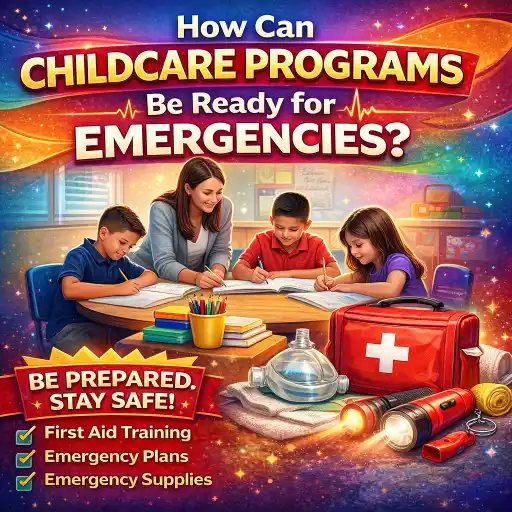
Practice makes the plan work. Staff and children need regular, calm practice so they know what to do without panic.
Follow these steps:
- 🛠️ Train new staff during orientation. Show the plan, roles, and where kits live.
- 🔁 Schedule drills: at least monthly for fire and often enough for other events (check local rules). Keep drills age-appropriate.
- 🗣️ Use simple words with children. Explain the drill, then do it. Praise children for listening.
- 📝 After drills, meet with staff to talk about what worked and what needs change. Record the drill date, time, and notes.
- 🔄 Update the plan after drills, staff changes, or building changes.
Training resources you can use:
- ChildCareEd offers courses on emergency and disaster #preparedness and on responding to emergencies: Emergency and Disaster Preparedness course
 Buy Now
 $55.00$45.00 and Responding to Emergencies Buy Now $16.00. - Use ChildCareEd’s article on creating and practicing safety protocols for clear drill ideas: Emergency Preparedness in Childcare.
Tip: Include realistic but low-stress practice so children feel safe. Staff should practice the steps to get meds, go-bags, and attendance lists quickly.
How do we communicate and reunify families after an emergency?
Reunification is the plan to get children back to their parents #safely. Quick, clear communication helps everyone stay calm.
Steps to build your reunification system:
- 📣 Choose a primary and a backup reunification site (on- and off-site). Tell families where to go ahead of time.
- 📋 Use sign-out rules to release a child only to adults listed on the child’s emergency form. Check photo ID every time.
- 📱 Use more than one way to tell families information: phone tree, text, email, or messaging apps. Have an out-of-area contact number too.
- 🧾 Keep current emergency contact info for each child in a waterproof folder in your go-bag.
- 🔗 Review CDC resources on reunification for best steps: CDC Reunification with Children After a Disaster.
Helpful ChildCareEd links:
- Read about family communication and reunification practices at ChildCareEd - What Every Provider Should Know.
Note: State rules often require you to describe reunification in your plan. State requirements vary - check your state licensing agency.
What supplies and supports should every center keep ready?
A go-bag and classroom kits save time and help you care for children during the first hours of an event.
Make sure you have:
- 🎒 Go-Bag for each classroom or a central kit. Include: day's attendance, health forms, meds (if allowed), first aid, water, snacks, flashlight, phone charger. See ChildCareEd - Your Emergency Go-Bag.
- 🧯 Extra supplies: diapers, wipes, formula, comfort items, blankets, and sanitation supplies.
- 📻 Tools: battery or hand-crank radio, whistle, duct tape, gloves.
- ♿ Supports for children with disabilities: plans for equipment, service animals, and backup power. Use Red Cross inclusive tips: Red Cross Inclusive Preparedness.
- 🗺️ Maps and copies of your emergency plan and local emergency phone numbers.
Check supplies regularly. Replace expired items and update forms when children or staff change. ChildCareEd offers a checklist and tips to help: Sample Plan and Checklists Buy Now $0.00.
FAQ
- Q: How often should we practice drills?
A: At least monthly for fire, and quarterly for other scenarios, or as your state requires. - Q: Who can give medication during an emergency?
A: Only staff authorized by your policies and local rules. Keep written consent and instructions from parents. - Q: What if I have children with special medical needs?
A: Include clear steps in the plan, training for staff, and backup equipment. Work with families and local responders. - Q: Should families be told about drills?
A: Yes. Let families know drill schedules and reunification steps so they do not panic.
Conclusion
Emergency readiness is a team job. Use a clear written plan, practice often, keep the right supplies, and make communication simple. Start small: write one page with roles and one go-bag. Then grow your plan from there. You protect lives and build #trust when you prepare.
For more tools and courses to help your program, visit ChildCareEd resources like their Emergency and Disaster Preparedness course Buy Now $55.00$45.00 and sample forms: Emergency Form Buy Now $0.00.
- 45 Hour Child Growth and Development
- 45 Hour Preschool Methods and Materials
- Adult Only CPR AED and Adult First Aid Blended
- Children at the Wheel: Emergent Curriculum
- 45 Hour Infant and Toddler Methods and Materials
- Pediatric RSV First Aid & CPR/AED
- 45 Hour School Age Methods and Materials
- Texas Director Credential
- D.C. Emergency Preparedness Training
- Focus on Health and Safety Training
- Life in the Fast Lane: Why First Aid Training & CPR is Critical for Those Working With Children
- First Aid & CPR ~ Empowerment Through Lifesaving Skills
- Pediatric First Aid and CPR Training with ChildCareEd - Empower Yourself!!
- CDA Certification en Español: Recursos y Consejos para Educadores Bilingües
- 🌪️Fire Drills, Flashlights & Fast Thinking: Why Emergency Preparedness Is a Must
- How can Washington, D.C. child care providers keep children safe during transitions, drop-off, and pick-up?
- How Should North Dakota Childcare Programs Handle Medical Emergencies?
- Why Does Child Care Cost So Much in Michigan — and How Can Providers Explain Value to Families?
- How can Michigan providers keep children safe around fireworks this Fourth of July?
- How can my North Dakota program make the most of food programs like CACFP?
- How can child care centers be ready for emergencies?
- How should Minnesota child care programs handle allergies and special diets?
- How Can Child Care Programs Build Effective Emergency Preparedness?
