You work hard to keep little ones safe. This short guide gives clear steps you can use in your program today. It is written for child care #providers and directors. It covers everyday routines, handling medicines and illness, sleep and playground safety, and emergency plans. Links to helpful tools and trainings are included so you can find forms and courses fast.
Why does health and safety matter in child care?
Keeping children healthy and safe helps them learn, grow, and come to your program ready to play. When families trust your center or home, they stay, staff feel supported, and children thrive. Good #health and #safety practices also reduce stress during busy days and protect staff and families.
Here are quick reasons why it matters:
- 😊 Protects children from illness and injury so they can learn.
- 🛡️ Builds parent trust and supports enrollment.
- 📋 Makes licensing visits and inspections easier when policies are clear. (Remember: state requirements vary - check your state licensing agency.)
Want tools? Start with the ChildCareEd guide Child Care Health and Safety Basics and the free resources page Health & Safety Resources. For national guidance on infection prevention, see the CDC portal Preventing Infectious Diseases.
What everyday practices keep children healthy and safe?
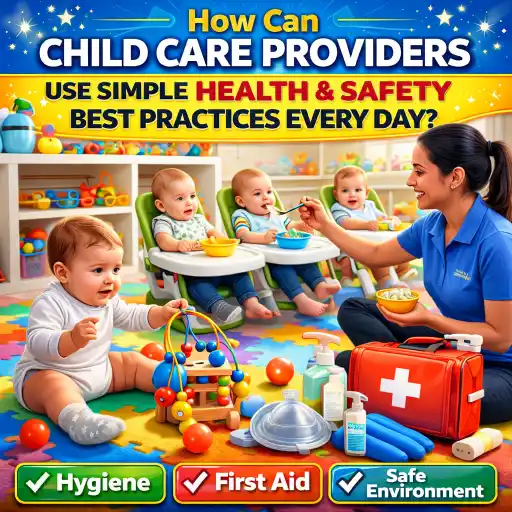
Daily routines make a big difference. Use simple steps your team can do every day. Put written rules where everyone sees them and train staff often.
- 🧼 Hand hygiene
- Wash hands for 20 seconds at key times like arrival, before food, after diapering, and after nose wiping. See CDC tips at Protecting Against Infections.
- 🧽 Cleaning & disinfection
- Clean mouthed toys and high-touch surfaces daily; disinfect when someone is sick. Use the cleaning ideas in CDC prevention.
- 🛏️ Safe sleep for infants
- Always place babies on their backs on a firm surface with no soft bedding. See the CDC safe sleep guide Providing Care for Babies to Sleep Safely.
- 🔒 Storage and labeling
- Keep all #medication locked, labeled, and with written parent permission. Use the ChildCareEd Medication Administration Template Buy Now $0.00.
- 👀 Supervision and safe spaces
- Use active supervision and check your playground often. ChildCareEd has a helpful checklist at Playground Safety Checklist.
Tip: Put short lists and signs in the classroom so staff and families can follow them. A one-page family handout helps everyone know what to expect at drop-off.
How do we manage illness, medication, and safe sleep so everyone stays protected?
Clear policies help staff and families act quickly and kindly. Use numbered steps so everyone knows what to do.
- Daily health checks at drop-off
- Ask: Can the child play? Do they need one-on-one care? Could they spread germs? If the answer is no or yes, ask the family to keep the child home. ChildCareEd explains this in What should an illness policy include?.
- Medication safety
- Follow the Six Rights: right child, right medicine, right dose, right time, right route, right documentation. See the Medication Administration Template here Buy Now $0.00 and local nursing guidance like the Minnesota page Medication Administration Procedures.
- Safe sleep for infants
- Back to sleep, empty cribs, firm mattress. Use the CDC guide Providing Care for Babies to Sleep Safely.
- When to exclude and return
- Examples: fever until 24 hours fever-free without medicine; vomiting or diarrhea until 24 hours symptom-free. Follow your state rules and CDC advice Protecting Against Infections. Remember: state requirements vary - check your state licensing agency.
Train staff on medication and illness procedures. ChildCareEd offers courses like Administering Basic Health and Safety  Buy Now $24.00 and a Preventative Health and Safety Buy Now $24.00 course. For staff preparing for a CDA credential or who want a concise checklist of core practices, see Health and Safety Essentials: What Every CDA Candidate Should Know.
How do we prepare for emergencies and avoid common mistakes?
Planning makes emergencies less scary. Use clear numbered steps and practice drills so staff know what to do.
- Make a written emergency plan
- Include evacuation, shelter-in-place, reunification, and special plans for infants or children with medical needs. See state examples like Tennessee Emergency Preparedness.
- Train and practice
- 🧯 Do fire and lockdown drills with children. Review staff roles and communication steps.
- Communication with families
- 📣 Have templates ready to explain what happened, what you did, and what families should watch for. Work with your local health department when outbreaks happen.
- Common mistakes and how to avoid them
- ❌ Mistake: Not sharing policies at enrollment. Fix: Give a one-page handout and get a signed receipt.
- ❌ Mistake: Requiring a doctor note for every common cold. Fix: Use clear return rules to reduce family burden.
- ❌ Mistake: Leaving medicines unlocked or unlabeled. Fix: Use locked storage and follow the medication form from ChildCareEd Medication Administration Template Buy Now $0.00.
FAQ
- Q: Do staff need special training to give medicine?
A: Often yes. Many states require Medication Administration Training. See ChildCareEd courses and local rules. state requirements vary - check your state licensing agency. - Q: When can a child return after vomiting?
A: Usually 24 hours symptom-free. Follow your written policy and local health guidance. - Q: How long keep health records?
A: Check state rules; many programs keep records 3–5 years. ChildCareEd offers recordkeeping tips on the resources page. - Q: Where to find forms and templates?
A: ChildCareEd has templates like the Medication Administration Template Buy Now $0.00 and many free resources at Health & Safety Resources.
Conclusion
Small, consistent steps lead to big results. Use short checklists, train your team, and keep families informed. The resources at ChildCareEd and the CDC give practical tools and courses to support you. Keep your focus on clear policies, safe routines, and practice so that your program is a trusted, calm place for children to learn and play. Protect your #children, support your #providers, and make #health and #safety part of every day.
- Why Celebrate Labor Day?
- Capacitación en Salud y Seguridad Preventiva en Línea para Proveedores de Cuidado Infantil
- Normas de Licenciamiento de Cuidado Infantil en Virginia para Centros Diurnos Infantiles y Hogares Diurnos Familiares
- Proporciones de Cuidado Infantil y Tamaños de Grupo por Edad en Virginia (Guía Rápida para Centros y Hogares)
- How can childcare centers use simple health and safety best practices every day?
- How can child care providers use simple health and safety best practices every day?
- How can DC classrooms welcome every child and make inclusion real?
- Celebrando la amistad en el cuidado infantil durante el Día de los Mejores Amigos
- How can child care programs meet licensing and compliance requirements?
- What are the basic child care safety standards we must follow?
- What is a simple first-week staff onboarding plan for Minnesota child care?
- How can North Dakota child care programs protect young skin with simple sun-safety routines?
- How Child Care Providers Can Promote Safety and Well-Being
- How can Florida child care centers run a simple, safe first-week staff onboarding plan?
- Classroom Management Technology: Tools and Best Practices
- How can child care programs stop germs and keep children healthy?
- How Can New York Providers Support Health, Family, and Learning Together?
- What Makes a Great Home Daycare? 10 Things Parents Notice First
- Caring for Our Children: Is It a Law, a Licensing Rule, or a Best-Practice Guide?
- How Can Child Care Programs Build Effective Sun Safety Practices for Children?
