In child care, keeping germs away helps children learn and staff stay well. This short guide gives clear, doable steps for teachers and directors. You will find easy routines, policy tips, cleaning rules, and what to do in an outbreak. Use the links to ChildCareEd and the CDC for templates and training. Remember: state requirements vary - check your state licensing agency.
Why does infection control matter in my child care program?
2. Clear routines help keep your program open and build trust with parents. For simple daily habits and leader checklists, visit ChildCareEd prevention tips.
3. Protecting vulnerable children and staff is part of your duty of care. The CDC explains big-picture prevention steps in the Early Care and Education Portal.
Why this matters for you today:
- Quick routines (like #handwashing) are easy to teach and stick with.
- Short, clear policies help families make the right choice on busy mornings.
- Good records and training make licensing visits easier and keep children safer.
For training to meet federal health and safety needs, see the course Prevention and Control of Infectious Diseases  Buy Now $16.00.
What simple daily routines stop germs in my classroom?
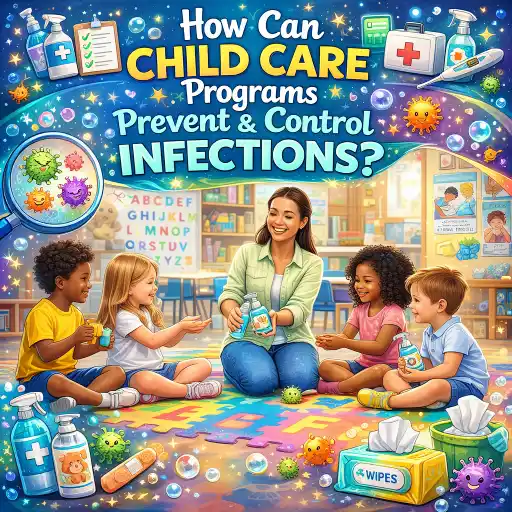
Use a few short, repeatable routines. Number them and post them where staff and families can see.
- 🧼 Wash hands often (20 seconds). Teach children a song and supervise young kids. The CDC explains when and how to wash in Hand Hygiene in ECE. Hand hygiene is the top habit to build.
- 🧽 Clean, then sanitize or disinfect. Clean visible dirt first. Use sanitizing for mouthed items and disinfect for diaper areas or body-fluid spills. See How To Clean and Disinfect ECE Settings and ChildCareEd’s guide Cleaning vs. Sanitizing vs. Disinfecting.
- 🧸 Use a "Mouthed Toy" bin. Put toys that go in mouths into the bin and wash/sanitize them daily. ChildCareEd explains this in Infection Control Practices.
- 🚼 Diapering routine: prepare supplies first, clean child front-to-back, discard trash in a hands-free can, clean the surface, then wash hands. See CDC diapering steps at Healthy Habits: Diaper Changing Steps.
- 💨 Improve air and space: open windows when safe and move activities outside when possible. The CDC notes ventilation as part of prevention in Preventing Infectious Diseases.
Small weekly actions to add: check soap and paper towels, run a "wash my toys" time, and review the cleaning schedule. For a ready cleaning checklist, see ChildCareEd’s What to Clean When.
How should we write and use an illness policy and daily health checks?
- 📝 What to include in the policy:
- One-sentence rule: when a child should stay home.
- Symptoms requiring exclusion (fever, vomiting, diarrhea, uncontrolled cough, new rash, eye drainage). For guidance on mpox (monkeypox), its rash presentation, and steps to protect children in your care, see the CDC resource on mpox (monkeypox).
- Clear return rules (example: fever-free 24 hours without medicine).
- Medication steps and required forms.
- 👀 Daily health checks: use a short morning checklist—behavior, breathing, skin, tummy, and temperature if the child feels warm. See practical tips at Daily Health Checks.
- 📋 Recordkeeping: write Date • What you saw • Action taken • Parent notified (time). Keep one short note per child each day. ChildCareEd's recordkeeping advice helps with formats.
- 📣 Communicate kindly: give the one-page handout at enrollment, post the rules at the door, and practice staff scripts for drop-off talks.
Tip: Keep the policy 1–2 pages and translate it if families speak other languages. And remember: state requirements vary - check your state licensing agency.
What should we do during outbreaks and what common mistakes should we avoid?
Act quickly, keep clear records, and work with public health. Use short numbered steps so staff can follow them under stress.
- 📞 Notify public health early. Your local health department will tell you if this is an outbreak and what to do next. ChildCareEd guides this in Outbreak steps.
- 🧯 Isolate and care: move the sick child to a supervised, separate area and have a staff member nearby. Use PPE if needed and follow CDC cleaning steps at How To Clean and Disinfect.
- 📣 Tell families once with facts: what happened, what you did, and what to watch for. Use short templates and ask public health to review major letters. ChildCareEd offers sample messages in its outbreak resources.
- 🔁 Increase cleaning and follow the clean-then-disinfect rule. Never mix bleach and ammonia. The CDC explains safe product use and contact time in Cleaning and Disinfecting.
Common mistakes and fixes (short):
- 🚫 Mistake: Disinfecting before cleaning. Fix: Clean first, then disinfect.
- 🚫 Mistake: Leaving chemicals where children reach them. Fix: Lock and label supplies.
- 🚫 Mistake: Asking for doctor notes for every cold. Fix: Use clear return rules so families know when a note is needed.
For local outbreak rules and reporting steps, see your county health guidance (example: San Diego County guidance). Keep a calm tone when you speak with families—kindness helps everyone cooperate.
Summary and quick checklist: What can I do tomorrow?
Here are short, numbered actions you can take right away:
- 🧼 Put a handwashing poster by sinks and practice the 20-second song with children. #handwashing
- 🧸 Start a "Mouthed Toy" or "Wash Me" bin and schedule who will wash toys each day. #cleaning
- 📋 Update a one-page family illness handout and post it at the door. #policy
- 👩🏫 Schedule a short staff refresh on diapering, isolation steps, and documentation. Consider ChildCareEd infection control training Buy Now $16.00. #training
- 💉 Encourage staff and families to keep immunizations up to date and share vaccine info. #vaccination
FAQ (short):
- Q: Can hand sanitizer replace handwashing? A: No. Use sanitizer (60%+ alcohol) only when soap and water aren’t available.
- Q: When should a child stay home? A: With fever, vomiting, or diarrhea; follow your written sick rules.
- Q: Who do I call for an outbreak? A: Your local health department. Keep their number handy.
- Q: Where to get forms and trainings? A: ChildCareEd has templates and courses linked above.
Thank you for the care you give every day. Small, steady steps and clear communication keep children safe, families trusting, and staff healthy. For more tools and printable checklists, visit ChildCareEd and the CDC links in this article. state requirements vary - check your state licensing agency.
1. Fewer sick days means more time for learning and less stress for families and staff. See practical reasons in How can child care programs prevent the spread of illness?.Write short, kind rules so families and staff can follow them fast. Use numbered lists and a one-page family handout.- 45 Hour Child Growth and Development
- How To Keep A Healthy Class: Six Tips for Germ Control
- Pediatric RSV First Aid & CPR/AED
- How To Keep A Healthy Class: Six Tips for Germ Control
- Texas Director Credential Renewal
- Texas Director Credential
- Effective Coaching & Mentoring in ECE
- Shoo, Germs! Don't Bother Me!
- Ah-Choo!
- What should child care programs consider when returning to the classroom?
- CDA Certification en Español: Recursos y Consejos para Educadores Bilingües
- Recursos en Español sobre el Sueño Seguro del Bebé
- Capacitación en Salud y Seguridad Preventiva en Línea para Proveedores de Cuidado Infantil
- Proporciones de Cuidado Infantil y Tamaños de Grupo por Edad en Virginia (Guía Rápida para Centros y Hogares)
- Cómo Trabajar en el Cuidado Infantil en California: Requisitos y Pasos
- Capacitación Previa al Servicio para Proveedores de Cuidado Infantil en California
- How can childcare programs prevent the spread of illness?
- How can child care programs prevent the spread of illness?
- How can child care programs prevent and control infections?
- Cómo simplificar la capacitación para sus empleados de daycare
- How can child care programs control infections and keep kids healthy?
- How can child care programs prevent infections and keep kids healthy?
- How should Michigan child care providers watch for measles this summer?
- How can I create a safe childcare environment for every age group?
- How can childcare settings prevent the spread of illness?
- How Can Daycare Programs Prevent the Spread of Common Illnesses?
- How Can Child Care Programs Manage Sick-Child Exclusion Policies Fairly and Effectively?
- How Can Classrooms Prevent the Spread of Illness During Cold and Flu Season?
