Introduction
Daily health checks are a short, friendly look at each child when they arrive. You do not need to be a nurse—just a careful observer. A good check keeps kids safe, helps stop germs, and builds trust with families. These checks are part of making a healthy #he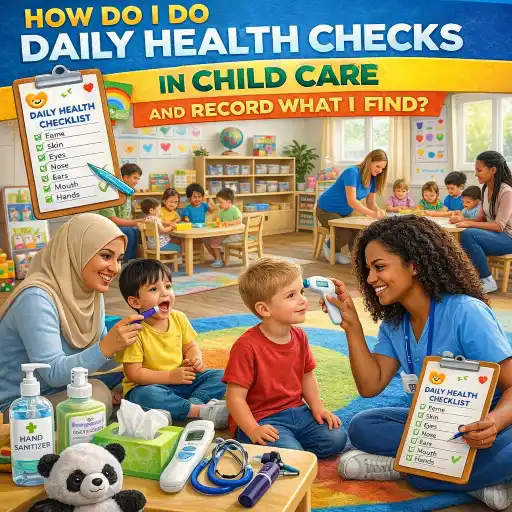 alth space for your program and help your team act quickly when someone is sick.
Why it matters:
1) A quick check can stop an illness from spreading to the whole classroom. See guidance on protecting against infections in early care from the CDC and our practical tips in Infection Control Practices on ChildCareEd.
2) Good notes mean you can show families what happened, follow up when needed, and meet licensing rules. For help with records see Recordkeeping and Documentation Tips on ChildCareEd. Remember: state requirements vary - check your state licensing agency.
Key tags you'll see in this article: #checks #documentation #children #providers
What signs and symptoms should I look for at drop-off?
When a child arrives, look and listen. You are checking for common signs that mean the child might need to stay home or be watched closely. Use a quick checklist every morning so staff are consistent.
- 🩺 Temperature and behavior
- Check if the child feels hotter than usual, or if they act much more tired, irritable, or sleepy than normal. Changes in behavior are often a first sign of illness as noted in Signs of Illness Buy Now $0.00.
- 🤧 Respiratory signs
- Look for heavy coughing, fast or troubled breathing, very runny nose with coloring, or red/watery eyes. The CDC recommends sending kids home when symptoms suggest an infectious illness.
- 🤢 Gastrointestinal signs
- Watch for vomiting or diarrhea. Many programs exclude children until symptom-free for a period. Use an illness exclusion chart like the Illness Exclusion Quick Reference Chart Buy Now $0.00 on ChildCareEd to guide decisions.
- 🌡 Skin and rashes
- New rashes, especially with fever, may need medical clearance before returning. The national standards in Caring for Our Children give details about when to exclude.
- 👁 Eye or ear problems
- Thick eye drainage, ear pain, or ear drainage are reasons to contact the parent and consider exclusion.
Use the same short questions each morning and teach families what you look for. This keeps checks fast and fair. See the CDC school guidance for more on reducing infections in group settings: Preventing Spread of Infections.
How should I document what I see and what forms or tools should I use?
Documenting is simple when you have a plan. Keep one short note per child each morning and a clear place for more detailed entries when needed. Good records protect children and the program and help you follow up.
- Choose your tools
- Use a short paper form or app for the daily health check. ChildCareEd has helpful templates and training — see Recordkeeping and Documentation Tips.
- Keep longer forms ready: emergency contact forms, medication logs, and accident/incident reports like the Emergency Form Buy Now $0.00 and Accident/Injury Report Buy Now $0.00.
- Write what you see
- Use this quick format: Date & time • What you observed • What you did • Parent notified (yes/no + time). This objective style is recommended in ChildCareEd's recordkeeping advice.
- Keep a filing system
- 1 file per child for health forms, 1 classroom binder for daily checks, 1 program file for policies and training. See easy systems in Recordkeeping and Documentation Tips.
- When to document immediately
- 📝 Injuries, medication given, vomiting/diarrhea episodes, or anything requiring parent follow-up. Write these things right away while details are clear.
Keep documentation private and stored securely. If you’re unsure what your state requires for records, remember: state requirements vary - check your state licensing agency. For training that covers health checks and infection prevention, ChildCareEd’s course Prevention and Control of Infectious Diseases  Buy Now $16.00 is a great resource.
When should a child be sent home or isolated, and how do I tell families?
Decisions about exclusion and isolation should be clear, calm, and consistent. Use a published exclusion chart to guide your call. ChildCareEd’s Illness Exclusion Quick Reference Chart Buy Now $0.00 and Caring for Our Children explain common rules for when children should stay home.
- Common exclusion reasons (use a numbered rule so staff are consistent)
- Fever with behavior change or fever and symptoms: send home until fever-free for the program’s defined interval (often 24–48 hours without fever-reducing medicine).
- Vomiting or diarrhea: exclude until symptom-free for the period your chart recommends (many programs ask for 24–48 hours symptom-free depending on cause; see the CDC guidance on norovirus isolation Appendix A).
- Contagious rash, pink eye with discharge, or untreated lice/impetigo: follow exclusion and return rules on your chart.
- How to isolate safely
- Have a quiet, supervised area where a sick child can wait, away from others, with a familiar staff member. The CDC suggests planning for an isolation space and supervision.
- How to tell families (clear, kind steps)
- 1. Call or speak privately and say what you observed. 2. Explain the program’s exclusion rule and why (protecting other children/staff). 3. Tell them what will happen next and what you need from the family (pick up, doctor note, or symptom-free period).
When an outbreak or cluster is suspected, follow your local health department guidance and the CDC's outbreak steps. Keep documentation so you can share accurate details with public health if asked. And again: state requirements vary - check your state licensing agency.
How can daily health checks help prevent outbreaks and support follow-up care?
Daily checks are one part of a whole-plan approach to keep classrooms healthy. When checks are consistent and documented, you spot trends sooner and act before many children get sick.
- Use checks to track trends
- 1) Keep simple logs and review them weekly. 2) If you see several similar symptoms across children, treat this as a potential cluster and notify your supervisor and local public health.
- Pair checks with cleaning and infection control
- 🧼 If a child has vomiting or a confirmed illness, follow your cleaning checklist (for example, ChildCareEd’s Daily Cleaning Checklist Buy Now $0.00) and CDC cleaning guidance to stop environmental spread.
- Train staff and families
- Provide staff training in prevention and control (see ChildCareEd’s Prevention and Control of Infectious Diseases Buy Now $16.00) and share clear family guidance so drop-off checks are consistent.
- Provide staff training in prevention and control (see ChildCareEd’s Prevention and Control of Infectious Diseases
- Document follow-up and referrals
- 📋 When you see repeat symptoms in one child, document and plan: track notes for 2–4 weeks, share observations with the family, suggest a doctor visit or screening, and, if needed, help with referrals. Use strong recordkeeping practices from ChildCareEd's Recordkeeping article.
Working together—staff, families, and public health—keeps children safer. Encourage vaccination, handwashing, and staying home when sick. See the CDC's summary on preventing infections and the ChildCareEd resources linked above for practical steps.
Common mistakes and how to avoid them
- ❌ Vague notes: Avoid "not feeling well." Instead write facts: time, temperature, what you saw, what you did.
- ❌ Inconsistent checks: Use one short form and train all staff so decisions are fair.
- ❌ Delayed documentation: Write incident and illness notes immediately while details are fresh.
- How to avoid them: 1) Use a simple template, 2) assign someone to check forms daily, 3) review health notes weekly in team meetings.
FAQ
- Q: Do I need to take a temperature for every child? A: Not always. Use a temperature check when a child looks or reports feverish. Observe behavior first.
- Q: How long should records be kept? A: Follow state licensing rules; keep health and incident records as required. See ChildCareEd's recordkeeping guidance for ideas.
- Q: What if a parent disagrees with exclusion? A: Stay calm, explain the rule using your written policy and the illness chart. Offer examples of when children can return.
- Q: Who reports outbreaks? A: Your director or program leader should contact local public health. Keep records ready to share.
Conclusion
Daily health checks are a small action with big benefits. With a short routine, clear documentation, and simple communication with families, you protect the whole classroom and support each child’s care. Use the ChildCareEd tools and the CDC guidance linked above to build a steady system. Your work matters—thank you for keeping children safe and healthy.
Important resources cited in this article: ChildCareEd's Illness Exclusion Quick Reference Chart Buy Now $0.00, Recordkeeping and Documentation Tips, Daily Cleaning Checklist Buy Now $0.00, and the CDC pages on Protecting Against Infections and Preventing Spread of Infections.
- 45 Hour Child Growth and Development
- Administering Basic Health and Safety ONLINE
- Basic Life Support (BLS) Blended Healthcare Providers
- 45 Hour Infant and Toddler Methods and Materials
- Texas Director Credential Renewal
- Texas Director Credential
- 24 Hour Family Child Care Pre-Service Training ONLINE
- Family Child Care: Building, Premises, and Outdoor Safety
- Capacitación en Salud y Seguridad Preventiva en Línea para Proveedores de Cuidado Infantil
- How to Open a Home Daycare in Nevada
- How to Open a Home Daycare in North Carolina
- In-Home Daycare Requirements in Texas
- How to Get a Daycare License in Virginia
- How to Become a Licensed Childcare Provider in North Carolina
- How do I become a licensed child care provider in North Dakota?
- What do I need to know to provide child care in New York?
- How do I start a home daycare business?
- Home Daycare Guide: How to Start Caring for Children in Your Home
- Home Daycare Basics: Licensing, Safety, and Training
- How to Get a Home Daycare License
- Entry-Level Daycare Jobs: How to Start Your Child Care Career
- How can I renew my New York child care license without a gap?
- How Can North Dakota Providers Best Prepare for a Licensing Visit?
- How do I open a licensed group child care home in North Dakota?
- How Can I Pass My OCFS Inspection: A New York Provider's Checklist?
- How to Become a Childcare Worker in Washington: Requirements and Steps
- How can daily health and safety checks keep my early childhood program safer?
- What Certifications Do I Need to Open a Child Care Center? Owner vs. Director Requirements Explained
