Summer brings travel, camps, and more close contact. That means measles can travel into child care programs quickly. This short guide helps Michigan child care leaders and staff know what to watch for and what to do. It uses easy steps you can start today. Remember: state requirements vary - check your state licensing agency. We link helpful resources from ChildCareEd and the CDC so you can act with confidence.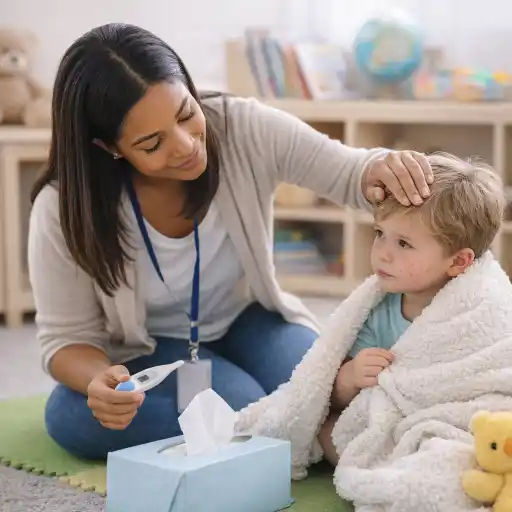
Why this matters:
1) Measles is very contagious and spreads fast in groups.
2) Many infants are too young for the MMR shot and depend on everyone else being protected.
3) A small outbreak can close classrooms and worry families. Keeping kids in care helps families, staff, and the community. Use these steps to protect #children, strengthen #childcare, support #vaccination, and keep everyone #safe from #measles.
What is measles and why should Michigan child care providers care this summer?
Measles is a virus that causes fever, cough, runny nose, red eyes, and a rash. It is one of the most contagious illnesses. A person with measles can spread it by breathing, coughing, or sneezing. The virus can stay in the air and on surfaces for up to 2 hours. Someone can be contagious 4 days before the rash appears and 4 days after. That is why quick action matters.
- 🩺 Incubation: 7–14 days usually (can be 7–21 days).
- 📣 Infectious time: 4 days before to 4 days after rash starts.
- 💉 Protection: 2 doses of MMR are best (about 97% effective).
For national data and risk context, see the CDC measles pages and outbreak updates. The CDC explains how measles cases and outbreaks are tracked and why low local vaccination rates increase risk: as part of the CDC measles cases and outbreaks. For childcare-specific practical steps, review the ChildCareEd guide for Michigan providers: as part of How can Michigan child care providers protect children.
What practical steps can we take now at drop-off and during the day?
Use short routines and clear rules. Number these steps so staff can follow them fast at drop-off and during the day.
- 🔎 Check records now: Review each child’s immunization file and note who is missing MMR. Keep a simple list of children who need follow-up. ChildCareEd has a step-by-step checklist you can use as part of Shots of Success.
- 🩺 Health and safety requirements: For programs working to keep MMR records organized and staff immunity documentation current ahead of a potential outbreak, ChildCareEd's Health & Safety Requirements for Childcare Providers
 Buy Now $79.00 is a 10-hour online course covering infectious disease prevention, recordkeeping, and emergency planning — directly supporting the immunization file review, staff exclusion tracking, and family communication steps described throughout this article.
 - 🙂 Screen at drop-off: Ask families 1–2 quick questions (fever, cough, recent travel). Use a short script so everyone speaks the same way.
- 🏠 Isolation plan: Set a quiet, supervised space to keep a sick child until pickup. Have masks, gloves, and a phone ready. Ensure at least one staff member maintains current BLS certification so they can safely manage respiratory or cardiac emergencies while awaiting medical help.
- 🦠 Infectious disease prevention and control: To help staff confidently implement daily screening, isolation, and cleaning routines during a measles exposure event, ChildCareEd's Prevention and Control of Infectious Diseases Buy Now $16.00 is a 2-hour online course covering how to recognize symptoms, follow isolation and exclusion guidelines, and reduce disease spread in group care settings — a direct match for the drop-off script, isolation room setup, surface cleaning, and public health notification steps outlined in this guide. ChildCareEd’s guide to illness routines is helpful: as part of How can child care programs prevent the spread of illness?.
- 🧽 Clean and ventilate: Clean high-touch surfaces often and improve airflow—open windows when safe or run fans/HEPA units. See CDC cleaning guidance for child care and health rooms as part of CDC measles infection control.
- 💬 Talk with families: Share where to get MMR shots and encourage timely vaccination. Offer help finding low-cost options like Vaccines for Children.
These steps keep the day calm and reduce the read. State requirements vary - check your state licensing agency for rules about recordkeeping and exclusion.
How do we handle exposures, report cases, and work with public health?
If someone in your program might have measles, act fast and be calm. Follow a clear chain of action, so staff know who does what.
- 📞 Isolate then call: Put the person in your isolation room and call your local health department before sending anyone to a clinic. Public health will advise on testing and next steps. The CDC and local health teams emphasize calling ahead: see CDC HAN advisory.
- 🧪 Testing and protection: Public health may ask for testing (throat or nasopharyngeal swab and blood). They decide who needs post-exposure help. MMR vaccine within 72 hours of exposure can prevent or reduce illness. Immune globulin (IG) can be given to some high-risk people within 6 days. The CDC details post-exposure options and healthcare guidance as part of CDC infection prevention.
- 🚫 Staff exclusion and immunity checks: Staff without written evidence of immunity (2 MMR doses or lab proof) who are exposed may need to stay home for up to 21 days after last exposure. Keep staff immunization records handy. See workplace guidance in the CDC measles healthcare recommendations.
- 📣 Communicate with families: Send one clear message—what happened, what you did, and what parents should watch for. Use short templates from ChildCareEd to stay calm and clear,s part of the Michigan measles guide.
Work closely with public health. They will guide quarantine, vaccination clinics, and any required exclusions. State requirements vary - check your state licensing agency and local health department.
What common mistakes should we avoid, and what should we tell families?
Learn from common pitfalls and keep communication friendly and short. Below are mistakes and fixes, plus a short FAQ you can share with families.
- 🚫 Mistake: Waiting to check records. Fix: Review immunization files today and follow up on missing MMR records.
- 🚫 Mistake: Sending a sick child into class. Fix: Use the drop-off script and the one-page illness handout so families know the rules.
- 🚫 Mistake: Mixing or misusing cleaners. Fix: Clean first, then sanitize or disinfect. Follow product labels and keep chemicals locked up. See cleaning steps at ChildCareEd: as part of How can child care programs control infections.
- 🚫 Mistake: Delaying contact with public health. Fix: Call early—public health will help limit spread and advise about vaccine clinics or IG for infants and pregnant people.
Short FAQ to share with families:
- Q: Can the MMR vaccine cause measles? A: No. The vaccine cannot cause measles. See ChildCareEd shots resource: as part of Shots of Success.
- Q: What if my child is too young for MMR? A: Infants 6–11 months may get an early MMR during outbreaks or before travel. They still need two more doses later. Public health will advise when to give IG or a vaccine.
- Q: Who pays for vaccines? A: Many plans and the Vaccines for Children (VFC) program help pay for eligible children.
- Q: When should I call the center? A: Call before bringing a child with fever, rash, or recent exposure so staff can plan and protect others.
Keep messages short, kind, and focused on next steps. Use trusted links from the CDC and your local health department. For practical tools, ChildCareEd has templates, scripts, and training you can use today, as part of the Michigan measles guide.
Conclusion
Start with these 3 actions today:
1. Check MMR records and note who needs follow-up.
2. Practice a short drop-off screen and keep an isolation spot ready.
3. Connect with your local health department and share clear family messages.
You are not alone. Use ChildCareEd templates and the CDC guidance linked above, and remember state requirements vary - check your state licensing agency. If you suspect measles, call public health before sending anyone to a clinic. Quick action protects your #children, your #staff, and your whole #childcare program.
- Capacitación Previa al Servicio en Michigan
- CDA Certification en Español: Recursos y Consejos para Educadores Bilingües
- 🔍 ¿Qué ves cuando observas a un niño aprender?
- 📚 ¿Qué capacitaciones se requieren para el personal de cuidado infantil en California?
- Capacitación en Salud y Seguridad Preventiva en Línea para Proveedores de Cuidado Infantil
- Regulaciones de Licenciamiento de Cuidado Infantil en California para Centros y Hogares de Cuidado Infantil Familiar
- Proporciones de Cuidado Infantil y Tamaños de Grupo por Edad en Maryland (Guía Rápida para Centros y Hogares)
- Proporciones de Cuidado Infantil y Tamaños de Grupo por Edad en Virginia (Guía Rápida para Centros y Hogares)
- Horas de Capacitación Anual para Proveedores de Cuidado Infantil en Maryland
- Lista para Guardería en Casa en California: Cómo Iniciar una Guardería en el Hogar
- Lista para Guardería en Casa en Texas: Cómo Iniciar una Guardería en el Hogar
- Consejos de Supervisión Activa para Salones de Preescolar y el Juego al Aire Libre
- Retraso del Habla en la Guardería: Cómo Pueden Ayudar los Proveedores
- Cómo Trabajar en el Cuidado Infantil en California: Requisitos y Pasos
- Cómo Trabajar en el Cuidado Infantil en Wisconsin: Requisitos y Pasos
- Capacitación Previa al Servicio para Proveedores de Cuidado Infantil en Georgia
- Capacitación Previa al Servicio para Proveedores de Cuidado Infantil en Wisconsin
- How can Michigan child care providers protect children now that measles is back in 2026?
- How should Michigan child care providers watch for measles this summer?
- Cómo Planificar Actividades al Aire Libre Seguras Durante el Calor y la Mala Calidad del Aire
