Every child care provider wants children to feel capable of trying new things, persisting through challenges, making appropriate choices, and solving problems with increasing independence. This article gives directors and providers practical, research-aligned strategies for building confidence and autonomy through predictable routines, accessible classroom materials, meaningful responsibilities, encouraging teacher language, and playful opportunities to practice self-help and decision-making skills. It also explains how adults can offer support without taking over, recognize effort rather than perfection, and adapt expectations to each child’s developmental level. To deepen staff practice, explore ChildCareEd’s self-paced online course Supporting Children’s Independence  Buy Now $24.00, which focuses on building confidence, self-esteem, perseverance, and the skills children need to become more independent. Programs can also benefit from Environments That Inspire Independence and Exploration Buy Now $55.00, which offers practical strategies for creating inclusive spaces that promote emotional well-being, curiosity, and autonomy. Remember that state requirements vary, so always check with your state licensing agency.
Why does building confidence and independence matter for the children in my program?
Short answer: independence and confidence are foundational to learning, social relationships, and long-term well-being. Research and field guides show that when children believe they can try, they attempt new skills, recover from mistakes, and develop persistence—key drivers of future success. See the practical overview at How can we build confidence and independence in young learners? For classroom examples and rationale.
- 👍 Better learning: Confident children try again after errors and acquire skills faster; this applies across motor, language, and self-help domains (Raising Capable Kids).
- 🧭 Smooth routines: Independent children follow daily schedules more easily, freeing teachers to teach rather than do basic tasks (Daily routines & independence).
- 💡 Self-regulation and play: Pretend play and executive-function games support decision-making, perspective taking, and impulse control (see evidence on play and cognition at The Role of Pretend Play).
Why it matters for programs: Programs that intentionally teach independence reduce behavior friction, increase child participation, and create more time for targeted teaching. For practical, research-based strategies, look to the CSEFEL materials on creating supportive environments and routines (CSEFEL).
How can daily routines and the environment be arranged to invite independence?
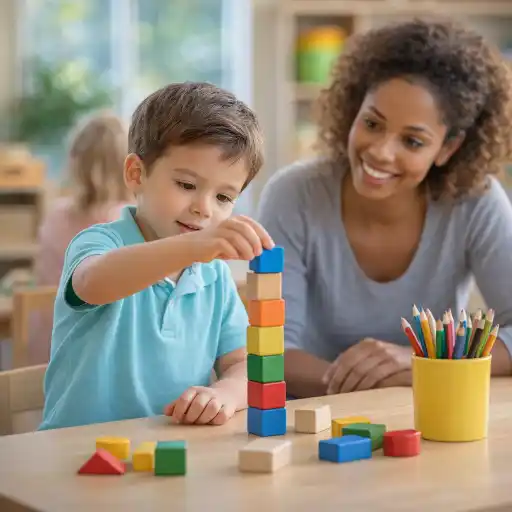
Children practice independence most when the environment signals: “You can do this.” Use a short list of design decisions and routine steps that make success likely.
- 🔹 Physical setup: low hooks, child-height shelves, labeled bins, and reachable tools (small pitchers, brooms) — see Montessori-inspired ideas at Why We Love Montessori and free practical-life PDFs at Resources.
- 🔸 Visual routines: post 3–5 picture steps for dressing, handwashing, snack, and transitions. Visuals reduce talking and let children self-check (Daily routines).
- 🔹 Small choices: offer two acceptable options (e.g., two songs, two snack items) so children practice decision-making without overwhelm (CSEFEL).
- 🔸 Classroom jobs and rotation: rotate simple roles (line helper, plant waterer) so responsibility becomes routine and visible (Building Independence).
Implementation tips:
- Start with 1–2 routines and add more as children master steps.
- Keep practice short (3–7 minutes) and frequent; repetition > long lessons.
- State requirements vary - check your state licensing agency when you change room setup or practice routines.
What teacher strategies reliably build confidence and scaffold independence?
Adults shape a child’s belief in themselves. The language you use, how you scaffold, and when you step back are the decisive levers.
- 🔹 Use specific, effort-focused feedback: Say “You worked hard to zip three buttons” rather than “Good job.” This highlights strategy and creates a #growth mindset (How can we build confidence?).
- 🔸 Scaffold deliberately: break tasks into the smallest teachable steps, model one step, support once, then watch. Gradually fade prompts so competence becomes independent (CSEFEL).
- 🔹 Control of error and self-correction: use materials and setups that let children notice mistakes and fix them (a cor
 e Montessori principle; see Control of Error).
 - 🔸 Co-regulate, then step back: when upset, meet the child at their level, name feelings, breathe together, offer one small next step, then give space to try.
- 🔹 Plan for gradual risks: offer safe challenges—slightly harder buttons, a taller pour, a longer job—so children learn resilience.
Staff training note: align language and steps across staff so children receive consistent messages; consider staff courses like Supporting Children’s Independence on ChildCareEd.
Which activities and games accelerate self-help, executive function, and decision-making?
Practical, playful routines build the skills that look like independence. Use short, repeated activities embedded in the day.
- 🎲 Practical life tasks (pouring, buttoning, sweeping): embed in snack and cleanup so motor skills and pride grow each day (Daily routines).
- 🎯 Executive function games: short turn-taking games (e.g., Simon Says, Red Light/Green Light) boost inhibition and attention—see game ideas referenced in ChildCareEd materials.
- 🧸 Pretend play and role-play: high-quality social pretend play supports perspective taking and planning; research summaries detail links to cognition and language (Pretend play & cognition).
- 📊 Self-management charts: 1) pick a routine, 2) post step photos, 3) child marks progress—used over weeks until routines are internalized (CSEFEL).
- 🌿 Heavy work and calming sequences: short motor activities help regulation before a tricky task (see practical resources at ChildCareEd resources).
Tip: integrate practice into natural moments—line time, snack, bathroom, outdoor play—so independence becomes part of the rhythm, not an extra lesson. For developmental expectations, use CDC milestones (CDC preschooler tips).
What common mistakes should we avoid, and what do providers frequently ask?
Common mistakes are fixable when teams know the traps and have quick alternatives.
- ❌ Doing tasks for children instead of prompting them to try. Fix: give a single prompt, present a smaller step, then wait.
- ⚠️ Setting expectations that are too high. Fix: match tasks to the child’s stage; celebrate partial success (Building Independence).
- 🙉 Vague praise. Fix: name the action and effort (“You kept trying to tie that shoe!”).
- 🌀 Offering too many choices. Fix: limit to two acceptable options so decisions are doable (CSEFEL).
FAQs
- Q: How fast should a child learn a self-help task? A: Progress varies; expect small steps—days for small wins, weeks for habit. Use charts and celebrate increments.
- Q: What if a child refuses to try? A: Offer two tiny choices, use peer modeling, and try again after a calming activity.
- Q: How do we balance safety and independence? A: Teach safety steps first, demonstrate, then let children perform the safe parts independently. State requirements vary - check your state licensing agency.
Conclusion
Helping children build #confidence and #independence is intentional and highly rewarding. Use environment design, short predictable #routines, consistent teacher language, and playful activities to make independence part of daily life. Start small, train staff in shared steps, and celebrate the tiny wins that add up to lasting competence. For ready-to-use lessons and staff training, explore ChildCareEd resources such as How can daily routines help preschoolers build independence? and Raising Capable Kids. Your consistent belief that children can try makes the biggest difference—thank you for doing this essential work. #preschoolers #teachers
- 45 Hour Child Growth and Development
- Creating Engaging and Meaningful Learning Experiences
- Texas Director Credential
- Engaging Families for Child Success
- Environments That Inspire Independence and Exploration
- Mindful Supervision: Balancing Safety & Independence in Montessori
- Ways to Serve: Leadership
- Supporting Children's Independence
- Confidence Boosters for Preschoolers
- Preparing Your Child for a New School Year: Social Skills and Independence
- CDA Certification en Español: Recursos y Consejos para Educadores Bilingües
- Ready, Set, Kindergarten!
- How can New York childcare providers build self-confidence in toddlers?
- How can we help young children stand tall like the Golden Driller and build real confidence?
- How Can North Dakota Providers Encourage Independence in Young Children?
- How Can We Support Toddler Independence Without Overwhelming Them?
- How can child care programs help children build confidence and independence?
- How can childcare programs encourage independence and responsibility in young children?
- Is the Lost Art of Letting Children Figure It Out Worth Rediscovering?
- Can Everyday Responsibilities Help Children Develop Confidence?
- How Can Child Care Programs Build Meaningful School Readiness?
- How Can Task Cards Make Independent Center Time Run Smoothly?
- How Do Classroom Jobs Build Responsibility and Confidence in Toddlers?
- How Can Child Care Providers Support Kindergarten Emotions on the First Day of School?
- How Can Toddlers Contribute to Classroom Jobs Without Turning Them into Rewards?
- How Can Montessori Field Trips Support Independence While Keeping Children Safe?
- How Can Preschool Teachers Build Independence Without Giving Too Much Help?
