A well-planned Montessori outing gives children meaningful responsibilities within clear boundaries and attentive adult supervision. Use the Field Trip Safety Checklist for Child Care & Preschool Buy Now $0.99 to support trip preparations, then identify manageable choices children can make, such as selecting what to observe or carrying their own drawing materials. For focused professional learning, explore Mindful Supervision: Balancing Safety & Independence in Montessori  Buy Now $24.00, which addresses supervision in Montessori settings, including outings. To strengthen connections between field trips and curriculum, consider Enriching Education: Field Trips Buy Now $16.00. Read on for ways to encourage independence while keeping supervision responsibilities clear.
Why do Montessori field trips matter for independence?
In Montessori education, an outing can be more than a change of scenery. It extends the prepared environment into the community, where children encounter real people, places, routines, and questions. A visit to a garden, library, market, or neighborhood park can invite careful observation and give children a reason to practice courtesy, communication, and responsibility in a new context.
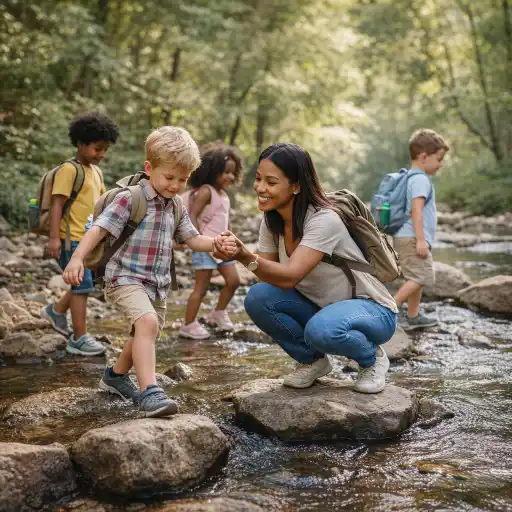
Independence does not mean leaving children to manage risks alone. It means offering appropriate opportunities to make choices and contribute while adults provide a dependable safety structure. Children might help choose a destination, suggest what to investigate, carry a small personal item, or help remember a group expectation. Adults retain responsibility for permission, staffing, risk planning, and supervision.
Montessori programs often treat community experiences as part of learning rather than isolated entertainment. As the Follow the Child Montessori School field-trip description illustrates, trips can be curriculum-connected and designed to build independence over time. The balance matters: a child who feels trusted can participate with curiosity, while predictable routines help the group remain safe and settled. Thoughtful outings nurture #independence, belonging, and a sense of competence.
How can educators prepare children to participate meaningfully?
Preparation begins with an authentic purpose. Choose a destination that relates to current learning or children’s interests, then shape the experience around a few clear questions. Instead of presenting every detail, invite children to help with age-appropriate decisions: What might we notice? What should we bring? How can we show respect at the site?
Student involvement can grow with development. Younger children may practice a stop signal, learn where to wait, or help pack a simple observation kit. Older children can help research opening hours, draft questions for a visitor, or map the route with adult guidance. Edutopia’s discussion of student-driven Montessori field trips describes how planning can become part of the learning, with educators guiding rather than taking over.
- Explain the destination, basic schedule, boundaries, and group expectations in concrete language.
- Rehearse walking together, stopping when signaled, and asking an adult for help.
- Use visual supports, stories, maps, or photographs to make the plan understandable.
- Let children contribute in ways suited to their age, abilities, language, and comfort level.
Preparation is not a promise that everything will go as planned. It gives children a familiar framework for adapting when the bus is late, a site is crowded, or an activity changes. That flexibility supports confidence and practical problem-solving without shifting adult duties onto children.
What supervision practices protect children without limiting exploration?
Effective supervision is active, attentive, and responsive—not simply being present or counting heads from a distance. Adults should position themselves to see and hear children, scan the environment, anticipate likely movement, and engage as needed. The level of closeness can shift with the setting: a quiet garden path presents different demands from a busy sidewalk, transit stop, or crowded museum.
Before leaving, assign responsibilities by name. Identify who leads the group, who carries the roster and emergency information, who manages any authorized medication, and which adult is responsible for each subgroup. Confirm the applicable ratio and consider whether the destination, transitions, children’s needs, or transportation call for additional support. State requirements vary - check your state licensing agency.
Use repeated name-to-face checks during transitions rather than relying only on a numerical count. Check before departure, when boarding and exiting a vehicle, upon arrival, whenever locations change, and before returning. If the number or roster does not match, pause the group and resolve the discrepancy before moving on. A buddy system can reinforce group awareness, but it never replaces adult responsibility.
- Set clear boundaries and a meeting point when arriving at a destination.
- Keep children within the assigned adult’s sight and hearing, adjusting positions as the group moves.
- Use calm, consistent signals and acknowledge children who follow group routines.
- 🚶 Pause at crossings and transitions so children and adults can regroup before moving.
Supportive supervision allows children to explore within safe limits. The adult’s role is to prevent foreseeable hazards while leaving room for observation, questions, and manageable choices. This is #supervision that protects learning as well as physical safety.
How should programs plan transportation, health needs, and accessibility?
Transportation adds decisions that deserve a separate review. Confirm the route, vehicle, driver, loading and unloading arrangements, and appropriate restraints for each child. Follow applicable laws, manufacturer instructions, and program procedures. Staff should know the seating plan and complete a final vehicle sweep after unloading before the vehicle is secured.
Gather trip-specific permissions and make sure the information adults need is available and protected. Review each child’s relevant health plans, allergies, authorized medication instructions, emergency contacts, communication needs, and accommodations. Assign a staff member who understands the relevant care plan and confirm that required supplies are packed and accessible. Do not assume that a family’s usual classroom arrangements automatically cover an off-site outing.
Accessibility is part of planning, not an afterthought. Contact the destination to ask about entrances, paths, restrooms, seating, sensory conditions, and possible activity adaptations. Consult families and, when appropriate, specialists to identify supports that help each child participate meaningfully. Head Start’s guidance on socializations and field trips highlights considering developmental needs, family goals, accessibility, and culturally and linguistically appropriate experiences.
- Prepare a contact list, roster, first-aid supplies, charged communication device, and trip itinerary.
- Identify a weather alternative and a response plan for delays, illness, separation, or other emergencies.
- Share practical trip details with families in advance and invite relevant questions.
A carefully planned trip can be both inclusive and manageable. If essential staffing, consent, equipment, or health supports are not in place, adapt the plan or postpone rather than improvising around a critical safety gap.
How can educators connect the outing to Montessori learning?
A purposeful outing begins before departure and continues after the group returns. Before the trip, help children form questions connected to their interests or classroom work. At the destination, allow time to observe, listen, compare, and wonder. Adults can offer language and gentle prompts—“What do you notice?” or “What changed?”—without turning every moment into a quiz.
For young children, learning may appear in small actions: waiting for a turn, greeting a community member, noticing patterns in leaves, or remembering a familiar route. Providers can document discoveries with children’s words, drawings, photographs, or collected observations where appropriate. These records help connect a real-world experience to later conversation and classroom work.
After returning, invite children to revisit the experience in ways that suit them. They might share a story, make a map, sort observations, act out a visit, or help care for an item connected to the trip. Montessori practical-life experiences emphasize meaningful participation, independence, and care for the environment; see Montessori Practical Life Activities for related examples. The goal is not to produce a polished project but to help children make meaning from what they encountered.
Educators can also reflect with colleagues: Which routines supported calm transitions? Did every child participate? Were adult roles clear? Did the outing match its learning purpose? These questions turn each trip into information for the next one. A community experience becomes especially rich when safety procedures are consistent enough that adults can attend to children’s thinking and relationships.
What common pitfalls can teams avoid?
Even experienced teams can be caught by familiar assumptions: a general enrollment form must cover every outing, another staff member packed the medication, the venue is safe because it was visited before, or a headcount at departure is enough. A written, trip-specific plan reduces reliance on memory and makes responsibilities visible. The Virtual Lab School’s field trip checklist offers examples of pre-departure and return checks that programs can adapt to their own policies.
Another pitfall is confusing independence with adult withdrawal. Children can help with suitable tasks, but they should not be made responsible for monitoring peers, carrying emergency decision-making, or managing hazards beyond their developmental capacity. On the other side, over-directing every movement can turn a learning experience into a rigid march. Set clear boundaries, then allow children room to notice and engage within them.
- Do not assume a universal ratio applies to every destination; verify local rules and assess the specific outing.
- Do not rely on a buddy arrangement instead of continuous adult supervision.
- Do not overlook accessibility, sensory needs, restrooms, weather, or transition time.
- Do not continue when an essential safety condition is missing; pause, revise, or postpone.
After returning, reconcile the roster, document incidents or meaningful changes, return supplies and medications to their proper storage, and share relevant updates with families. A brief team debrief can identify one success and one adjustment for next time. When plans are clear and adaptable, children have more space to practice #confidence, responsibility, and curiosity.
Conclusion: How can field trips balance independence and supervision?
Montessori field trips support independence when children have genuine, age-appropriate opportunities to prepare, observe, participate, and reflect—and when adults maintain clear responsibility for safety. The essential practices are purposeful planning, explicit staff roles, active supervision, repeated name-to-face checks, transportation and health preparation, and inclusive accommodations.
Start with a destination that connects to children’s questions, prepare the group with simple routines, and make the risk plan specific to the people and place. During the outing, stay attentive while allowing children to make manageable choices and engage with the community. Afterward, revisit what children learned and improve the process as a team.
For focused professional learning, explore these English-language ChildCareEd courses:
- Mindful Supervision: Balancing Safety & Independence in Montessori Buy Now $24.00
- Enriching Education: Field Trips Buy Now $16.00
- Transportation and Field Trip Safety Buy Now $25.00
- Appropriate Precautions in Transportation of Children Buy Now $10.00
- Active Supervision: A Strategy That Works Buy Now $35.00
Review course details and confirm whether a course meets your professional learning needs or local requirements. With thoughtful preparation and responsive adult support, children can experience the wider community as a place to explore—and a place where they are cared for.
- Appropriate Precautions in Transportation of Children
- CDA Home Visitor Subject Area 3 Part 3 Birth to 5
- Transportation and Field Trip Safety
- Mastering Supervision: Keeping Children Safe in All Settings
- Transportation and Field Trip Safety in the Early Childhood Environment
- Sensitive Periods in Montessori: Guiding Natural Learning
- Enriching Education: Field Trips
- Mindful Supervision: Balancing Safety & Independence in Montessori
- The Prepared Environment: Montessori Class Design
- CDA Certification en Español: Recursos y Consejos para Educadores Bilingües
- 🔍 ¿Qué ves cuando observas a un niño aprender?
- 💛🧩 ¿Cómo puedo hacer que mi enseñanza sea inclusiva para los niños con autismo?
- Recursos en Español sobre el Sueño Seguro del Bebé
- Proporciones de Cuidado Infantil y Tamaños de Grupo por Edad en Nueva Jersey (Guía Rápida para Centros y Hogares)
- Proporciones de Cuidado Infantil y Tamaños de Grupo por Edad en Virginia (Guía Rápida para Centros y Hogares)
- Lista para Guardería en Casa en Illinois: Cómo Iniciar una Guardería en el Hogar
- Apoyo en Preescolar para Retrasos del Habla: Estrategias Simples que Ayudan
- Las Mejores Ideas de Excursiones para Guarderías en Texas
- Las Mejores Ideas de Excursiones para Guarderías en Georgia
- Capacitación Previa al Servicio para Proveedores de Cuidado Infantil en Texas
- Best Daycare Field Trip Ideas in Maryland
- Summer Field Trips for Daycares in Texas
- Canciones, juegos y preguntas de círculo para niños
- How can you turn summer days into learning moments at your Minnesota program?
- Simple Field Trip Ideas Without Leaving the Classroom
- Should I Add an Afterschool Component to My Michigan Child Care Program?
- What School-Age Activities Create Engaging, Inclusive, and Well-Managed Programs?
- How Can Montessori Field Trips Support Independence While Keeping Children Safe?
