Are we shortchanging young learners by stepping in too fast? Letting children work through small challenges builds durable #confidence, real #independence, and stronger #problemsolving skills—but it takes intention and a classroom design that supports safe risk-taking. If you want practical techniques you can use today (and training hours that strengthen your practice), start with ChildCareEd's Supporting Children's Independence  Buy Now $24.00 for step-by-step strategies and then explore Mindful Supervision: Balancing Safety & Independence in Montessori Buy Now $24.00 to learn how to supervise without doing the doing for children.
Why has letting children figure it out become so rare?
In many programs, pressure for efficiency, safety concerns, and the desire to accelerate outcomes have nudged adults toward doing tasks for children rather than coaching them through them. Yet research and practice show that when we remove manageable barriers, children develop essential executive functions and social skills. In classrooms where staff default to immediate help, children miss repeated, low-stakes opportunities to test ideas, recover from small failures, and rehearse self-regulation. The result: fewer chances to practice independence and less time for adults to focus on intentional teaching. Reclaiming this lost art requires shifting everyday routines, rethinking materials, and learning precise prompts that support, not substitute, children's efforts. Integrating small changes—low shelves, visual steps for tasks, and predictable routines—lets children choose, fail, and try again while teachers observe and extend learning. Remember: state requirements vary - check your state licensing agency.
How does letting children “figure it out” benefit development?
When children struggle with a doable challenge, they engage the cognitive processes that underlie later academic and life success: planning, monitoring, flexible thinking, and sustained attention. These moments build neural pathways for self-directed problem solving and foster resilience. Socially, children who resolve small disputes or negotiate play roles learn perspective-taking and collaborative skills. For practical classroom routines and collaborative activities that intentionally build these abilities, see Building Cooperative & Problem Solving Skills. Emotionally, having small successes after effort grows #confidence and self-efficacy—children learn they can influence outcomes. Practically, independence reduces conflict over daily routines (dressing, snack, clean-up) and gives teachers bandwidth to teach higher-level skills. Programs that focus on gradual release and scaffolding—scaffold, prompt, fade—help move skills from supported to independent. For staff wanting a research-informed path to embed these practices, consider courses such as Student Success: Expectations & Independence Buy Now $16.00, which links expectations with everyday opportunities for practice.
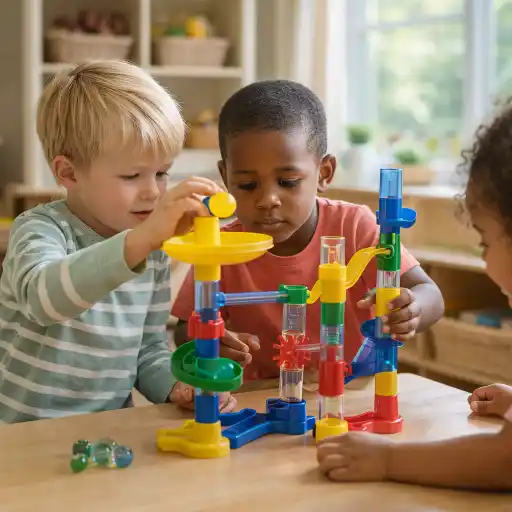
What teacher moves let children solve problems safely and effectively?
Teachers shift from problem-solvers to facilitators by using precise, limited interventions. Key strategies include:
- Offer a single, specific prompt (not a solution): "What could you try next?"
- Break tasks into visual steps so children can check progress.
- Model one step, then step back—use fade-out scaffolding.
- Use encouraging descriptive language: "You kept trying the zipper—that stuck effort matters."
- Provide safe opportunities for small risk-taking (climbing low structures, pouring activities) with clear boundaries.
- Document attempts briefly—photo + child quote—to plan next scaffolds.
- 🧭 Create choices that support autonomy ("Do you want the green cup or the blue one?").
For practitioners concerned about safety, the Mindful Supervision Buy Now $24.00 course offers concrete supervision strategies so children can take appropriate risks while adults remain actively attentive. Also, designing environments using ideas from The Prepared Environment: Montessori Class Design Buy Now $16.00 helps make independent choices realistic and safe.
How can the environment and routines encourage independence?
A prepared environment reduces adult prompts and increases successful attempts. Practical adjustments include low, labeled shelves; child-sized tools; step-by-step visual charts for routines; and rotating open-ended materials that invite experimentation. Routines should have predictable sequences with few steps, each visible as a checklist children can follow—this promotes #play that becomes purposeful learning. Arrange learning centers to minimize congestion and allow children to persist at a task. Use classroom jobs and peer helpers to build responsibility and trust. Train staff to notice "just-right" challenges aligned to each child's zone of proximal development: support when tasks fall in the ZPD, step back when children are ready. Programs aiming to redesign environments and curriculum alignment should see Creating Engaging and Meaningful Learning Experiences Buy Now $55.00 for planning tools and adaptations for diverse learners. Note: state requirements vary - check your state licensing agency when changing room layouts or materials.
How do we avoid common mistakes when promoting independence?
Common pitfalls derail even well-intentioned plans. Avoid these mistakes:
- Rushing in to solve problems for children—instead, count to 10 and prompt once.
- Setting expectations too high—match tasks to current skills and celebrate incremental steps.
- Using praise that praises personhood ("You're smart") rather than specific effort and strategy—use descriptive encouragement.
- Offering too many choices, which overwhelms—limit choices to two or three meaningful options.
- Neglecting safety boundaries—combine independence with clear rules and active supervision.
To build staff skills and avoid these traps, short, targeted professional development works best. Courses like Supporting Social Learning: Creating Classrooms that Care Buy Now $35.00 sharpen adult facilitation of peer problem-solving, while practice-oriented courses such as Student Success: Expectations & Independence Buy Now $16.00 help set realistic classroom expectations.
FAQ: What directors and providers ask most
- Q: When is it unsafe to let children try on their own?
A: When the risk includes serious injury or clear health hazards. Use adult-led instruction for high-risk tasks and supervised, scaffolded practice for low-risk challenges. - Q: Won't progress slow if we let kids struggle?
A: Short-term challenge often speeds long-term learning—children who practice problem solving gain durable skills and need fewer adult prompts over time. - Q: How do I document progress?
A: Use quick records: photo, child quote, one-line observation, and the next-step scaffold. These feed planning and family communication. - Q: How to get staff buy-in?
A: Start with one routine change, offer short coaching, and share student videos of success. Professional learning like Supporting Children's Independence Buy Now $24.00 gives staff a shared language and tools. - Q: How to involve families?
A: Share simple home strategies (choice, single prompts) and send examples of child-led successes to normalize small risks.
Conclusion
Letting children figure things out is not neglect—it’s a deliberate teaching choice that builds #children who are more independent, resilient, and capable problem solvers. Small shifts in language, room design, supervision, and routines produce big gains in #independence and #confidence. Directors: invest in short, focused staff training and design changes that make independent success the default. Consider these ChildCareEd trainings to support your next steps: Supporting Children's Independence Buy Now $24.00, Student Success: Expectations & Independence Buy Now $16.00, Mindful Supervision Buy Now $24.00, The Prepared Environment Buy Now $16.00, and Supporting Social Learning Buy Now $35.00. These courses offer practical strategies and tools to restore the valuable art of guided independence in your program. state requirements vary - check your state licensing agency.
- CDA Certification en Español: Recursos y Consejos para Educadores Bilingües
- ⏰ Cómo puedo facilitar las transiciones y las rutinas diarias en mi aula?
- 🤯 ¿Por qué este niño está teniendo un comportamiento difícil de repente?
- Pascua En El Aula: Actividades Sencillas Para Aprender y Celebrar Con Seguridad
- Apoyo en Español para Capacitaciones Grupales Presenciales y por Zoom en Cursos Selectos
- Niveles de credencial de Maryland: qué significan
- ¿Cómo pueden los equipos de cuidado infantil practicar habilidades rápidas de primeros auxilios en situaciones reales?
- ¿Cómo afecta la dopamina a los niños: señales, efectos e influencias diarias?
- ¿Cómo solicito la licencia para una guardería en California?
- Regulaciones de Licenciamiento de Cuidado Infantil en California para Centros y Hogares de Cuidado Infantil Familiar
- Requisitos de Cuidado Infantil en Nueva Jersey para Centros y Proveedores de Cuidado Infantil Familiar
- Normas de Licenciamiento de Cuidado Infantil en Illinois: Guía para Centros y Hogares de Cuidado Infantil
- Cómo Celebrar el Día Nacional del Kindergarten
- Lista para Guardería en Casa en Illinois: Cómo Iniciar una Guardería en el Hogar
- Capacitación Previa al Servicio para Proveedores de Cuidado Infantil en Maryland
- Las Mejores Ideas de Excursiones para Guarderías en Dakota del Norte
- Las Mejores Ideas de Excursiones para Guarderías en Texas
- Is the Lost Art of Letting Children Figure It Out Worth Rediscovering?
