Toddlers are naturally driven to move, climb, balance, and test what their bodies can do. This article gives child care directors and providers practical, evidence-informed strategies for channeling that energy into safe experiences that build strength, coordination, motor planning, and confidence. It covers developmentally appropriate climbing equipment, protected movement zones, maintained fall surfaces, clear teaching cues, active supervision, inclusive adaptations, and procedures for responding to and reviewing injuries. To strengthen staff practice, explore ChildCareEd’s self-paced online courses Balancing Active Play in Child Care  Buy Now $16.00, which helps educators provide developmentally appropriate active play that supports healthy growth, and Safe Supervision in Child Care: Birth to School Age Buy Now $24.00, which addresses effective supervision, environmental risks, and injury prevention across care settings. Programs can also use the free Active Supervision Poster Buy Now $0.00 to reinforce staff positioning, scanning, listening, counting, anticipation, and engagement. Remember that state requirements vary, so always check with your state licensing agency when selecting equipment and developing climbing and movement procedures.
Why does safe climbing and movement matter for toddlers?
1. Toddlers develop gross motor skills, spatial awareness, and self-regulation through active movement; outdoor and well‑designed indoor spaces increase everyday activity and developmental gains, as discussed in How the environment shapes physical activity and CDC guidance on outdoor play.
2. Risk + support = learning: supervised, guided risk (low heights, loose parts, varied surfaces) builds judgement and resilience; see research summaries on the benefits of risky play (Live Science, Phys.org).
3. Program outcomes: better movement routines often reduce classroom stress and improve focus—so safety and learning reinforce each other (Outdoor play benefits).
Inline hashtags: supporting #toddlers' #climbing, #safety, #movement, and strong #supervision matters every day.
How can we design indoor and outdoor spaces to encourage safe climbing?
- 🔧 Equipment zoning: create distinct zones—toddler gross‑motor, climbing/challenge, quiet, and creative. ChildCareEd offers practical layout tips in their environment guide (environment and activity post).
- 🌳 Natural features outdoors: include logs, low stumps, gentle slopes, and planting for varied balance challenges; see outdoor play benefits (ChildCareEd outdoor play).
- 🧱 Low, progressive levels indoors: use soft ramps, low platforms, tape balance beams, and foam climbers to scaffold skill—rotate challenges so children can repeat and succeed (Gross motor activities). On cold days, staff can add more indoor movement opportunities with these ideas for keeping children active indoors.
- 🧰 Clear pathways & surfacing: keep sightlines open; choose impact-absorbing surfacing under climbing areas and maintain depth for loose-fill surfaces (CPSC and ChildCareEd checklists: Playground safety, Ultimate checklist).
- ♿ Accessibility: include ramps, varied grip heights, and alternative challenges so children of different abilities join in (environment post).
What equipment and materials work best for toddler climbing and movement?
- 🟢 Soft climbers: foam blocks, wedges, and ramps create low-risk, high-repetition practice—great for classrooms and small programs (see foam-climber benefits, industry guidance).
- 🪵 Natural loose parts: logs, rocks, crates, and planks let children problem-solve and scale challenges; ChildCareEd highlights natural elements as a movement booster (outdoor play post).
- ⚖️ Low fixed equipment: toddler-appropriate slides, short climbing frames, and rails with guardrails for edges; follow age‑appropriate recommendations in the ChildCareEd playground safety resources (playground safety).
- 🧺 Impact surfacing & mats: use unitary rubber or maintained loose‑fill under fall zones per CPSC/ASTM guidance; keep records for inspections (safety checklist).
- 🔁 Rotation & cleaning: rotate materials weekly to sustain interest and clean according to program health protocols—ChildCareEd free resources include gross motor handouts and cleaning guidance (Safe and Sound resources).
How should staff supervise, scaffold risk, and teach toddlers to move safely?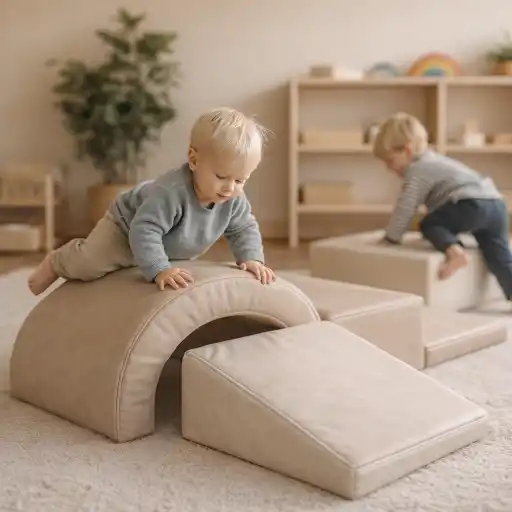
Effective supervision and teaching strategies create a culture where toddlers stretch skills safely. Follow these numbered practices:
- 📌 Zone-based active supervision: divide the yard into numbered zones and assign one adult per zone; rotate assignments daily so attention stays sharp. See ChildCareEd's active supervision resources (Mastering Supervision).
- 👀 Active supervision steps: move, scan, count, and talk. Keep a 60-second huddle before outdoor time to name coverage and first-aid roles (playground safety).
- 🎯 Scaffold risk with prompts: use brief, specific coaching—"Try stepping across the plank with one hand on the rope"—and praise effort and strategy to foster a growth mindset (reaching new heights).
- 🧭 Teach rules with visuals: one-step rules (e.g., "slide feet-first") and picture cards lower language barriers and help toddlers follow routines.
- ⚕️ Training & policy: provide staff drills on hazard scanning, incident steps, and ratio coverage; keep licenses and logs handy and remember: state requirements vary - check your state licensing agency.
What common mistakes should we avoid and how should we respond to incidents?
Common pitfalls and clear fixes help teams stay consistent. Numbered list of common mistakes and solutions:
- ❌ Skipping daily checks — Fix: require a signed morning checklist before play; use ChildCareEd's playground checklist as a template (playground checklist).
- ❌ Overprotection (removing all risk) — Fix: offer graded challenges (low heights, supervised loose parts) so children learn judgement and gain skills; see evidence that guided risky play supports learning (research).
- ❌ Poor supervision patterns — Fix: use zones, active scanning, and short role huddles; keep phones out of reach during outdoor time (supervision resources).
After an incident, follow this rapid-response sequence:
- 🚨 Immediate care: move the child to a calm spot, administer first aid, call 911 if needed.
- 📞 Notify family with facts and next steps; document the call.
- 📝 Document: complete an incident report (who, when, witness, actions). ChildCareEd provides templates and incident guidance (incident guidance).
- 🔧 Tag out and repair: remove broken equipment from use and schedule repairs with a log.
- 🔁 Team review: discuss near-misses in the staff meeting and update the checklist or supervision plan.
FAQ — quick answers (4 items):
- Q: How high is too high for toddlers? A: Keep primary climbing work low (under 30 inches) and always provide soft surfacing; consult product age labels and your state rules.
- Q: Are foam climbers safe for centers? A: Yes—good for repetition, cushioning, and small-group practice; cleanable surfaces are essential (foam guide).
- Q: How often should we inspect surfacing? A: Daily hazard scan plus weekly surfacing depth checks and after storms—keep logs (playground checklist).
- Q: When to refer for evaluation? A: If a child repeatedly struggles with age-typical movement milestones despite supports, follow your referral policy and document observations.
Conclusion
Turn safety plans into habits with a short weekly cadence. Use this quick 5-step checklist right now:
- 🔎 Do a daily hazard scan and log it (morning and after weather).
- 🧭 Assign zones & run a 60-second pre-play huddle for coverage.
- 🧱 Provide graded climbing materials (foam climbers, low logs, tape beams) and rotate them weekly.
- 👩🏫 Coach with short, specific prompts and celebrate effort to build confidence.
- 📝 Record near-misses and incidents, tag out broken equipment, and hold a brief review each week.
Small systems—regular checks, intentional supervision, and scaffolded challenges—let toddlers explore while reducing harm. For printable checklists, staff drills, and more activity ideas, prioritize ChildCareEd resources like their playground safety and gross motor libraries (Ultimate Playground Safety Checklist, Safe and Sound resources, Gross Motor Activities). Your role as #providers—practical, watchful, and encouraging—makes safe exploration possible every day.
- 45 Hour Child Growth and Development
- 45 Hour Infant and Toddler Methods and Materials
- 45 Hour School Age Methods and Materials
- CDA Bridge Bundle: Infant/Toddler without Portfolio Review
- Sensitive Periods in Montessori: Guiding Natural Learning
- Texas Director Credential
- Wellness in Action: Teaching Healthy Habits to Children
- CDA Infants/Toddlers: Smart Nutrition & Feeding
- Bye Bye Winter: The Role of Outdoor Play in Early Childhood Development
- How motor skills shape child development and creative ways educators can foster them.
- CDA Certification en Español: Recursos y Consejos para Educadores Bilingües
- Recursos en Español sobre el Sueño Seguro del Bebé
- Proporciones de Cuidado Infantil y Tamaños de Grupo por Edad en Virginia (Guía Rápida para Centros y Hogares)
- Canciones, juegos y preguntas de círculo para niños
- How can child care programs create safe climbing and movement experiences for toddlers?
- Mixed-Age Daycare Schedule: How to Plan a Day for Different Age Groups
- Crunch, Stomp, Scoop! Fall Activities Toddlers Can’t Resist
- How Can Child Care Providers Support Healthy Brain Development in Young Children?
- How Can Child Care Providers Support Gross Motor Development in Every Child?
- How Can Child Care Providers Support Healthy Toddler Development?
- How Can Child Care Programs Make Nature-Based Learning Meaningful, Inclusive, and Safe?
- How Can You Create a “Yes Space” Where Infants and Toddlers Explore Safely?
- How Can Child Care Providers Build Healthy Habits for Young Children?
- How Can Child Care Programs Make Physical Activity a Daily Practice?
- What Should a 2-Year-Old Be Learning at Daycare?
- What Gross Motor Skills Should Children Develop at Each Age?
