What if your infant-toddler room could invite curiosity without requiring constant redirection? A thoughtfully designed yes space gives children safe choices, supports independent movement, and helps educators spend more time observing and responding. For a deeper professional foundation, explore ChildCareEd’s 45-Hour Infant and Toddler Methods and Materials Buy Now $399.00 course, which can help strengthen developmentally appropriate planning, materials selection, and classroom practices while providing 45 hours of training.
Why does a yes space matter for infants and toddlers?
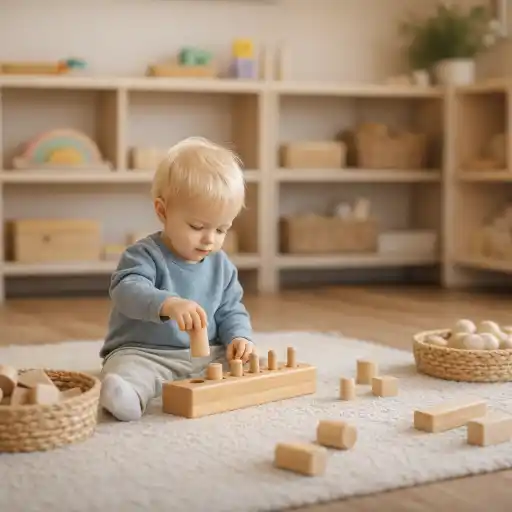
A yes space is a carefully prepared area in which the materials, furniture, and pathways are safe for children to access with appropriate adult supervision. It is not a room without boundaries, and it does not mean educators permit every behavior. Instead, it shifts the focus from repeated prohibition to intentional preparation: “How can I arrange this space so children can explore safely?”
This approach matters because infants and toddlers learn through sensory investigation, repetition, movement, and trial and error. Head Start describes the environment as part of the curriculum because children’s surroundings influence what they notice, attempt, and practice. A safe, welcoming space can support motor development, problem-solving, communication, confidence, and early independence.
A yes space also supports relationships. When adults reduce unnecessary interruptions, children experience more authentic play and educators gain better opportunities to observe interests and emerging skills. NAEYC’s discussion of a yes environment emphasizes that the goal is not to eliminate the word “no,” but to reserve it for situations involving genuine danger or destruction while offering meaningful alternatives whenever possible.
For providers, the benefits are practical:
- Children can choose and access appropriate materials more independently.
- Educators spend less time guarding shelves and correcting avoidable conflicts.
- Room arrangement becomes an active tool for curriculum and guidance.
- Safety expectations become clearer because fewer items are exceptions.
How can you begin with a child-level environmental review?
Start with a “child tour.” Kneel, crawl, or sit on the floor and examine the room from the perspective of a mobile infant or toddler. Notice what is visible, reachable, tempting, confusing, or hidden. A beautifully displayed object at adult eye level may be meaningless to a young child, while a low shelf filled with inaccessible or fragile materials may create frustration.
Walk the room during different parts of the day. A layout that works during quiet play may become hazardous during transitions, meals, or active movement. Observe where children repeatedly gather, where they collide, and where adults frequently say “stop,” “leave that,” or “not there.” Repeated correction is useful data: it may signal that the environment needs redesign rather than that children need more reminders.
Use the following review questions:
- Are materials within reach safe, intact, and developmentally appropriate?
- Can children move between areas without crossing a high-traffic path?
- Are quiet areas protected from active or noisy play?
- Can educators see and hear every child from their likely supervision positions?
- Are adult-only supplies clearly separated and secured?
- Do children see their families, cultures, languages, and abilities represented?
The safe and healthy child care environment guide from ChildCareEd similarly recommends looking at spaces from children’s eye level, securing hazardous materials, anchoring furniture, and checking toys for damage. Make one change at a time, observe the result, and adjust rather than attempting an overwhelming full-room renovation.
Which safety features should every yes space include?
Safety is the foundation of a yes space. Before inviting independent exploration, remove or secure hazards that children may touch, mouth, pull, climb, or carry. Virtual Lab School’s indoor safety checklist recommends physically moving through the room at children’s level and examining structure, furniture, placement, routines, teacher materials, choking hazards, and children’s materials.
Pay particular attention to:
- Unprotected outlets, accessible cords, strings, and blind pulls.
- Unlocked medication, cleaning products, personal belongings, and other hazardous substances.
- Unstable shelves, lightweight furniture, sharp corners, protruding hardware, and damaged surfaces.
- Small parts that may create choking or breathing risks.
- Slippery rugs, loose mats, blocked exits, and crowded pathways.
- Materials that are not appropriate for the age, size, or developmental ability of the children using them.
Furniture must be sturdy and positioned to support both exploration and supervision. Low shelves can define areas without blocking sight lines. A protected block corner can prevent crawling children from accidentally disrupting construction. Soft surfacing may support movement activities, but it should not introduce tripping or entrapment hazards.
Safe sleep is separate from active exploration. Infants should sleep according to current safe-sleep guidance and program policy, in approved cribs free of loose blankets, pillows, stuffed animals, and other hazards. A yes space does not replace direct supervision, required ratios, or routine safety checks. State requirements vary - check your state licensing agency.
How can you support exploration while maintaining active supervision?
“Safe” does not mean “unsupervised.” Active supervision involves positioning, scanning, listening, counting, moving, and engaging. The Child Care Technical Assistance Network states that caregivers should directly supervise children by sight and sound, while following applicable ratios and group-size requirements. A well-designed yes space makes active supervision easier; it never removes the adult’s responsibility.
Position yourself where sight lines remain open and where you can reach children quickly. Avoid sitting with your back to the room or allowing tall furniture to create hidden corners. Scan the entire space regularly, listen for changes in sound, and maintain awareness of children who are sleeping, eating, climbing, or using water and sensory materials.
Supervision can be responsive rather than intrusive:
- Observe before interrupting when the activity is safe.
- Move closer when a child is approaching a reasonable challenge.
- Use brief language to describe the boundary: “The shelf is not for climbing. You may climb on the cushion.”
- Offer an alternative that addresses the same developmental need.
- Intervene immediately when there is danger, injury risk, or destructive use.
For example, if toddlers are repeatedly carrying heavy objects across the room, consider whether they need transporting, pushing, or filling experiences. Provide baskets, lightweight containers, or a designated carrying route. If children are climbing furniture, create a safe gross-motor option rather than relying only on repeated correction. This is #supervision that protects children while honoring their intentions.
How should materials and boundaries evolve with children’s development?
A yes space is not permanent. Infants move from reaching and rolling to crawling, pulling up, cruising, and walking; toddlers develop stronger coordination, language, social interest, and problem-solving abilities. The environment should change as children’s skills and needs change.
For younger infants, prioritize open floor space, tummy-time opportunities, mirrors designed for early childhood settings, graspable objects, and varied textures. As mobility increases, provide clear pathways, sturdy objects for supported standing, and materials that encourage reaching, transferring, filling, emptying, and cause-and-effect exploration.
For toddlers, add carefully selected open-ended materials such as large blocks, board books, pretend-play utensils, chunky puzzles, containers, balls, and art tools appropriate for their developmental level. Offer duplicates of highly desired materials when possible. Head Start notes that multiple materials and appropriately sized areas can reduce conflict more effectively than repeatedly asking toddlers to share.
Boundaries should be specific, predictable, and connected to safety or community care:
- “Books stay in the reading area.”
- “Blocks are for building on the rug.”
- “Water stays in the tub; here are towels for spills.”
- “Hands are gentle with people. You may hit this drum.”
🌱 Include children’s interests in the redesign process by documenting what they repeatedly try to do. Their behavior is communication about movement, sensory input, connection, mastery, or investigation. Thoughtful observation helps educators create #independence without expecting children to manage risks they are not yet ready to understand.
What common mistakes can providers avoid?
Creating a yes space can be challenging, especially when educators are balancing safety, limited square footage, staffing patterns, cleaning routines, and family expectations. The goal is progress, not perfection. A few common pitfalls are especially worth reviewing.
- Making everything accessible: Accessibility applies to safe, age-appropriate materials—not medications, cleaning supplies, sharp tools, staff belongings, or choking hazards.
- Confusing freedom with a lack of structure: Children still need consistent boundaries, predictable routines, and responsive adults.
- Using supervision as a substitute for preparation: Alert educators are essential, but supervision cannot make an unsafe environment acceptable.
- Keeping attractive “do not touch” items within reach: Move fragile or adult-only materials rather than repeatedly asking children to ignore them.
- Overloading the room: Too many toys can reduce focus, create crowding, and make cleanup difficult. Offer fewer, meaningful choices and rotate them.
- Designing only for appearance: A room should be beautiful and welcoming, but its primary test is whether children can participate safely and meaningfully.
Directors can support consistency by using a shared checklist, scheduling daily scans and periodic audits, documenting repairs, and discussing environmental changes during staff meetings. Invite families to share information about children’s interests, home routines, languages, and cultural experiences. Use the Playful Spaces for Infants & Toddlers  Buy Now $24.00 course as an additional professional-learning option for exploring age-appropriate materials, inclusion, and spaces that promote free play.
Summary: What makes a safe and effective yes space?
A yes space is a prepared environment where infants and toddlers can explore, move, choose, and repeat experiences within clear safety boundaries. It begins with a child-level review, continues through careful hazard reduction and active supervision, and evolves as children’s abilities and interests change.
The central question is not “How can I stop this behavior?” but “What need is this behavior expressing, and how can the environment meet that need safely?” When educators remove genuine hazards, provide appropriate alternatives, protect sight lines, and observe with curiosity, the room becomes a partner in learning rather than a constant source of prohibition.
Use the Playful Spaces: Designing the Infant & Toddler Classroom Buy Now $35.00 course for focused training on room arrangement and materials selection, consider Intentional Safety for Infants/Toddlers Buy Now $24.00 for additional safety-focused learning, and explore Positive Attention: Interactions & Supervision for Infants & Toddlers Buy Now $35.00 to strengthen responsive supervision. Pair your professional learning with ChildCareEd’s Infant and Toddler Yes-Space Safety Checklist so your team can turn the principles into a practical, repeatable classroom routine.
When the environment communicates “you may explore here,” children gain confidence—and educators gain more opportunities to nurture capable, curious learners.
- Birth to Five CDA Credential with Portfolio Review
- Pediatric RSV First Aid & CPR/AED
- CDA Bridge Bundle: Infant/Toddler without Portfolio Review
- CDA Bridge Bundle: Infant/Toddler
- 45-Hour Infant and Toddler Curriculum
- Positive Attention: Interactions & Supervision for Infants & Toddlers
- Playful Spaces for Infants & Toddlers
- Texas Director Credential
- Spaces that Support Discovery
- 💛🧩 ¿Cómo puedo hacer que mi enseñanza sea inclusiva para los niños con autismo?
- 🚨 Reporte Obligatorio en Nevada
- Recursos en Español sobre el Sueño Seguro del Bebé
- Capacitación en Salud y Seguridad Preventiva en Línea para Proveedores de Cuidado Infantil
- Proporciones de Cuidado Infantil y Tamaños de Grupo por Edad en Virginia (Guía Rápida para Centros y Hogares)
- Consejos de Supervisión Activa para Salones de Preescolar y el Juego al Aire Libre
- Found a Building for a Daycare? Read This Before You Sign
- Understanding DCFS Rule 407 Appendix A for Toddler Classrooms
- How can we create safe environments for infants and toddlers?
- Canciones, juegos y preguntas de círculo para niños
- How can I create a safe childcare environment for every age group?
- Crunch, Stomp, Scoop! Fall Activities Toddlers Can’t Resist
- No Playground Today! Rainy Day Activities for Kids All Ages.
- Title 22 Home Daycare Ratios: How Age Mix Changes Your California Capacity
- Proporciones para guarderías en casa bajo el Título 22: Cómo la mezcla de edades cambia su capacidad en California
- What Makes Babies Stressed in Child Care? 7 Nursery Changes That Can Help
- How Can You Create a “Yes Space” Where Infants and Toddlers Explore Safely?
- How Should Providers Review Loose Parts Before They Enter a Toddler Play Area?
- How Can Child Care Teams Manage Infant Sleep Spaces Safely During Staggered Arrivals?
- How Can One Floor Mat Offer Two Experiences for Crawlers and Walkers?
