Hello—this short guide answers one big question: how can your child care program keep the #playground safe for every child? You will find easy steps, checks, and tools you can use today. This article is for directors and providers who want practical, quick routines.
Why it matters:
Outdoor play builds muscles, friends, and confidence. When playgrounds are safe, children learn without getting hurt. A simple routine and clear roles help staff spot problems before they become injuries. For quick tools, see the ChildCareEd Playground Safety Checklist Buy Now $0.00 and the article The Ultimate Playground Safety Checklist.
What daily checks should staff do before children play?
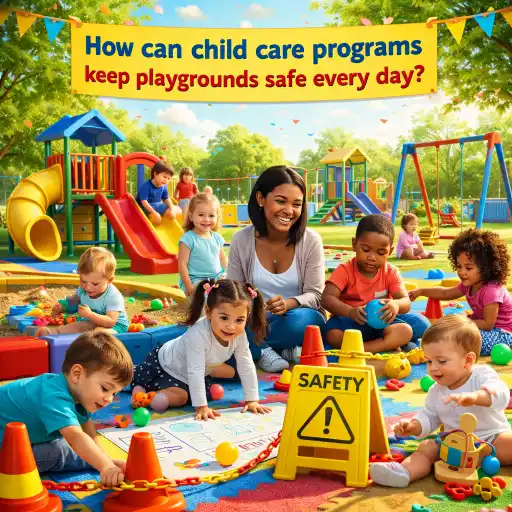
Do these checks every day. Numbered steps help staff share the job and sign off fast.
- 🔍 Inspect equipment: look for loose bolts, splinters, sharp edges, missing parts, rust, or cracked plastic. If you find big problems, close the piece and tag it out of use. See the ChildCareEd inspection tips: Playground Safety.
- 🌡️ Temperature check: touch slides, rails, and metal. If they are too hot to hold, keep children off until they cool.
- 🧹 Scan the surface: remove glass, trash, animal waste, and holes. Make sure cushioning material (wood chips, sand, rubber) is even and deep enough. The CPSC lists safe surfacing types and depths: Playground Surfacing Materials (CPSC).
- 🪧 Age signs: check that younger children use toddler areas and older children use the proper equipment and that signage is clear.
- ✅ Clean and clear: pick up litter, move toys off pathways, and check for standing water or insect nests.
- 📝 Log it: staff initial a short form with time and notes. Keep records for repairs and for licensing reviews. For a printable checklist, use ChildCareEd's resource: Playground Safety Checklist Buy Now $0.00.
State rules differ—state requirements vary - check your state licensing agency. Make the check a required step before children go outside.
How do we supervise outdoors to prevent injuries?
- 📌 Divide the yard into zones. Post a map and assign one adult per zone. Change zones each day so staff stay alert.
- 👀 Use active supervision: move, scan, count, and talk to children. ChildCareEd explains active supervision clearly: Active Supervision Tips.
- 🔢 Count at transitions: count at the door, when leaving/entering the yard, and when moving between areas. Use visual checks and head counts.
- 👋 Keep clear sightlines: arrange equipment so adults can see all children. Move furniture or small trees if they block view.
- 🗣️ Teach short rules: one-step rules like "slides feet-first" and "no climbing on top of roofs" help kids remember and staff enforce safely.
- 📣 Use a 60-second huddle: before going out, say who covers each zone, who carries the first-aid kit, and any special notes (weather, repairs).
Active supervision reduces most playground injuries. For posters, check ChildCareEd active supervision resources: Active Supervision. This helps your #supervision and team skills.
What surfacing and equipment rules cut fall and burn risks?
- 🪵 Surface type and depth:
- Loose-fill (wood chips, sand, pea gravel): needs regular topping and 9–12 inches in high areas. The CPSC compares materials and safe depths: CPSC Surfacing Guide. For supervised sensory play ideas using sand that work indoors and out, see the Kinetic Sand Day activities.
- Unitary surfaces (rubber mats, poured-in-place): often allow ADA access and need proper installation and testing (ASTM F1292).
- ⚖️ Match equipment to age: keep toddler areas low to the ground and separate from school-age structures. ChildCareEd explains age-appropriate equipment and S.A.F.E. categories: Playground Safety.
- 🌞 Heat checks: metal and dark plastic heat up. If surface is too hot, delay play or use shaded times. Teach staff to touch and test before use.
- ♿ Accessibility: follow ADA guidance for accessible routes and features. See the ADA play area standards summary: 2010 ADA Standards.
- 🧰 Maintenance schedule: rake loose-fill, repair anchors, and tighten bolts. Keep a repair log and tag broken items out of use until fixed.
Good surfacing and upkeep lower the risk of head and bone injuries and keep play open to more children. Use ChildCareEd and CPSC resources when you plan changes.
What steps do we take after an incident and how can we make the playground safer over time?
Plan short steps staff can follow so adults act calmly and records are clear. Numbered actions help everyone do the same thing.
- 🚨 Immediate safety: move the child to a quiet spot, give first aid, call 911 if needed, and keep other children away from the scene.
- 📞 Notify family: call the parent/guardian with facts—what happened, what care was given, and next steps.
- 📝 Document: fill an incident form with time, staff on duty, witnesses, actions, and follow-up. ChildCareEd offers incident templates and reporting tips: Incident & Checklist Guidance.
- 🔧 Tag and repair: take broken equipment out of service, post a repair request, and set a date to fix. Keep the broken piece blocked so children can’t use it.
- 🔁 Review and train: talk about the incident at the next staff meeting, update the daily #checklist, and run a short drill if needed.
Common mistakes and how to avoid them:
- ❌ Skipping the morning check. ✅ Fix: require the checklist as part of staff sign-in.
- ❌ One adult covers too much ground. ✅ Fix: create smaller zones or add a floater staff.
- ❌ Not logging near-misses. ✅ Fix: record near-misses to stop bigger problems later.
Conclusion and quick FAQ
Summary—5 quick actions for safer play:
- Inspect daily and log it. (Playground Checklist Buy Now $0.00)
- Use zones and active scanning for #supervision.
- Choose and maintain proper surfacing (CPSC guidance).
- Train staff on quick incident steps and documentation.
- Review near-misses and fix things fast.
FAQ (short answers):
- Q: How often should we inspect? A: Twice a day—before morning play and before afternoon play—and after strong weather.
- Q: Who signs the checklist? A: The adult leading outdoor time should initial and date the form.
- Q: What surfacing is best? A: Loose-fill (wood chips, sand) or unitary rubber that meets ASTM/CPSC standards. See the CPSC guide: CPSC Surfacing Materials.
- Q: What if a family asks about sun screen? A: Follow your program policy and get written permission before applying sunscreen.
Thank you for the careful work you do each day. Small routines keep play safe and joyful for #children. For more tools and printable checklists, visit ChildCareEd resources like the Ultimate Playground Safety Checklist and training courses on supervision and premises safety. Remember: state requirements vary - check your state licensing agency.
Good supervision is the top safety tool. Use simple routines so every staff member knows what to watch.Choose surfaces and equipment that match the kids who use them. A good surface cushions falls. Follow these simple rules:- 45 Hour Child Growth and Development
- How To Keep A Healthy Class for Infants/Toddlers
- 45 Hours Director-Administration ONLINE
- Easy Steps to Resume and Interview Success
- Bienvenido! Welcoming All Families
- 45 Hour Infant and Toddler Methods and Materials
- 45 Hour School Age Methods and Materials
- Texas Director Credential
- How To Prevent Child Injury Using The Course Of 1,2,3 Eyes On Me
- CDA Certification en Español: Recursos y Consejos para Educadores Bilingües
- Recursos en Español sobre el Sueño Seguro del Bebé
- Normas de Licenciamiento de Cuidado Infantil en Virginia para Centros Diurnos Infantiles y Hogares Diurnos Familiares
- Proporciones de Cuidado Infantil y Tamaños de Grupo por Edad en Virginia (Guía Rápida para Centros y Hogares)
- How Can Nevada Child Care Providers Create Safe, Calm, and Well-Organized Learning Spaces?
- How can Washington child care programs keep playgrounds safe from stinging insects, slugs, and harmful plants?
- How can we create safe environments for infants and toddlers?
- How can child care programs keep playgrounds safe every day?
- Celebrando la amistad en el cuidado infantil durante el Día de los Mejores Amigos
- Canciones, juegos y preguntas de círculo para niños
- How can child care programs keep playgrounds safe every day?
- How can child care programs keep playgrounds safe every day?
- How can child care programs keep playgrounds safe every day?
- How can child care programs prevent seasonal safety hazards like heat, cold, allergies, holiday risks, and outdoor play dangers?
- Active Supervision in Early Childhood: Simple Strategies That Work
- California Preschool Ratios: How Many Children Can One Teacher Supervise?
- What Does Illinois DCFS Check Most Often During a Day Care Center Licensing Visit?
- How Can Child Care Programs Build Strong Allergy Awareness and Response Systems?
- What Are the Most Common Child Care Safety Mistakes—and How Can Providers Prevent Them?
