Every child belongs in a safe, welcoming child care program. This article helps Minnesota child care providers and directors learn simple, practical steps to support children with special needs. You will find ideas for daily routines, working with families and specialists, Minnesota resources, and ways to avoid common pitfalls. Remember: state requirements vary - check your state licensing agency. This article focuses on using strengths, making easy adaptations, and fostering clear teamwork so children can join in and learn with their peers. See ChildCareEd links below for trainings and tools you can use right away.
1) What are easy classroom changes we can make today to be more inclusive?
Small changes often make the biggest difference. Try these simple steps to help children feel safe and able to participate in daily activities.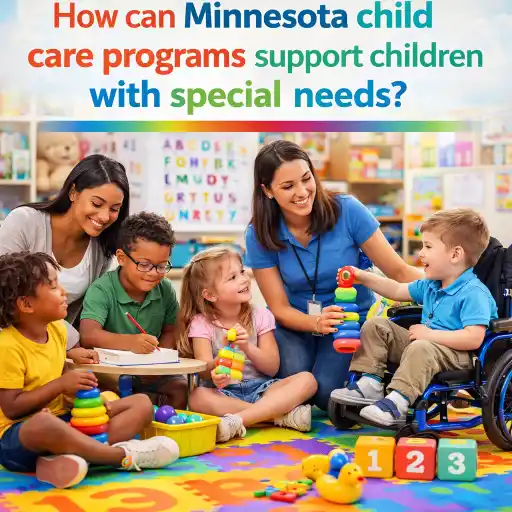
- Make routines visible: use a picture schedule for arrival, snack, play, and nap. This helps kids know what comes next and reduces anxiety. See visuals tips at ChildCareEd: Inclusive Practices.
- Change materials, not goals: same circle time goal, different access—bigger crayons, foam grips, or a weighted lap pad.
- Offer quiet options: create a soft corner with low lighting and fidgets for children who need breaks. ChildCareEd has ideas on how to Support Children with Special Needs.
- Use clear language and gestures: say short steps and show actions ("Coat on. Line up."), and add visuals.
- Design the space for movement: leave wide pathways for walkers or wheelchairs and flexible seating so kids can stand or sit as needed.
Why it matters: Children who understand routines and can access materials feel calmer and join in more. These supports help both the child with extra needs and the whole group. These are simple forms of #inclusion that build confidence and belonging.
2) How do we partner with families and specialists to support each child?
Families are experts on their child. Working together makes care better and quicker. Follow these steps to build strong partnerships.
- Start with questions: ask what comforts the child, what frustrates them, and what works at home. A short "getting to know you" form helps gather useful details.
- Share observations daily: quick notes at pick-up build trust and keep families informed.
- Invite specialists: if a child has an IFSP or IEP, ask to meet the team. ChildCareEd's course Special Needs: From Referral to Inclusion
 Buy Now $24.00 explains IEP basics and working with providers.
 - Make written plans: a simple Mini Behavior Support Plan or adaptation sheet helps staff stay consistent. See examples at ChildCareEd strategies.
- 😊 Use translators or translated notes when needed to include non-English speaking families. Building trust is essential—ask families about cultural routines and favorite comfort items.
Tip: keep communication strengths-based—share successes and next small steps. This keeps families involved and helps children reach goals. A reminder: #families and teams are key partners in planning supports.
3) What Minnesota and legal resources can help our program follow rules and get support?
Minnesota has strong resources for children with special needs. Use them to find services, funding, and training.
- State health and early childhood links: check the Minnesota Integrated Care for Early Childhood Initiative and local family resources at MN Dept. of Health: Children & Youth with Special Health Needs.
- Funding & grants: look into community grants like Community Solutions for Healthy Child Development Grants to support programs for children of color and children with special needs.
- ADA and legal guidance: learn your obligations under the ADA. The federal ADA guidance and ChildCareEd summaries explain reasonable accommodations—see ChildCareEd on the ADA and the official Child Care Centers and the ADA Buy Now $0.00 PDF.
- Local supports: Minnesota has programs like the Governor's Council on Developmental Disabilities and Disability Hub MN, listed in MN Health resources.
- 👩🏫 Training: Use ChildCareEd classes such as CDA: Special Needs Buy Now $24.00 and Mastering Inclusive Education for staff development. #training and local resources help you meet regulations and improve care. For a concise overview of why specialized child care matters and the training available for caregivers, see The Need for Care.
Note: state requirements vary - check your state licensing agency for specific Minnesota licensing and paperwork.
4) What common mistakes should we avoid, and how do we fix them?
Many programs want to do well but fall into avoidable pitfalls. Here are frequent mistakes and easy fixes.
- ❌ Mistake: Making changes just for one child without telling the staff. Fix: write down adaptations and share a short plan that everyone uses.
- ❌ Mistake: Expecting the child to "fit" the program. Fix: ask “How can we adapt the activity?” and change materials or steps to keep the child in the group. ChildCareEd's article on adaptations has many examples.
- ❌ Mistake: Not involving families or skipping translation. Fix: invite family solutions and use translators or pictures for messages.
- ❌ Mistake: Overlooking staff training. Fix: Schedule short team trainings and practice a Mini Behavior Support Plan together. See ChildCareEd trainings on behavior and inclusion.
- ✅ Keep the focus on strengths: celebrate small wins and track progress with notes. This keeps staff motivated and supports the child steadily.
Conclusion
Inclusion in Minnesota child care is possible with small, consistent steps: make routines visible, adapt materials, partner with #families and specialists, use state and ChildCareEd resources, and train your team. Start with one change this week—like a picture schedule or a quiet corner—and build from there. For deeper learning, explore ChildCareEd courses on special needs and inclusion and the Minnesota Department of Health links above. Your work makes a powerful difference in children’s lives. #Minnesota #inclusion #IEPs #training
Selected resources: Inclusive Care Strategies, Special Needs: From Referral to Inclusion Buy Now $24.00, MN Dept. of Health: Resources.
- Tracking Progress, Shaping Futures: Observation & Assessment Skills
- CDA Family Child Care Credential with Portfolio Review
- CDA Bridge Bundle: Preschool
- CDA Bridge Bundle: Family Child Care
- Family Child Care Health Essentials
- CDA Bridge Bundle: Family Child Care without Portfolio Review
- CDA Bridge Bundle: Infant/Toddler without Portfolio Review
- CDA Bridge Bundle: Preschool without Portfolio Review
- Equity in Action with Head Start
- Texas Director Credential
- The Power of International Sign Language in Early Childhood Education
- CDA Certification en Español: Recursos y Consejos para Educadores Bilingües
- 💛🧩 ¿Cómo puedo hacer que mi enseñanza sea inclusiva para los niños con autismo?
- Which Minnesota training bundle is right for my child care team?
- How can Minnesota child care programs support children with special needs?
- How do Minnesota's Pre-K programs compare to the rest of the country?
- How does ChildCareEd help Minnesota childcare providers complete their annual training hours online?
- How can ChildCareEd help Minnesota childcare directors in small towns manage staff training with no budget?
- How many Minnesota child care training hours are required and how can providers earn them?
- How can Minnesota families and providers understand the true cost of child care?
- What Could the SEED Act's New Tax Deduction Mean for Minnesota Early Educators?
- How do Minnesota child care providers support child health and family stability?
- How Can Private Providers in Minnesota Stand Out Against Public Pre-K?
- What are Minnesota's Family Child Care Variances and How Do I Request One?
- How should Minnesota child care programs handle allergies and special diets?
- Why Does Self-Regulation Matter More Than ABCs for Minnesota Kindergarten Readiness?
- How do we build a health care plan for children who need daily medication?
- How can Minnesota child care programs cover staff breaks and stay in ratio?
- MN Daycare Rules and Regulations 2026: Current Requirements and Upcoming Changes
