A healthy classroom depends on choosing the right level of germ control—not simply using the strongest product everywhere. Learn when to clean, sanitize, or disinfect, and build a practical routine your team can follow; for deeper guidance on illness prevention, explore ChildCareEd’s Prevention and Control of Infectious Diseases  Buy Now $16.00 course, a two-hour online training that supports professional knowledge and may help meet relevant training requirements. A quick classroom reset can make these practices easier to maintain throughout a busy day.
Why does the difference matter in a child care classroom?
Children learn through close interaction: they share toys, eat together, touch common surfaces, and explore objects with their hands and mouths. These everyday experiences are developmentally valuable, but they also create opportunities for germs to spread. Consistent routines help reduce that risk while keeping the classroom welcoming rather than sterile.
Cleaning, sanitizing, and disinfecting are related but distinct processes. Using a stronger chemical than necessary can create avoidable exposure, while using the wrong process—or skipping a step—may leave germs behind. A clear distinction helps staff direct their time and products where they matter most.
In practical terms, a table with crumbs needs cleaning; a food-contact surface may need sanitizing after cleaning; and a diaper-changing surface or a spill involving body fluids may require disinfection according to the program’s procedures and product directions. The CDC’s early care cleaning guidance explains these core differences and emphasizes following the product label.
A predictable routine also supports teamwork. When staff understand the purpose of each step, they can respond confidently, communicate clearly, and maintain a safer environment for children and colleagues.
What is the difference between cleaning, sanitizing, and disinfecting?
Think of these as different tools for different tasks—not interchangeable words. The appropriate choice depends on the surface, how it is used, whether it is visibly soiled, and the risk of contamination.
- Cleaning uses soap or detergent, water, and physical action such as scrubbing to remove dirt, oils, food, and many germs. It is the first step whenever a surface is dirty and is necessary before sanitizing or disinfecting.
- Sanitizing reduces germs on a clean surface to levels considered safe by applicable public health standards. It is commonly used on food-contact surfaces and items children may put in their mouths, following the product label and program policy.
- Disinfecting uses an appropriate product to kill remaining germs on a clean surface. It is used for designated areas such as diaper-changing surfaces and bathrooms, and in situations such as body-fluid contamination or illness, as required by guidance and policy.
The sequence is essential: remove soil first, then apply sanitizer or disinfectant if needed. Debris can interfere with a product’s effectiveness. Keep in mind that many products have specific directions about application, dilution, rinsing, and how long the surface must remain wet.
For additional reference, the CFOC routine cleaning, sanitizing, and disinfecting guidance describes the purpose of each process and recommends written schedules for staff and families to reference.
When should staff use each process?
A reliable schedule focuses on the task and the level of use or contamination. Routine cleaning is appropriate for many everyday situations, while sanitizing and disinfecting are reserved for specific surfaces and circumstances. Follow your written policy, applicable health guidance, and licensing rules.
- Clean after meals and activities: remove food, craft residue, and visible soil from tables, counters, and other work surfaces.
- Sanitize food-contact and mouthed items: follow the required process for dishes, feeding items, highchair trays, and toys that children may put in their mouths. Check product directions for food-contact use and rinsing instructions.
- Disinfect designated areas: follow the program schedule for diaper-changing surfaces and bathrooms. After blood or other body fluids, use standard precautions, clean the area, and then disinfect as directed.
- Respond to illness appropriately: increase cleaning or disinfection when indicated by public health guidance, licensing rules, or your illness-response plan.
Some objects require attention after each use, while other surfaces are cleaned daily or on a weekly schedule. For example, Head Start’s schedule for cleaning, sanitizing, and disinfecting provides examples for food areas, classroom materials, floors, and other parts of a program. Adapt any schedule to the materials and rules in your setting.
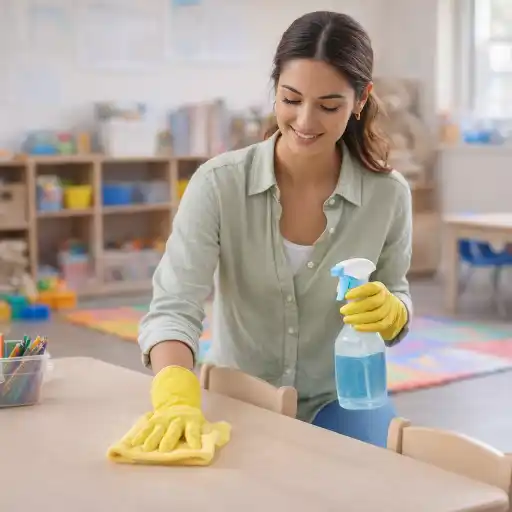
Remember that cleaning surfaces is one part of infection prevention. Handwashing, appropriate ventilation, safe food practices, and keeping children’s personal items separate also contribute to a healthier classroom.
How can a quick classroom reset stay safe and effective?
A short reset works best when the steps are simple, supplies are ready, and responsibilities are clear. It can help staff return the room to a usable state after an activity or before the next group uses an area. A reset is not a substitute for the full cleaning, sanitizing, or disinfecting procedures required for a particular task.
Use a quick routine such as this, adapting it to your program’s policy:
- 🧽 **Clear and sort:** remove dishes, visible debris, and materials that need laundering or special handling.
- Clean visible soil: use the appropriate soap or detergent and water, then rinse or dry as product directions require.
- Choose the next step: sanitize or disinfect only when the surface or situation calls for it.
- Protect supervision: arrange coverage so children remain actively supervised while staff complete the task.
- Reset supplies and materials: return only clean, dry items to children’s reach and put used cleaning materials in the designated place.
Always read product labels before use. Keep children away while cleaning, sanitizing, or disinfecting products are being applied, maintain fresh air flow, and leave the product on the surface for the full label contact time. Do not mix products, and store chemicals locked, labeled, and out of children’s reach.
A brief classroom reset checklist can reinforce these steps and help the team share responsibility. Use ChildCareEd’s Daily Cleaning Checklist Buy Now $0.00 as a reference for opening, during-the-day, and closing tasks.
What common mistakes should programs avoid?
Even experienced teams can fall into shortcuts during busy transitions. Support staff with demonstration, accessible procedures, and time to complete the task safely; a missed step is often a systems issue to solve together, not a reason to blame an individual.
- Sanitizing or disinfecting before cleaning: remove visible dirt first so the product can work as directed.
- Wiping too soon: follow the label’s contact time and keep the surface wet for the full period.
- Assuming all products work on all surfaces: check the label and manufacturer instructions for the specific material and intended use.
- Using chemicals near children: keep children away during application, maintain ventilation, and store products securely afterward.
- Mixing chemicals: never combine cleaners or disinfectants unless the product label explicitly directs it; some combinations can cause serious harm.
- Returning damp or contaminated materials: use a designated “to be cleaned” area and allow washable items to dry completely before returning them to play.
For more practical advice on product selection and safe handling, consult Head Start’s guidance on selecting and using cleaning, sanitizing, or disinfecting products. The Environmental Protection Agency also advises that children should not apply disinfectants, including disinfectant wipes; adults should use products according to their labels and keep them inaccessible to children.
Post a written schedule, assign tasks by role or shift, and review the routine periodically. State requirements vary - check your state licensing agency.
Conclusion: How can providers put the right routine into practice?
The essential distinction is straightforward: cleaning removes dirt and many germs; sanitizing reduces germs on appropriate clean surfaces; disinfecting kills remaining germs on clean surfaces when the task or situation calls for it. Clean first, choose the appropriate next step, and follow the product label and your program’s procedures.
For a practical start, choose one daily transition—such as after lunch or before closing—to review the routine with staff. Clarify which items need cleaning, which need sanitizing, and which situations call for disinfection. Make supplies accessible to adults but securely stored away from children, and build in the time needed for safe application and contact time.
A short checklist supports consistency, while training can strengthen the team’s understanding of infectious-disease prevention. Pair a classroom-ready reset with the ChildCareEd Prevention and Control of Infectious Diseases Buy Now $16.00 course for a fuller learning experience. With clear roles and realistic routines, providers can protect children’s health while keeping the classroom ready for discovery and play.
Further learning: ChildCareEd courses relevant to health and infection prevention include Prevention and Control of Infectious Diseases Buy Now $16.00, How To Keep A Healthy Class: Six Tips for Germ Control Buy Now $35.00, Shoo, Germs! Don’t Bother Me! Buy Now $24.00, Handling and Storage of Hazardous Materials Buy Now $10.00, and BBP (Bloodborne Pathogens) Buy Now $32.00. Review course details and check whether the training fits your individual professional-development needs.
- CDA Certification en Español: Recursos y Consejos para Educadores Bilingües
- 10 Ejemplos de Cómo la Cultura Influye en el Desarrollo Infantil
- Cómo Trabajar en el Cuidado Infantil en California: Requisitos y Pasos
- How can child care programs prevent the spread of illness?
- How can child care programs prevent and control infections?
- How can child care programs control infections and keep kids healthy?
- How can childcare settings prevent the spread of illness?
- How can child care programs use safe diapering and toileting procedures to protect children and stay compliant?
- How should childcare programs clean, sanitize, and disinfect spaces to keep children and staff safe?
- How can group child care programs effectively prevent the spread of illness?
- How can I manage childcare supplies and classroom materials efficiently and safely?
- How Can Daycare Programs Prevent the Spread of Common Illnesses?
- What Are the Best Practices for Diapering and Handwashing Procedures in Child Care?
- How Can Classrooms Prevent the Spread of Illness During Cold and Flu Season?
- How Can Child Care Providers Strengthen Food Safety Practices?
- How Can Child Care Centers Properly Sanitize Toys?
- Why Doesn’t a Handwashing Reminder Alone Close Germ-Control Gaps in Child Care?
- How Often Should Daycare Toys and Classroom Materials Be Cleaned and Sanitized?
- Cleaning, Sanitizing, and Disinfecting in Child Care: What’s the Difference?
- What Health Supplies Should Family Child Care Providers Keep Stocked?
