When a child gets a scrape, a stomach bug moves through the group, or the soap dispenser runs dry, reliable supplies help you respond calmly and keep care routines moving. Use this practical guide to prioritize health essentials, organize them safely, and set up a replenishment routine; Minnesota providers can also explore Family Child Care Health Essentials  Buy Now $16.00 for focused learning on infection prevention, food handling, and home-environment hazards. The course is approved only in Minnesota, so check its details and your local training requirements before enrolling.
Why does a thoughtful health-supply inventory matter?
Family child care homes combine the routines of a household with the responsibilities of a licensed care setting. A well-planned supply system helps providers avoid preventable gaps in first aid, hygiene, cleaning, food handling, and emergency readiness. It also reduces the pressure of improvising while supervising children.
Inventory is more than purchasing. It is a way to know what is available, where it is stored, whether it is safe to use, and when it needs replacement. A current record can help you identify expired products, damaged equipment, low stock, or supplies that no longer fit the ages and individual health needs of the children in your care.
Organization supports consistent practice, too. When supplies have clear locations and staff know the routine, it is easier to clean up promptly, follow care plans, and respond to minor incidents without losing sight of the group. A printable Classroom Supply Inventory Resource Guide Buy Now $1.49 can help you review, track, and manage supplies during setup or regular inventory checks.
Think of your inventory as a practical safety tool: it connects thoughtful purchasing with daily routines and gives you a clearer picture of what your program needs.
Which first-aid and emergency supplies belong on the list?
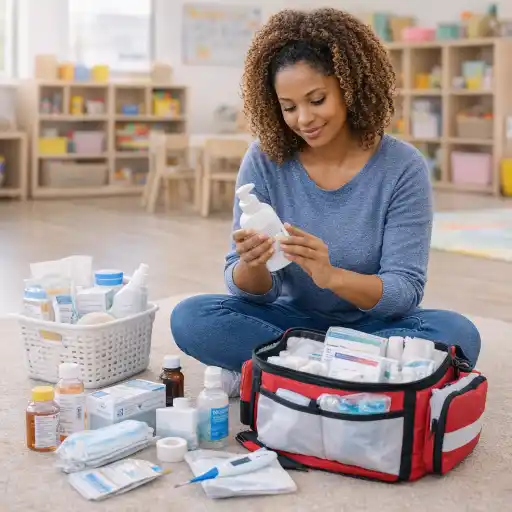
Keep an up-to-date first-aid kit in a closed, clearly labeled container. It should be readily accessible to adults but inaccessible to children. Check your local rules for required contents and kit locations, including whether portable kits are needed for outings or vehicles. Guidance from Caring for Our Children Basics on first-aid and emergency supplies recommends restocking supplies after each use and keeping kits current.
Common first-aid items may include assorted adhesive bandages, sterile gauze, medical tape, disposable gloves, blunt-tip scissors, tweezers, and instant cold packs. Keep only items appropriate for your program’s policies and the children in care; medication should not be added or administered casually. Follow each child’s written health plan and applicable medication-consent procedures.
Emergency provisions deserve a separate check. Depending on your plan, household size, and local hazards, maintain a portable go-kit and supplies for sheltering in place. Include age-appropriate water and food, diapers and wipes as needed, a flashlight and batteries, current emergency contacts, attendance information, and comfort items. Child Care Aware® of America describes portable and 72-hour kits and advises tailoring contents to currently enrolled children and staff in its emergency supply kit guidance.
- 🩹 Check the first-aid kit after every use and record what needs replacing.
- Keep emergency supplies accessible to adults, clearly labeled, and out of children’s reach.
- Review the kit when enrollment, health plans, or emergency procedures change.
What hygiene and cleaning supplies should stay available?
Everyday hygiene supplies support routines that protect children and caregivers: liquid soap, paper towels or clean hand-drying options, tissues, toilet paper, and child-appropriate supplies for diapering and toileting. Keep gloves available for tasks that may involve blood or bodily fluids, and use them as directed by your program’s procedures. Ensure children cannot access disposable items that could create a choking or other hazard.
For environmental cleaning, stock products appropriate to the surfaces and tasks in your home program. Store cleaning agents in their original containers with labels intact, and keep them secured away from children. Do not mix products. Read and follow label directions, including protective equipment, ventilation, dilution, and the amount of time a disinfectant must remain wet on a surface.
Remember that cleaning, sanitizing, and disinfecting are not interchangeable. Cleaning removes visible dirt and many germs; sanitizing reduces germs on appropriate surfaces; disinfecting is used for specific purposes and according to product instructions. The CDC’s guidance on cleaning and disinfecting early care and education settings explains these distinctions and emphasizes safe product use. The CFOC standard on routine cleaning, sanitizing, and disinfecting also recommends keeping a posted schedule and ensuring children are not nearby while these products are in use.
Set minimum stock levels for frequently used items—such as soap, gloves, paper towels, and approved cleaning products—so you can reorder before supplies run out.
How should food, allergy, and medication supplies be managed?
Food-related supplies help protect children during preparation, meals, and snacks. Keep clean, age-appropriate dishes and utensils; food-storage containers; and the supplies needed to follow your program’s food-safety procedures. Check refrigerator temperatures and storage practices according to applicable guidance, and label or separate food as needed to prevent mix-ups. The CDC’s infection-prevention guidance recommends careful cleaning and disinfecting procedures around feeding and food-contact surfaces.
Allergy readiness depends on current information as much as equipment. Keep each child’s allergy and emergency action plan where authorized caregivers can find it, and confirm that the supplies or prescribed medication identified in that plan are present, unexpired, and stored as directed. Make sure staff understand the program’s response procedures and know whom to contact. Never substitute a general supply list for a child’s individualized medical instructions.
For medication, follow written authorization, labeling, storage, documentation, and administration requirements. Keep medication secured from children but accessible to the responsible adult in an emergency, consistent with regulations and the child’s plan. Check expiration dates routinely and clarify any unclear directions with the family and appropriate health professional. Do not stock or administer medicines without following the required procedures.
Food and medication requirements are especially important because they are child-specific and may be regulated. Childcare.gov’s overview of health and safety requirements notes that rules include food safety, handling sick children, and storing and giving medication. State requirements vary - check your state licensing agency.
How can you organize, track, and restock supplies efficiently?
A simple inventory can prevent duplicate purchases and last-minute shortages without becoming another burdensome task. Start by grouping supplies into useful categories: first aid and emergency, hygiene, cleaning and sanitation, food service, and child-specific health needs. Record each item’s name, location, quantity, expiration date where relevant, and minimum amount to keep on hand.
Use a printed checklist, spreadsheet, or shared digital document—whichever you can update consistently. The four-page Classroom Supply Inventory Resource Guide Buy Now $1.49 is designed to help educators review and track classroom materials during setup and routine checks; adapt its inventory approach to your family child care health supplies.
- Assign one person to check priority items weekly and update the list.
- Set a monthly date to inspect expiration dates, packaging, and equipment condition.
- After use, record what was used and add it to the replenishment list.
- Store supplies by function, label shelves or bins, and keep hazardous products locked away.
- Rotate shelf-stable items by placing newer stock behind older stock.
Make the routine small and sustainable: a brief weekly check catches common shortages, while a more thorough monthly review can address expiration dates and changing needs. A useful inventory is not the longest one—it is the one that reflects what your program actually uses and gets updated reliably.
What common stocking mistakes can providers avoid?
Even conscientious providers can run into predictable problems. One is treating a single first-aid kit as the answer to every need. Kits should be appropriate to the care locations and outings in your plan, and their contents must be checked and replenished. Another is overlooking child-specific requirements: an allergy plan, prescribed medication, or emergency contact information can change when enrollment or a child’s needs change.
Providers may also purchase too much of a product before checking storage space, expiration dates, or whether it is suitable for the task. Cleaning products are not interchangeable; always follow labels and relevant public-health directions rather than relying on assumptions. Avoid decanting chemicals into unmarked containers, mixing products, or storing hazardous items where children can reach them.
Finally, do not confuse a supply checklist with a complete health and safety plan. Supplies support practice, but staff also need clear routines, appropriate training, current child records, and emergency procedures. Licensing rules and training expectations differ by jurisdiction and program type, so verify specific requirements directly with the licensing agency.
For practical professional development on family child care health practices, Minnesota providers may review Family Child Care Health Essentials Buy Now $16.00. The course covers biological contaminants, food storage and preparation, infectious disease prevention, and environmental hazards. It is approved only in Minnesota; providers elsewhere should confirm that any training they choose fits their own requirements.
Conclusion: What health supplies should you keep stocked?
A dependable family child care health inventory covers first-aid and emergency items, hand-hygiene essentials, cleaning products, food-service supplies, and the child-specific materials identified in care plans. Keep items labeled and safely stored, check quantities and expiration dates on a schedule, and replace supplies promptly after use.
The key is not buying everything imaginable. It is maintaining the right supplies for your enrolled children, your daily routines, your emergency plan, and your local licensing requirements. A concise, regularly updated inventory can reduce avoidable stress and make your home program more prepared to provide safe, responsive care. Use a printable inventory guide as a starting point, then tailor your checklist and restocking routine to your own setting.
Which five English-language courses can support related learning?
- Family Child Care Health Essentials Buy Now $16.00 — family child care health and safety topics; approved only in Minnesota.
- Safe and Sound: Creating Healthy Environments for Every Child Buy Now $55.00 — hygiene, food safety, and safe-environment practices.
- Prevention and Control of Infectious Diseases Buy Now $16.00 — infection prevention and control in child care.
- Handling and Storage of Hazardous Materials Buy Now $10.00 — safe handling, storage, and disposal practices.
- Nutrition Essentials for Child Care Providers Buy Now $16.00 — food storage, preparation, allergies, and nutrition.
Course availability, hours, and acceptance for licensing or professional development vary. Confirm details with ChildCareEd and your state licensing agency.
- How To Keep A Healthy Class for Infants/Toddlers
- How To Keep A Healthy Class: Six Tips for Germ Control
- Bienvenido! Welcoming All Families
- Moving About the Classroom: Effective Transitions for Everyday
- Pediatric RSV First Aid & CPR/AED
- Family Child Care Health Essentials
- Texas Director Credential
- Everyday Safety: Creating Healthy Environments
- Moving About the Classroom: Effective Transitions for Everyday
- Recursos en Español sobre el Sueño Seguro del Bebé
- Cómo usar tu certificación de 90 horas en Maryland para completar tu CDA
- Que es Título 22 en California?
- Capacitación en Salud y Seguridad Preventiva en Línea para Proveedores de Cuidado Infantil
- Regulaciones de Cuidado Infantil en Maryland para Centros y Hogares de Cuidado Infantil Familiar
- Regulaciones de Licenciamiento de Cuidado Infantil en California para Centros y Hogares de Cuidado Infantil Familiar
- Normas de Licenciamiento de Cuidado Infantil en Virginia para Centros Diurnos Infantiles y Hogares Diurnos Familiares
- Proporciones de Cuidado Infantil y Tamaños de Grupo por Edad en Maryland (Guía Rápida para Centros y Hogares)
- Horas de Capacitación Anual para Proveedores de Cuidado Infantil en Maryland
- Lista para Guardería en Casa en California: Cómo Iniciar una Guardería en el Hogar
- Lista para Guardería en Casa en Texas: Cómo Iniciar una Guardería en el Hogar
- Capacitación Previa al Servicio para Proveedores de Cuidado Infantil en Dakota del Norte
- Capacitación Previa al Servicio para Proveedores de Cuidado Infantil en Maryland
- Capacitación Previa al Servicio para Proveedores de Cuidado Infantil en Georgia
- Requisitos para Guarderías en Casa en Georgia
- La mejor manera de hacer seguimiento a la capacitación de su equipo de daycare How to Organize Staff Training for Your Child Care Center Cómo organizar la capacitación del personal para su centro de cuidado infantil
- What Do You Need to Open a Daycare at Home? Start With Your House, Not the Toys
- Can Your House Be a Daycare? In-Home Daycare Requirements to Check Before You Apply
- How Can You Set Up an Infant Room So Substitutes Can Find What They Need?
- What Health Supplies Should Family Child Care Providers Keep Stocked?
