Food safety in child care protects children whose developing bodies can be especially vulnerable to foodborne illness, choking, and allergic reactions. Build a reliable daily system with Food Preparation and Nutrition  Buy Now $32.00 to strengthen handling, storage, preparation, and allergy-prevention practices while earning relevant professional development. For broader health protections, explore Safe and Sound: Creating Healthy Environments for Every Child Buy Now $55.00.
Why does food safety deserve focused attention in child care?
Meals and snacks are more than routine tasks: they are moments when children depend on adults to manage invisible hazards. Infants and young children face particular risks because of developing immune systems, age-related feeding skills, and common choking hazards. The Partnership for Food Safety Education reports that children under four are more likely to acquire bacterial foodborne infections than adults, making consistent prevention essential.
Food safety is also a shared responsibility. Teachers, floaters, substitutes, kitchen staff, and directors may handle food or supervise meals. A strong program therefore treats #food safety as a system of coordinated habits rather than a task assigned to one employee. The Institute of Child Nutrition’s Child Care Center Food Safety Guide emphasizes personal hygiene, time and temperature control, cleaning and sanitizing, and safe preparation for infants and young children.
State requirements vary - check your state licensing agency. Directors should also review local health department expectations, CACFP requirements when applicable, and facility-specific policies.
How can programs prevent contamination before food is served?
Prevention begins with purchasing and receiving. Use reputable suppliers, inspect packages for damage, check dates, and promptly refrigerate or freeze perishable items. Keep raw animal products separated from ready-to-eat foods during transportation, storage, and preparation. Written procedures help staff make the same safe decision even during a busy lunch transition.
- Wash hands with soap and water before food preparation and after toileting, diapering, coughing, sneezing, or handling raw foods.
- Use clean, food-safe equipment and dedicate preparation tools when possible.
- Wash produce under running water before serving or cutting.
- Keep food, utensils, and preparation areas protected from children’s hands, cleaning chemicals, and non-food materials.
- Exclude or reassign staff who are ill or have uncovered infected cuts, according to program policy and public health guidance.
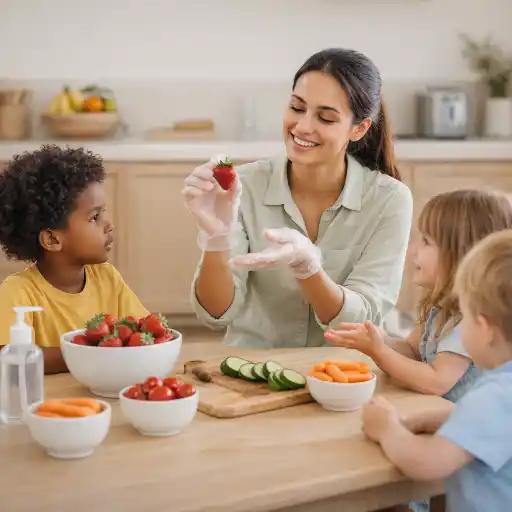
Hand hygiene deserves special emphasis. The Virtual Lab School identifies poor personal hygiene as a major contributor to foodborne illness outbreaks. Directors can support compliance by placing sinks and supplies conveniently, modeling handwashing, observing routines respectfully, and documenting refresher training. When children participate in age-appropriate food preparation, these routines can also help make kitchen activities both safe and educational; see how to include kids in the kitchen.
What temperature and storage practices reduce foodborne illness?
Time and temperature control limit the growth of harmful microorganisms. Use calibrated thermometers rather than appearance, smell, or touch. Keep cold foods cold and hot foods hot according to applicable food code and licensing requirements. Because exact thresholds and holding times may vary by jurisdiction and food, programs should follow their approved procedures and current regulatory guidance.
Cooling is a frequent point of failure. Divide large amounts of cooked food into shallow containers, leave space for air circulation, and refrigerate promptly. Record cooling, refrigeration, cooking, reheating, and holding temperatures when required by the program’s food safety plan. The ICN CACFP Food Safety Toolkit provides sample SOPs and logs for receiving, refrigeration, cooking, cooling, holding, thermometer calibration, and cleaning.
- Label prepared foods with dates and discard according to policy.
- Store raw meat, poultry, and eggs below ready-to-eat foods to reduce dripping and cross-contamination.
- Thaw food safely under approved refrigeration or other approved methods, never on a counter.
- Reheat only as permitted by your procedure and verify the internal temperature.
- When in doubt about safety, do not serve the food; document the decision and notify the director.
How should staff clean, sanitize, and disinfect food areas?
These terms describe different actions. Cleaning removes soil with soap, water, and scrubbing. Sanitizing reduces microorganisms on food-contact surfaces to an acceptable level. Disinfecting uses stronger products for specific contamination or illness-control needs. The CDC advises cleaning before sanitizing or disinfecting and following product labels carefully.
Food preparation counters, highchair trays, dishes, utensils, bottle-feeding equipment, and food preparation tools require a dependable schedule. Head Start’s cleaning and sanitizing schedule recommends cleaning and sanitizing food preparation surfaces before and after each use and cleaning and sanitizing eating utensils and bottle-feeding equipment after each use.
- 🧽 Use separate, clean cloths or disposable towels for food-contact areas; avoid dirty sponges.
- Follow the product’s dilution, application, and contact-time directions.
- Never mix bleach with ammonia or other incompatible chemicals.
- Store chemicals labeled, secured, and out of children’s reach.
- Air-dry sanitized items when the procedure requires it, and protect them from recontamination.
Directors can make these practices sustainable with posted checklists, assigned responsibilities, supply inventories, and brief observations. A checklist should support professional judgment, not replace it.
How can programs safely manage allergies, infants, and choking risks?
Every child with a known food allergy should have an accessible, current, written care plan developed with the family and health care provider. The Child Care Technical Assistance Network recommends that caregivers know the allergen, prevention steps, symptoms, medications, and emergency response. Staff and substitutes need training before they are responsible for the child.
Preventing cross-contact requires more than removing an allergen from one plate. Review labels, recipes, shared utensils, preparation surfaces, storage containers, and serving practices. Keep allergy information confidential but available to personnel who need it. During meals and field trips, ensure that emergency medications and care plans are available as required by the child’s plan and state policy.
- Maintain an updated allergy list and verify changes with families.
- Read labels every time; ingredients and manufacturing statements can change.
- Use clean utensils and surfaces for allergen-safe meals.
- Teach children not to share food, while avoiding shame or fear.
- Follow the emergency plan immediately and contact emergency services when required.
Infant feeding requires individualized attention to breast milk, formula, bottles, textures, developmental readiness, and family instructions. The Child Care Technical Assistance Network’s Nutrition and Food Service standards address bottle warming, human milk and formula storage, choking hazards, controlled kitchen access, and feeding practices. Cut foods appropriately, supervise children while eating, and never leave infants or toddlers unattended with food.
How can directors turn food safety guidance into daily practice?
A written food safety plan translates general recommendations into routines specific to the program. An HACCP-based approach identifies hazards, critical control points, monitoring methods, corrective actions, and documentation. New York’s child care guidance explains that HACCP principles can be adapted to child care and encourages programs to seek assistance from their local health department.
Begin with a walk-through from delivery to disposal. Ask where contamination, temperature loss, allergen exposure, or choking risk could occur. Then develop short SOPs that staff can use during real transitions.
- Assign responsibility for receiving, storage, preparation, service, cleanup, and recordkeeping.
- Train all food handlers during orientation and provide periodic refreshers.
- Use logs for temperatures, refrigerator checks, cleaning, training, and corrective actions.
- Review incidents without blame; focus on system improvements and retraining.
- Audit procedures during different shifts, including breakfast, snacks, and special events.
Common mistakes include relying on smell to judge safety, leaving food at room temperature during activities, forgetting highchair frames and table legs, allowing untrained substitutes to serve meals, and treating allergy information as a one-time enrollment form. A supportive director anticipates these vulnerabilities and makes the safe action the easy action.
What are the main takeaways for child care leaders?
How can child care providers strengthen food safety practices? By combining trained people, clear procedures, appropriate equipment, careful supervision, and continuous review. Food safety begins before food arrives, continues through hand hygiene, storage, preparation, temperature control, service, and cleanup, and includes individualized protection for children with allergies or feeding needs.
Use the referenced ICN toolkits, federal guidance, CDC cleaning resources, and local regulatory information to build a practical plan. Pair that plan with professional learning such as Prevention of and Response to Allergic Reactions Buy Now $8.00, Nutrition Essentials for Child Care Providers Buy Now $16.00, and Health and Nutrition Buy Now $24.00. Consistent, respectful routines protect children and help staff feel confident in the important work they do every day.
- Safe and Sound: Creating Healthy Environments for Every Child
- SIDS: Saving Babies: A Change of Position, A Change in Tradition
- Basic Health & Safety and Breastfeeding Awareness
- Medication Administration and the Prevention of and Response to Food and Other Allergies in the Child Care Environment
- Health and Safety Orientation
- Nutrition Essentials for Child Care Providers
- Pediatric RSV First Aid & CPR/AED
- Medication Administration and the Prevention of and Response to Food and Other Allergies in the Child Care Environment
- Texas Director Credential
- Prevention of and Response to Allergic Reactions
- What Parents and Educators Need to Know About Child Safety
- 🧼Band-Aids, Germs & Giggles: Why Basic Health & Safety Training Is a Big Deal in Child Care
- 🩺Safe & Sound: Health and Safety Requirements Every Childcare Provider Must Know
- 10 Ejemplos de Cómo la Cultura Influye en el Desarrollo Infantil
- Capacitación en Salud y Seguridad Preventiva en Línea para Proveedores de Cuidado Infantil
- Cómo Empezar una Guardería en Casa: Requisitos y Pasos
- Proporciones de Cuidado Infantil y Tamaños de Grupo por Edad en Maryland (Guía Rápida para Centros y Hogares)
- Proporciones de Cuidado Infantil y Tamaños de Grupo por Edad en Virginia (Guía Rápida para Centros y Hogares)
- Lista para Guardería en Casa en Texas: Cómo Iniciar una Guardería en el Hogar
- Cómo Trabajar en el Cuidado Infantil en Wisconsin: Requisitos y Pasos
- Cómo simplificar la capacitación para sus empleados de daycare
- How can child care programs build healthy eating habits that last?
- How Can You Prepare Your Classroom for Fall While Prioritizing Safety, Health, and Learning?
- What Massachusetts EEC Regulations Do Child Care Providers Need to Follow?
- What Is the Difference Between Babysitting, Child Care at Home, and a Licensed Home Daycare?
- Mawlid Around the World: How Kids Can Explore Different Traditions and Celebrations
- From Mealtime to Manners: How Cultural Influences Show Up in Everyday Child Care
- How Can Preschool Classrooms Strengthen Food Safety and Allergy Management?
- How Can Child Care Providers Build Healthy Habits for Young Children?
- How Can Child Care Providers Strengthen Food Safety Practices?
