A stomach bug can move through a childcare room quickly, but consistent routines can limit exposure and protect children, families, and staff. ChildCareEd’s Prevention and Control of Infectious Diseases  Buy Now $16.00 is a focused two-hour online course that can help you strengthen everyday infection-control practices and build confidence responding to illness. For practical classroom strategies, explore How To Keep A Healthy Class: Six Tips for Germ Control Buy Now $24.00 as a companion learning option while you review the steps below.
Stomach bugs are a broad category of illnesses that can cause vomiting and diarrhea; norovirus is one highly contagious cause. Because children share toys, meals, bathrooms, and close contact, a prevention plan works best when it is consistent, easy to follow, and understood by every staff member. The guidance below turns key public-health recommendations into everyday childcare practice.
Why does stomach-bug prevention matter in childcare?
Norovirus can spread through direct contact with an infected person, contaminated food or water, and surfaces touched by infectious stool or vomit. Vomiting can also disperse infectious material onto nearby objects and surfaces. A child or staff member may be contagious before recognizing symptoms, and norovirus can continue to be shed in stool after someone feels better. These features make early, consistent prevention essential—not a response reserved only for a confirmed outbreak.
In group care, young children are still learning toileting and handwashing skills. They may mouth toys, need help with diapering, or touch shared surfaces throughout the day. Staff therefore carry much of the responsibility for interrupting transmission through supervision, hygiene, cleaning, and prompt communication.
- Make handwashing and cleaning routines visible and predictable in every room.
- Keep children’s personal belongings and food items separate.
- Use illness logs to spot clusters and inform timely decisions.
- Support families with clear, respectful guidance rather than blame.
These steps can reduce preventable exposures and help maintain a healthier learning environment. They also give staff a shared plan during a stressful moment, when a calm and coordinated response matters most.
Which daily routines help stop transmission?
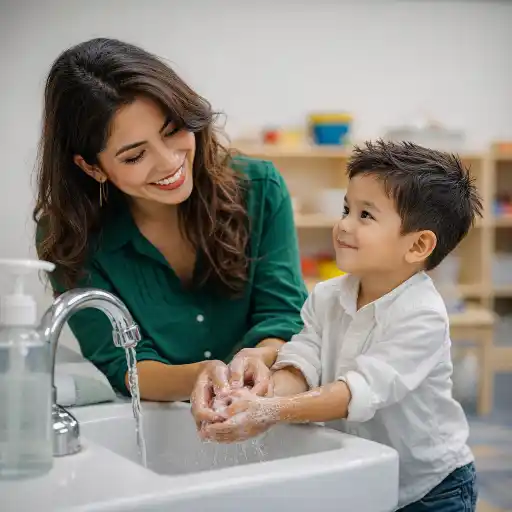
Handwashing with soap and water is a core defense against norovirus. The CDC recommends washing for at least 20 seconds, especially after using the toilet or changing diapers and before preparing, serving, or eating food. Hand sanitizer alone does not work well against norovirus, so it should not replace handwashing. Adults should closely supervise young children and help them wash thoroughly, including fingertips and between fingers.
Build handwashing into the schedule rather than relying on reminders given only when staff notice a problem. A posted routine can help children anticipate the next step and help substitute staff follow the same expectations. The CDC’s norovirus prevention guidance emphasizes soap-and-water washing and safe food handling.
- 🧼 Wash hands after toileting, diaper changes, assisting a sick child, and handling soiled clothing or linens.
- Wash hands before food preparation, feeding, serving meals, and eating.
- Use individual cups and utensils; avoid shared pitchers and communal food during illness concerns.
- Keep handwashing supplies stocked and within easy reach of adults.
- Train staff to follow the same practices, including floaters and substitutes.
Food safety also matters: wash produce, clean and sanitize food-contact equipment, and do not let a sick person prepare or handle food for others. Consistency is more valuable than an elaborate routine that staff cannot maintain.
How should programs respond to vomiting or diarrhea?
When a child or staff member becomes ill, act promptly while preserving the person’s dignity. Move the child to a designated, supervised area away from group activities, contact the family for pickup, and record observed symptoms and the time they began. Do not diagnose; note what was observed and follow your written illness policy. If several people develop similar symptoms within a short period, contact local public health for direction and reporting requirements.
For a vomit or diarrhea incident, keep children away from the affected area until it has been cleaned and disinfected. Staff should wear disposable gloves and any additional protective equipment called for by facility or public-health procedures. Carefully remove visible material without splashing, then clean and disinfect the affected area and nearby surfaces using a product labeled for the intended use. Follow the label’s required wet contact time and ventilation precautions. Never mix cleaning products.
- Bag waste securely and handle contaminated laundry gently, without shaking it.
- Wash hands with soap and water after cleanup and after removing gloves.
- Record the incident, cleanup, family contact, and any related illnesses in the program log.
- Ask public health whether additional steps or notifications are needed if cases cluster.
For detailed, situation-specific instructions, consult the CDC guidance for cleaning and disinfecting after norovirus and your local health department. Follow product labels and facility procedures; surfaces and approved products vary.
How can cleaning and disinfection be done safely and effectively?
Cleaning, sanitizing, and disinfecting are related but distinct steps. Cleaning uses soap or detergent, water, and scrubbing to remove dirt and many germs. Sanitizing reduces germs on items such as toys or feeding equipment that may contact children’s mouths. Disinfecting uses an appropriate product to destroy remaining germs on surfaces, particularly after illness or body-fluid contamination. Clean visibly soiled surfaces before sanitizing or disinfecting.
Use a product effective against norovirus, such as an EPA-registered product whose label includes norovirus, or a correctly prepared bleach solution when appropriate. Follow the product label for dilution, surface compatibility, personal protective equipment, ventilation, and wet contact time. The surface must remain wet for the full contact time for the product to work as directed. Never rely on a quick wipe if the label requires a longer application period.
- Prioritize bathrooms, diaper-changing areas, faucets, door handles, tables, and frequently handled toys.
- Clean and disinfect body-fluid spills immediately and according to written procedures.
- Remove mouthed toys for cleaning and sanitizing before they return to play.
- Keep chemicals labeled, locked away from children, and used only by trained staff.
- Do not mix bleach with ammonia or other cleaners; use fresh solutions and follow local guidance.
The CDC’s cleaning and disinfection guidance for early care and education settings explains the appropriate distinctions and safe product use. Check your state and local rules, since requirements and approved procedures can differ.
When should children or staff stay home, and when should leaders seek help?
Children and staff with vomiting or diarrhea should remain away from the program until they meet applicable return-to-care criteria. For suspected or confirmed norovirus, the CDC advises staying home and avoiding food handling or care of others until at least 48 hours after symptoms stop. Local public-health authorities may provide additional instructions during an outbreak. A child’s return should also consider whether the child can participate comfortably and whether staff can meet the child’s care needs safely.
Policies should clearly identify who makes exclusion decisions, how families are contacted, what information is documented, and who calls public health. Keep a daily illness log with dates, symptoms, classrooms, and staff or children affected. This record can help reveal a pattern before the situation becomes harder to manage.
- Notify the local health department when required, when cases cluster, or when you need outbreak guidance.
- Share factual, confidential updates with families, including symptoms to monitor and the steps the program has taken.
- During an outbreak, follow health-department advice about staffing, group activities, cleaning, and return timing.
- State requirements vary - check your state licensing agency and local public-health guidance.
Common pitfalls include treating sanitizer as a substitute for handwashing, disinfecting before removing visible soil, skipping label contact time, and waiting too long to report clusters. Simple procedures, staff practice, and supportive communication help prevent these gaps.
Conclusion: What should childcare leaders remember?
Preventing the spread of stomach bugs and norovirus depends on a coordinated set of habits: supervised handwashing with soap and water, safe food practices, prompt exclusion of people who are ill, careful cleanup of vomit or diarrhea, and correct disinfection. No single action is enough on its own; reliable routines across classrooms and shifts make the difference.
Prepare before illness occurs: keep supplies accessible, train staff, maintain an illness log, share clear return-to-care expectations with families, and know how to reach local public health. During a suspected outbreak, ask health authorities for direction and follow your jurisdiction’s reporting and exclusion rules. Consistent, compassionate prevention protects children and staff while supporting families through the uncertainty of illness.
To build your team’s knowledge further, consider ChildCareEd’s Prevention and Control of Infectious Diseases Buy Now $16.00 course and the classroom-focused How To Keep A Healthy Class: Six Tips for Germ Control Buy Now $24.00. These English-language training options offer additional learning on illness prevention and practical germ-control routines.
- BBP (Bloodborne Pathogens)
- How To Keep A Healthy Class: Six Tips for Germ Control
- Basic Health & Safety and Breastfeeding Awareness
- What Makes Me Special: An Overview of Autism and ADHD
- Pediatric RSV First Aid & CPR/AED
- Family Child Care Health Essentials
- Texas Director Credential
- Health and Safety Orientation
- Prevention and Control of Infectious Diseases
- Everyday Safety: Creating Healthy Environments
- CDA Certification en Español: Recursos y Consejos para Educadores Bilingües
- Cómo Abrir Una Quardería En Casa Sin Dinero?
- Recursos en Español sobre el Sueño Seguro del Bebé
- North Dakota Daycare Sick Policy: Fever, Vomiting, and Return-to-Care Rules
- 10 Ejemplos de Cómo la Cultura Influye en el Desarrollo Infantil
- Capacitación en Salud y Seguridad Preventiva en Línea para Proveedores de Cuidado Infantil
- Proporciones de Cuidado Infantil y Tamaños de Grupo por Edad en Nueva Jersey (Guía Rápida para Centros y Hogares)
- Proporciones de Cuidado Infantil y Tamaños de Grupo por Edad en Virginia (Guía Rápida para Centros y Hogares)
- Lista para Guardería en Casa en Illinois: Cómo Iniciar una Guardería en el Hogar
- Cómo Trabajar en el Cuidado Infantil en California: Requisitos y Pasos
- Capacitación Previa al Servicio para Proveedores de Cuidado Infantil en Nevada
- Canciones, juegos y preguntas de círculo para niños
- How can child care programs prevent the spread of illness?
- Cómo simplificar la capacitación para sus empleados de daycare
- How can North Dakota providers prevent and manage common illnesses?
- How can childcare settings prevent the spread of illness?
- How Can Daycare Programs Prevent the Spread of Common Illnesses?
- How Long Should a Child Stay Home After Vomiting?
- How Can Childcare Programs Prevent the Spread of Stomach Bugs and Norovirus?
