A mouthed toy can move from one child to another in seconds, but a calm, consistent response helps reduce germ spread without disrupting play. Prevention and Control of Infectious Diseases  Buy Now $16.00 can strengthen your understanding of everyday infection-prevention practices, while How To Keep A Healthy Class: Six Tips for Germ Control Buy Now $24.00 offers additional learning on classroom hygiene and practical routines. Explore these courses to build shared staff knowledge, then read on for ways to make your response to mouthed toys a dependable part of daily care.
Why does a mouthed shared toy need prompt attention?
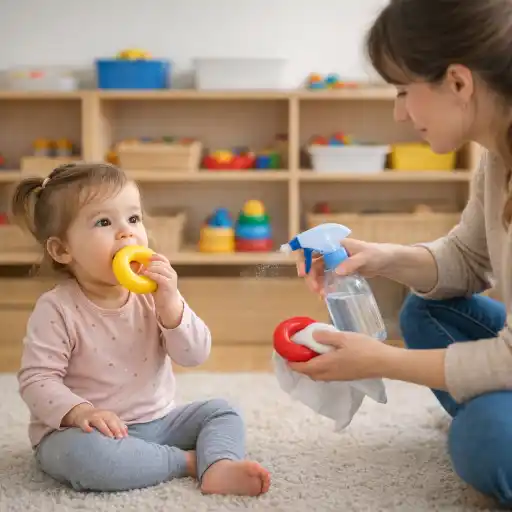
Young children explore by touching, tasting, and sharing materials. When a child mouths a toy, saliva and other germs may remain on its surface; another child may soon reach for it. Promptly removing the item from play interrupts that pathway and signals a simple, supportive health routine—not a reason to shame or frighten a child.
Respond with a neutral phrase such as, “You were exploring that toy with your mouth. I’m going to put it in the wash bin, and we’ll find another one for now.” This protects the child’s dignity while keeping the room’s expectations clear. Avoid scolding: mouthing is common in early childhood and may also meet a child’s sensory needs.
A quick, predictable process benefits children and educators alike. A labeled container, clear staff roles, and a reliable return-to-play procedure make it easier to respond while maintaining supervision. CDC guidance distinguishes cleaning, sanitizing, and disinfecting; using the appropriate step matters because stronger chemicals are not automatically needed for every toy.
- Remove the toy from shared play as soon as you notice it has been mouthed.
- Use the same respectful, matter-of-fact response across the team.
- Keep children engaged with another appropriate toy while the item is processed.
What should staff do immediately after noticing the toy?
First, calmly take the toy out of circulation. Place it in a designated, clearly labeled “mouthed toys” or “to be cleaned” container that is out of children’s reach. Avoid setting it on a clean shelf, table, or in a general toy basket where it could be picked up again. Keep pacifiers separate from other mouthed items when your program’s procedure calls for it.
Then wash your hands after handling the soiled item or placing it in the bin. If saliva is on your hands or another surface, wash with soap and water; use gloves if required by your policy or if there is visible blood or another body-fluid exposure. Continue active supervision—do not leave children unattended to process one toy. Ask a colleague to cover the group if you need to step away.
Inspect the item before cleaning. If it is cracked, torn, porous, has inaccessible holes, or cannot be washed and dried thoroughly, remove it from use and ask a supervisor about repair or disposal. Materials differ: an electronic toy, a plush toy, and a solid plastic block do not share one cleaning method.
- 🧸 Place the item directly in the designated soiled-toy bin.
- Keep dirty and clean toys, drying areas, and storage separate.
- Wash hands after handling the item; maintain supervision throughout.
How should the toy be cleaned and sanitized before reuse?
Follow the toy manufacturer’s care instructions, your program’s written procedure, and applicable local requirements. For a washable, nonporous toy, the usual sequence is to scrub it with warm water and soap or detergent, rinse away loosened soil, and then sanitize it using a method and product suitable for that item. Cleaning first is essential: dirt and saliva can interfere with the next step.
For toys that may go into children’s mouths, use a sanitizer appropriate for the item and follow its label directions. Observe any specified dilution, application method, contact time, and rinsing instructions. Some dishwasher-safe toys may be processed in a dishwasher using the required sanitizing cycle; only use this method for items designed to withstand it. Do not submerge electronic toys or items that trap water unless the manufacturer permits it.
Allow the toy to air-dry completely in a clean area before returning it to play. Do not return damp items to a bin or shelf, where moisture can remain in crevices. The UNC resource on cleaning and sanitizing mouthed items in child care provides a detailed workflow, including storage and separation practices. Product directions and your jurisdiction’s rules take precedence over a general example.
How can providers prevent the toy from being shared again too soon?
A simple workflow prevents accidental reuse. Set up a designated, child-inaccessible collection container near the classroom’s play area, and identify the staff member responsible for processing its contents. Keep clean toys in a separate protected location, and mark the bin clearly so substitutes and float staff understand its purpose. A visible routine helps the whole team follow the same steps during a busy day.
Return an item only after it has been cleaned and, when indicated by policy or regulations, sanitized and completely dried. Check that no residue or moisture remains in holes, seams, or crevices. The CDC advises sanitizing objects and surfaces that children may use, including toys, and following the product’s directions. For a practical distinction among these steps, consult the CDC guidance on cleaning and disinfecting early care and education settings.
Directors can make this dependable without adding a burdensome paperwork system. A brief checklist may record the date, room, processing method, and staff initials, especially when required by program policy. Review the workflow with educators during orientation and refreshers. State requirements vary - check your state licensing agency.
- Use separate, labeled containers for soiled items and clean, dry toys.
- Assign a primary person and a backup for processing mouthed toys.
- Confirm the item is dry and suitable for reuse before returning it.
How can staff respond when a child mouths toys repeatedly?
Repeated mouthing calls for both hygiene and curiosity about the child’s needs. The behavior can be part of typical exploration, especially for infants and toddlers, and may also provide oral sensory input or support self-regulation for some children. Observe when it occurs: Is the child tired, seeking a particular texture, overwhelmed, or simply investigating? Share observations respectfully with the family and, when appropriate, consult the director or relevant support professional.
Provide safe, developmentally appropriate alternatives consistent with family communication, the child’s plan, and program policy. Examples may include a personal, washable teether or another approved oral-sensory item, kept separate from shared materials and cleaned according to its instructions. Never offer a small or damaged item, or use food as a sensory strategy without considering allergies, choking risks, and family guidance.
Use brief, consistent redirection: “That toy stays out of our mouths. Here is your own teether,” followed by praise when the child uses the alternative. Make the environment easier to manage by choosing durable, washable materials and removing objects that are difficult to clean. A supportive approach keeps safety boundaries clear while recognizing that children communicate needs through behavior.
What common mistakes should programs avoid?
In a busy room, shortcuts can seem efficient, but they may make the process less effective or introduce new hazards. A mouthed toy should not go straight back into circulation after a quick wipe unless that method is specifically permitted for the item and follows applicable directions. Nor should every toy automatically be treated with the strongest disinfectant: cleaning, sanitizing, and disinfecting have different purposes.
Other common pitfalls include cleaning before removing visible soil, skipping the label’s contact time, returning a toy while it is damp, and using one method for fabric, wood, plastic, and electronics. Avoid mixing cleaning products. Keep chemicals in their original or properly labeled containers, locked away from children, and use them only as directed. Do not process toys where children can access wet chemical solutions.
Finally, do not let a cleaning task compromise supervision. If the classroom is short-staffed, place the toy in the designated bin and process it when adequate coverage is available. A workable routine is safer than a rushed one. Directors can reduce uncertainty by demonstrating the steps, posting a short procedure, and inviting staff to ask questions without blame.
- Do not return a mouthed toy to play before the required cleaning and drying steps are complete.
- Do not assume every toy can be submerged or put in a dishwasher.
- Do not mix products or leave chemicals accessible to children.
Summary: What is the best response after a child mouths a shared toy?
Remove the toy from play, place it in a designated soiled-item container, and wash your hands after handling it. Clean the toy according to its material and manufacturer instructions; sanitize when required for mouth-contact items, then let it dry fully in a protected area before reuse. Keep supervision steady, respond to the child without shame, and offer another appropriate activity while the toy is out of circulation.
For lasting consistency, establish a labeled bin, clear staff assignments, safe product-use practices, and a brief procedure that reflects your local rules. If a child mouths toys frequently, pair the hygiene routine with observation and supportive, safe alternatives. A calm, repeatable response helps protect children’s health while preserving the exploration and play that matter so much in early learning.
Further learning: These English-language ChildCareEd courses offer related professional development: Prevention and Control of Infectious Diseases Buy Now $16.00; How To Keep A Healthy Class: Six Tips for Germ Control Buy Now $35.00; Shoo, Germs! Don't Bother Me! Buy Now $24.00; Handling and Storage of Hazardous Materials Buy Now $10.00; and Using Toys to Support Learning Buy Now $16.00. Check course details and confirm whether training meets your needs with your licensing agency.
- Moving About the Classroom: Effective Transitions for Everyday
- CDA Bridge Bundle: Preschool
- Pediatric RSV First Aid & CPR/AED
- CDA Bridge Bundle: Family Child Care
- CDA Bridge Bundle: Family Child Care without Portfolio Review
- CDA Bridge Bundle: Infant/Toddler without Portfolio Review
- CDA Bridge Bundle: Preschool without Portfolio Review
- CDA Bridge Bundle: Infant/Toddler
- Texas Director Credential
- Moving About the Classroom: Effective Transitions for Everyday
- CDA Certification en Español: Recursos y Consejos para Educadores Bilingües
- 👧 ¿Cómo iniciar y abrir una guardería en Texas? Lo que necesitas saber
- 🚨 Reporte Obligatorio en Nevada
- Qué capacitación se requiere para ser director de cuidado infantil en Texas?
- Recursos en Español sobre el Sueño Seguro del Bebé
- ¿Cómo pueden los equipos de cuidado infantil practicar habilidades rápidas de primeros auxilios en situaciones reales?
- Capacitación en Salud y Seguridad Preventiva en Línea para Proveedores de Cuidado Infantil
- Lista para Guardería en Casa en California: Cómo Iniciar una Guardería en el Hogar
- Lista para Guardería en Casa en Texas: Cómo Iniciar una Guardería en el Hogar
- Cómo Ser Maestra de Preescolar en Dakota del Norte
- Capacitación Previa al Servicio para Proveedores de Cuidado Infantil en Dakota del Norte
- Celebrando la amistad en el cuidado infantil durante el Día de los Mejores Amigos
- How can child care programs control infections and keep kids healthy?
- How Do You Test Whether a Toy Is Too Small? A Choking Hazard Size Guide by Age
- How Can Child Care Centers Properly Sanitize Toys?
- How Should Providers Review Loose Parts Before They Enter a Toddler Play Area?
- How Can Toddlers Contribute to Classroom Jobs Without Turning Them into Rewards?
- How Often Should Daycare Toys and Classroom Materials Be Cleaned and Sanitized?
- How Can You Choose Toys That Make the Play You Want Possible?
- What Should You Do After a Child Puts a Shared Toy in Their Mouth?
