During flu season, choosing the right cleaning step can help protect children without exposing them to unnecessary chemicals. Build your team’s infection-prevention knowledge with ChildCareEd’s Prevention and Control of Infectious Diseases  Buy Now $16.00, a two-hour online course with practical strategies for reducing the spread of illness in child care. Read on for a clear, classroom-ready approach—and consider the course as a deeper learning option for your staff.
Why does the distinction matter during flu season?
Young children share toys, meals, learning materials, and close spaces throughout the day. They also touch their faces and may put objects in their mouths, so germs can move between children, staff, and families. A deliberate approach to surface care is one useful part of a broader prevention plan—not a replacement for staying home when sick, hand hygiene, vaccination, and good ventilation.
Cleaning, sanitizing, and disinfecting are not interchangeable. Applying a stronger product to every surface can increase chemical exposure and consume staff time without adding meaningful benefit. On the other hand, skipping the cleaning step or using a product incorrectly can make a sanitizing or disinfecting routine less effective.
The CDC recommends routine cleaning in early care settings and targeted sanitizing or disinfecting based on the item, use, and situation. For example, a table with crumbs needs cleaning; an appropriate food-contact surface may need sanitizing after cleaning; and a diaper-changing surface may require disinfection under program procedures. These distinctions help teams use supplies wisely while supporting a safe, welcoming learning environment.
Consistency matters as much as the product. When staff share the same understanding and follow a written routine, they can respond calmly to everyday messes and illness-related needs. A clear plan also helps directors coach staff without turning routine mistakes into blame.
What do cleaning, sanitizing, and disinfecting mean?
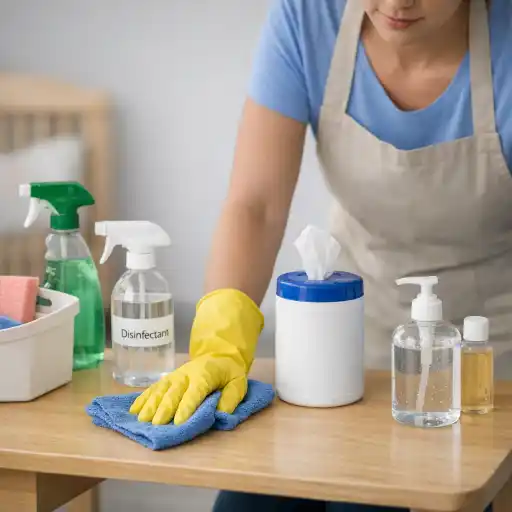
Think of the three processes as different tools. The right choice depends on whether a surface is dirty, how children use it, and whether contamination or illness is involved. The CDC’s early care cleaning and disinfecting guidance emphasizes cleaning surfaces before sanitizing or disinfecting them.
- Cleaning uses soap or detergent, water, and physical action such as scrubbing to remove dirt, food, oils, and many germs. It is the first step when a surface is visibly dirty.
- Sanitizing reduces germs on an appropriate clean surface to levels considered safe under applicable public health standards. It is commonly used for food-contact surfaces and items that children may put in their mouths, following program policy and product directions.
- Disinfecting uses an appropriate product to kill remaining germs on a clean surface. It is commonly used for designated areas such as bathrooms and diaper-changing surfaces, or after body-fluid contamination, as required by guidance and policy.
Remove visible soil before applying a sanitizer or disinfectant because residue can interfere with the product’s intended use. Then follow the label for dilution, application, rinsing, ventilation, protective equipment, and contact time. Contact time is the period the surface must remain visibly wet for the product to work as directed.
Remember: the strongest product is not automatically the best choice. Match the process to the surface and task, and use only products labeled for that setting and purpose.
When should staff use each process?
A task-based schedule is more useful than treating every surface the same way. Set routines according to how often an area is used, whether it touches food or mouths, and whether it has been contaminated. Follow your written policy, local public health guidance, and licensing rules.
- Clean routinely: tables after meals or activities, visibly dirty surfaces, and frequently touched objects such as handles, faucets, and toys. Increase frequency when use or visible soil warrants it.
- Sanitize when appropriate: clean food-contact surfaces and items that children may mouth, using a product or method suitable for that item and following directions.
- Disinfect designated areas: bathrooms and diaper-changing surfaces according to your schedule and applicable requirements.
- Respond to body fluids: use standard precautions, including gloves when indicated; remove the spill, clean the area, and then disinfect as directed.
- During illness: clean frequently touched objects regularly and disinfect when illness or public health guidance indicates. Avoid unnecessary deep cleaning that is not recommended.
Flu prevention depends on more than surfaces. The American Academy of Pediatrics recommends a layered approach in early education and child care that includes handwashing, respiratory etiquette, ventilation, vaccination promotion, and clear illness procedures. Surface routines work best alongside these measures—not as a substitute for them.
State requirements vary - check your state licensing agency and local health department for rules that apply to your program. Keep a written schedule that identifies the task, frequency, responsible staff member, and any required sign-off.
How can providers use products safely and effectively?
Product directions are part of the procedure, not optional fine print. Read the label before use and ensure staff know which surfaces the product is intended for, how it should be applied, and whether rinsing or protective equipment is required. EPA-registered disinfectants list the germs and use conditions for which their claims have been reviewed; consult the EPA guidance on registered disinfectants and labels when selecting or checking a product.
- Keep children away while cleaning, sanitizing, or disinfecting products are being applied. Maintain fresh air flow as directed.
- Keep a surface visibly wet for the full contact time on the label; reapply if needed and permitted by the directions.
- Wear gloves, goggles, or other protective equipment when the label calls for them.
- Never mix cleaners or disinfectants unless the labels explicitly say the combination is safe. Bleach and ammonia can produce dangerous fumes.
- Store products in their original or properly labeled containers, locked and out of children’s reach.
- Wash hands after handling products and after cleaning up waste, following your program’s procedures.
🧽 Practical reminder: Before using a product on electronics, toys, or other specialized materials, check the manufacturer’s instructions and the product label for compatibility.
Directors can support safe practice by keeping written directions accessible to staff, providing demonstrations, and planning coverage so cleaning tasks do not compromise active supervision.
What common mistakes should programs avoid?
Busy classrooms make shortcuts tempting, especially when illness is circulating. A supportive system—clear expectations, accessible supplies, and enough time—helps staff follow procedures reliably. Treat missed steps as an opportunity to strengthen the routine and clarify responsibilities.
- Sanitizing or disinfecting before cleaning: remove visible dirt first, then apply the next process if needed.
- Wiping a product away too soon: check the label and maintain the required wet contact time.
- Assuming one product works for every task: verify that the product is appropriate for the surface and intended use.
- Using chemicals while children are nearby: move children away during application and maintain ventilation as directed.
- Mixing products or transferring them into unlabeled bottles: never mix incompatible chemicals and preserve clear product identification.
- Disinfecting everything excessively: follow routine guidance and target extra steps to illness, contamination, or the requirements for specific areas.
Use a brief staff refresher before flu season and revisit the plan when a product, classroom setup, or public health recommendation changes. Invite staff to identify bottlenecks: Is the “to be cleaned” bin easy to reach? Are directions readable? Is there time for the surface to stay wet while children remain supervised elsewhere?
For additional professional development, ChildCareEd offers How To Keep A Healthy Class: Six Tips for Germ Control Buy Now $24.00, Shoo, Germs! Don’t Bother Me! Buy Now $24.00, Handling and Storage of Hazardous Materials Buy Now $10.00, and BBP (Bloodborne Pathogens) Buy Now $32.00. Review each course’s details and check whether it meets your specific training needs or local requirements.
How can directors make the routine practical for staff?
A good routine should fit the rhythm of the classroom. Post a short, task-based schedule where staff can see it, and assign responsibility by role or shift. Include what to do, when to do it, which process to use, and where supplies and clean materials belong. This makes expectations visible and reduces the need for staff to guess during a busy day.
Consider organizing the schedule around predictable moments:
- After meals and messy activities: remove debris and clean tables and work surfaces.
- After diapering or toileting: follow the full procedure for the changing or bathroom area.
- When a toy is mouthed or visibly soiled: remove it from circulation and place it in a designated container for appropriate processing.
- At opening and closing: check high-touch areas, waste bins, supplies, and any scheduled tasks.
- When illness or a body-fluid incident occurs: follow the written response plan and document steps as required.
Train new staff with demonstrations and use brief refreshers to reinforce contact time, safe storage, ventilation, and hand hygiene. Keep a simple log if your program’s policy or licensing rules require one; records can also help directors spot recurring gaps and adjust staffing or supplies.
Remember that cleaning is only one layer of prevention. Encourage families to follow the program’s illness policy, support handwashing and respiratory etiquette, and maintain ventilation. A calm, consistent plan helps protect children while keeping the classroom focused on play and learning.
Conclusion: What should childcare providers remember?
During flu season, the essential sequence is straightforward: cleaning removes dirt and many germs; sanitizing reduces germs on appropriate clean surfaces; disinfecting kills remaining germs on clean surfaces when the task or situation calls for it. Clean first, choose the right process, and follow the product label and program procedures.
Make the routine workable: post a clear schedule, assign responsibility, protect supervision, and keep chemicals secured. Pair surface care with hand hygiene, ventilation, illness policies, and other prevention practices. These measures support a healthier setting without relying on unnecessary or excessive chemical use.
Use the next staff meeting to review one familiar task—such as cleaning after lunch—and ask the team to identify whether it needs cleaning, sanitizing, or disinfection. For a fuller learning experience, explore ChildCareEd’s Prevention and Control of Infectious Diseases Buy Now $16.00 course, then confirm any training-hour or approval questions with your state licensing agency. State requirements vary - check your state licensing agency.
- What Makes Me Special: An Overview of Autism and ADHD
- Birth to Five CDA Credential with Portfolio Review
- Pediatric RSV First Aid & CPR/AED
- CDA Bridge Bundle: Family Child Care without Portfolio Review
- CDA Bridge Bundle: Infant/Toddler without Portfolio Review
- CDA Bridge Bundle: Preschool without Portfolio Review
- Texas Director Credential
- Shoo, Germs! Don't Bother Me!
- Recursos en Español sobre el Sueño Seguro del Bebé
- Que es Título 22 en California?
- Capacitación en Salud y Seguridad Preventiva en Línea para Proveedores de Cuidado Infantil
- ¿Cómo solicito la licencia para una guardería en California?
- Proporciones de Cuidado Infantil y Tamaños de Grupo por Edad en Maryland (Guía Rápida para Centros y Hogares)
- Proporciones de Cuidado Infantil y Tamaños de Grupo por Edad en Virginia (Guía Rápida para Centros y Hogares)
- ¿Cuál es la Diferencia Entre la Crianza Respetuosa y la Crianza Permisiva?
- Lista para Abrir una Guardería en Casa en Virginia: Cómo Empezar
- Lista para Guardería en Casa en Texas: Cómo Iniciar una Guardería en el Hogar
- Ejemplos de Crianza Respetuosa vs. Crianza Permisiva
- Capacitación Previa al Servicio para Proveedores de Cuidado Infantil en Dakota del Norte
- How can child care programs prevent and control infections?
- How can child care programs use safe diapering and toileting procedures to protect children and stay compliant?
- How should I prepare my classroom for cold and flu season beyond cleaning?
- How Can Classrooms Prevent the Spread of Illness During Cold and Flu Season?
- Flu Season Is Here: What 10 Essential Steps Can Childcare Providers Take to Protect Their Classrooms?
- How Can Childcare Providers Prepare for the 2026–2027 Flu Season?
- Cleaning vs. Sanitizing vs. Disinfecting: What Should Childcare Providers Do During Flu Season?
- How Can Michigan Child Care Classrooms Prevent Flu, RSV, and Other Illnesses?
- How Should Childcare Providers Clean, Sanitize, and Disinfect Classroom Materials During Flu Season?
