Shared toys, sensory tables, and art materials invite the exploration that makes early learning joyful—but they can also carry germs from one child to another. A practical, material-specific routine can reduce that risk without turning the classroom into a sterile space; ChildCareEd’s Prevention and Control of Infectious Diseases course  Buy Now $16.00 offers focused learning to strengthen everyday infection-prevention practices and related professional knowledge. For a complementary focus on classroom germ-control routines, explore How To Keep A Healthy Class: Six Tips for Germ Control Buy Now $24.00 and continue reading for steps your team can put into practice.
Why does preventing germ spread through materials matter?
Young children learn by touching, mouthing, pouring, scooping, building, and sharing. These actions are developmentally meaningful, yet they create frequent contact among hands, toys, tables, and sensory materials. Infants and toddlers may mouth objects; preschoolers may move quickly between centers; and sensory play can leave materials damp or visibly soiled. These are normal parts of learning, not behaviors to discourage through fear. A thoughtful hygiene system lets children continue exploring while reducing avoidable opportunities for germ transmission.
Classroom materials also differ in how they hold soil and moisture. A smooth plastic block can usually be scrubbed and dried thoroughly, while a porous sponge, plush toy, wooden puzzle, or electronic device needs a different approach. Sensory tables deserve special attention because shared water or loose materials can be contaminated during use and may be difficult to process if they are not emptied and cleaned as directed.
The goal is not to sterilize every object after every touch. It is to identify high-use and mouth-contact items, respond promptly to contamination, and make responsibilities clear. Guidance from the CDC on cleaning and disinfecting early care settings distinguishes cleaning, sanitizing, and disinfecting so staff can select the appropriate process rather than automatically reaching for the strongest product.
- Prioritize items that are mouthed, shared, visibly dirty, or frequently handled.
- Choose durable materials that staff can clean and dry reliably.
- Use a predictable routine that protects both health and meaningful play.
How are cleaning, sanitizing, and disinfecting different?
These terms describe distinct processes, and knowing the difference helps educators use products effectively and avoid unnecessary chemical exposure. Cleaning uses soap or detergent, water, and physical action such as scrubbing to remove dirt, residue, and many germs. Clean first whenever soil is present and before applying a sanitizer or disinfectant.
Sanitizing reduces germs on a clean item or surface to levels considered safe by applicable public-health standards. It is commonly relevant for food-contact surfaces and toys or objects children may put in their mouths, when the product and applicable rules call for it. Disinfecting uses an appropriate product to kill remaining germs on a clean surface. It is used for designated areas or situations—such as certain diapering surfaces or body-fluid contamination—according to program policy, public-health guidance, and licensing requirements.
Match the process to the item and the situation, not simply to the strongest chemical available. Read the product label for approved surfaces, application method, dilution, contact time, and any rinsing instructions. The surface must generally remain wet for the full contact time stated on the label. Keep children away while products are being applied, ensure fresh air flow, and never mix cleaning products unless the labels explicitly say it is safe.
- 🧽 Clean away visible soil before sanitizing or disinfecting.
- Use a sanitizer only when appropriate for the material and its intended use.
- Disinfect when guidance, program procedures, or the contamination risk calls for it.
How should staff handle shared toys and mouthed items?
When an educator notices a child mouthing a shared toy, calmly remove it from circulation. Place it in a clearly labeled, child-inaccessible “to be cleaned” bin—not on a clean shelf or back in the general toy basket. A neutral phrase such as, “I’m putting this toy in the wash bin; let’s choose another one,” protects the child’s dignity and keeps the routine matter-of-fact. Mouthing is common in early childhood, especially among infants and toddlers, and does not call for scolding.
Sort items by material and follow the manufacturer’s care instructions and your program’s written procedure. For washable, nonporous toys, scrub with soap and water, rinse, and sanitize when indicated using a product or method suitable for the item. Allow the toy to dry completely in a clean, protected area before returning it to play. Do not assume that every toy can be submerged or put in a dishwasher.
- Hard plastic or rubber: Wash and scrub textured areas; use a compatible sanitizing method when indicated.
- Fabric and plush: Follow the care label; launder when permitted and dry completely.
- Wood: Avoid soaking unless the manufacturer permits it; use a compatible method and dry promptly.
- Electronic toys: Follow manufacturer instructions, avoid immersing them, and keep liquid away from openings.
- Damaged or hard-to-clean items: Remove them from circulation if they cannot be cleaned and dried thoroughly.
Keep dirty items separate from clean, dry materials. If a child mouths toys repeatedly, pair the hygiene routine with observation and supportive redirection; where appropriate, discuss a safe, personal alternative with the family and follow the child’s plan and program policy.
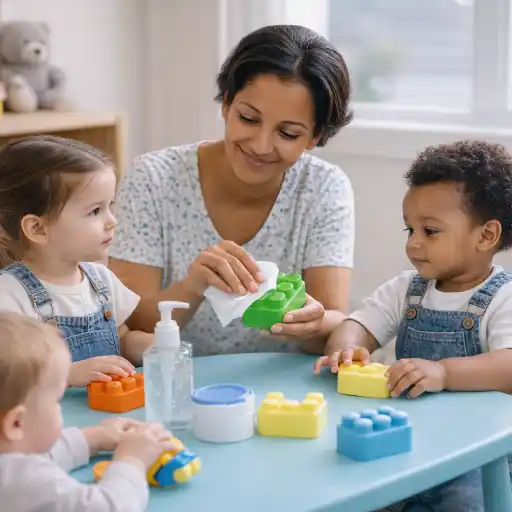
What routines work for sensory tables and shared materials?
Sensory activities can involve water, sand, dough, or other loose materials, so plan the hygiene steps before children begin. Ensure the table and tools are suitable for the activity and can be processed according to the manufacturer’s directions and program requirements. Encourage children and staff to wash hands before and after sensory play, and keep materials intended for one child separate when the activity or individual needs call for it.
For water tables, the Head Start cleaning, sanitizing, and disinfecting schedule recommends cleaning and disinfecting after use, including the table and toys, before a new group begins or at the end of the day. Follow your local guidance and program procedures, and do not continue water play when illness guidance or an outbreak response says to pause it. Empty and process the table rather than simply topping up shared water.
For shared art tools, manipulatives, and classroom materials, remove visible residue after activities and clean according to the item’s material and use. Separate materials that have been mouthed or contaminated, and do not return wet or soiled supplies to storage. Keep sensory ingredients and small loose parts under active supervision, with attention to age-appropriate use, choking risks, allergies, and any individual care plans.
- Plan for a “used” container and a clean drying area before play begins.
- Process sensory equipment after use and before another group uses it, as applicable.
- Maintain handwashing routines and supervise children throughout the activity.
How can directors make the system consistent and safe?
A routine works best when it is brief, visible, and realistic for a busy classroom. Directors can post an item-based schedule that identifies what is cleaned, how often, who is responsible, and where materials go afterward. Head Start’s cleaning, sanitizing, and disinfecting guidance and the Caring for Our Children routine standard support using clear procedures and schedules to guide staff practice.
Set up labeled containers for soiled items and a separate, protected place for clean materials to dry. Assign a primary staff member and backup for processing materials, while ensuring that cleaning tasks never compromise active supervision. A short checklist or log may help the team track recurring tasks and identify where supplies, time, or coaching are needed. Use staff demonstrations to review material-specific methods, label directions, contact time, safe storage, and how to respond to body-fluid contamination.
Store products in their original or properly labeled containers, locked and out of children’s reach. Follow label instructions for ventilation and protective equipment, and do not use products near children. Avoid common shortcuts: applying chemicals before cleaning away soil, wiping products off before the required contact time, using one method for every material, or returning damp items to play. During illness or an outbreak, follow public-health and licensing guidance for any additional measures. State requirements vary - check your state licensing agency.
Conclusion: What is the most practical way to prevent germs from spreading?
Preventing germ spread through toys, sensory tables, and classroom materials depends on a consistent system—not on trying to make every classroom object sterile. Remove mouthed or visibly contaminated items from play promptly, clean materials according to their construction and care instructions, and sanitize or disinfect only when the item, situation, and applicable guidance call for it. Give special attention to water-play equipment, shared sensory materials, and objects that are frequently handled or placed in children’s mouths.
Keep clean and soiled items separate, allow materials to dry completely, follow product labels and contact times, and store chemicals securely. Make roles and routines clear enough to use during a busy day, and review them when materials, classroom needs, or local guidance change. These practical steps help protect children and staff while preserving the exploration, creativity, and shared discovery that make classroom materials valuable.
Further learning: Which ChildCareEd courses can support this work?
For additional professional learning, consider these English-language courses:
- Prevention and Control of Infectious Diseases Buy Now $16.00 — focused learning on reducing the spread of illness and germs in child care.
- How To Keep A Healthy Class: Six Tips for Germ Control Buy Now $24.00 — practical strategies for maintaining a healthier classroom.
- Shoo, Germs! Don’t Bother Me! Buy Now $24.00 — explores communicable diseases, hygiene practices, and related classroom procedures.
- Handling and Storage of Hazardous Materials Buy Now $10.00 — covers safe handling and storage of hazardous materials and disposal of biocontaminants.
- Using Toys to Support Learning Buy Now $16.00 — addresses choosing age-appropriate classroom materials that support children’s development.
Review course details and confirm with your licensing agency whether a particular course meets your professional-development needs.
- Moving About the Classroom: Effective Transitions for Everyday
- How To Keep A Healthy Class: Six Tips for Germ Control
- 45 Hour Preschool Methods and Materials
- What Makes Me Special: An Overview of Autism and ADHD
- Using Toys to Support Learning
- CDA Bridge Bundle: Family Child Care without Portfolio Review
- Art from the Heart for Preschoolers: Open Ended Art Projects that Build Self-Esteem
- CDA Bridge Bundle: Infant/Toddler without Portfolio Review
- CDA Bridge Bundle: Preschool without Portfolio Review
- CDA Certification en Español: Recursos y Consejos para Educadores Bilingües
- Germs Happen! What to Do When the Sniffles Hit Circle Time
- Achoo! Classroom Tips to Help Stop Germs
- Recursos en Español sobre el Sueño Seguro del Bebé
- 10 Ejemplos de Cómo la Cultura Influye en el Desarrollo Infantil
- Proporciones de Cuidado Infantil y Tamaños de Grupo por Edad en Virginia (Guía Rápida para Centros y Hogares)
- Cómo Trabajar en el Cuidado Infantil en California: Requisitos y Pasos
- Cómo Ser Maestra de Preescolar en Maryland
- How can childcare programs prevent the spread of illness?
- Celebrando la amistad en el cuidado infantil durante el Día de los Mejores Amigos
- How can child care programs prevent the spread of illness?
- How can child care programs prevent infections and keep kids healthy?
- How can North Dakota providers prevent and manage common illnesses?
- How Can Daycare Programs Prevent the Spread of Common Illnesses?
- How Can Classrooms Prevent the Spread of Illness During Cold and Flu Season?
- What Should Daycare Illness Policies Include to Protect Children, Staff, and Families?
- How Can Child Care Centers Properly Sanitize Toys?
- How Can Child Care Providers Prevent the Spread of Illness in the Classroom?
- How Often Should Daycare Toys and Classroom Materials Be Cleaned and Sanitized?
- How Can Child Care Programs Prevent Germs from Spreading Through Shared Toys and Classroom Materials?
