A handwashing reminder is most useful when children have the supplies, time, and adult support to follow it. Display the Handwashing Steps Poster: Wet, Soap, Scrub, Rinse and Dry Buy Now $0.99 near the sink, then look at the routines around it: are supplies replenished, transitions paced realistically, and staff ready to model and guide each step? For a broader understanding of everyday germ-control practices, explore Prevention and Control of Infectious Diseases  Buy Now $16.00. Read on for ways to connect visual reminders with consistent habits and shared staff responsibilities across your program.
Why are reminders helpful but not enough?
Visual cues and songs can make handwashing easier to remember, especially for young children who are learning routines through repetition. But remembering a behavior and being able to complete it consistently are different things. A child may see a sign and still lack enough time, reach, supervision, or access to a working sink. A staff member may know the right steps yet be pulled away during a busy transition or unsure whether to wash before or after a particular task.
Hand hygiene is a vital part of infection prevention. The CDC’s guidance for schools and early care settings recommends building time into routines, supervising children as needed, and making supplies and facilities accessible. Posters can support these actions, but they cannot replace them.
Think of a reminder as one link in a chain. A strong routine also depends on convenient sinks, soap, a way to dry hands, staff modeling, supervision, and clear procedures. When one link is missing, the sign may be visible while the actual protection remains inconsistent. A systems approach supports both #children and staff without treating missed steps as a lack of caring.
What conditions commonly create germ-control gaps?
Gaps often emerge from the ordinary pressures of a child care day: arrivals, meals, toileting, diapering, outdoor play, and quick transitions between activities. If the schedule does not allow time for handwashing, children may be hurried through the process. If soap or paper towels run out, even a well-taught routine becomes difficult to follow. Younger children and children who need additional physical or communication support may need an adult to help them complete each step.
Handwashing is also only one part of the contact network in a classroom. Germs can move through shared toys, food-contact surfaces, diapering areas, frequently touched objects, and close interactions. The CDC’s cleaning and disinfecting guidance for early care settings distinguishes cleaning, sanitizing, and disinfecting; programs need clear procedures for choosing the appropriate action and using products according to their labels.
- 🧼 Check that sinks, soap, and hand-drying supplies are easy to access and restocked.
- Review busy transitions to identify where staff or children are likely to be rushed.
- Look for shared items and high-touch areas that need consistent cleaning practices.
- Make sure written procedures account for children who need hands-on assistance.
These are system design issues, not simply reminders to “try harder.” Naming the barriers helps directors and teams solve the conditions that make good practice difficult.
How can programs turn handwashing into a dependable routine?
Build hand hygiene into the daily schedule at predictable moments instead of relying on staff to remember it under pressure. The Caring for Our Children hand hygiene situations include key moments such as arrival, before and after eating or handling food, after toileting, and after diapering. Use applicable guidance and your program’s written procedures to establish the full set of times for children and adults.
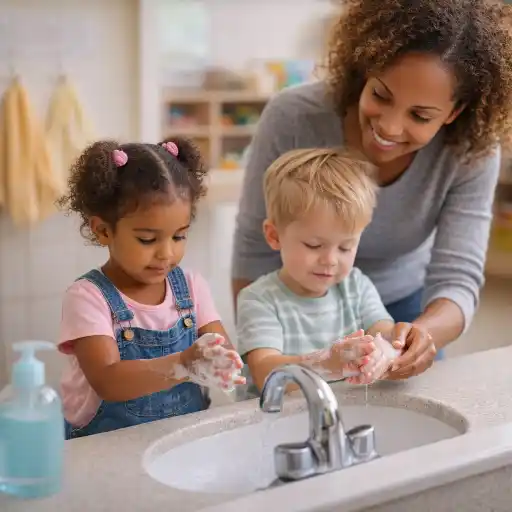
Then make the routine workable. Allow sufficient transition time, keep supplies stocked, and ensure children can reach sinks or receive support safely. Teach the steps through demonstration and practice: wet hands, apply soap, rub all surfaces for at least 20 seconds, rinse, and dry thoroughly. Children may enjoy a song or visual sequence, but adults should observe and assist when needed rather than assuming a poster has taught the skill.
Staff practice matters just as much as child instruction. Directors can model the expected routine, clarify when adults wash their hands, and discuss how to handle moments when the classroom is busy. Reinforce successful practice with calm, specific feedback—“You used soap and rubbed between your fingers”—instead of scolding children for forgetting.
Set a short supply-check routine, too. At opening and during the day, assign responsibility for checking soap, towels, sink access, and posted guidance. These simple operational habits make #handwashing more reliable and reduce dependence on memory alone.
What other infection-control practices complete the picture?
Hand hygiene works best within a coordinated prevention plan. Programs should connect it to safe diapering and toileting, food handling, cleaning of high-touch surfaces, age-appropriate illness procedures, and clear communication with families. The CDC’s infectious disease prevention resources for early care and education describe planning and consistent practices as central to reducing spread and teaching children healthy habits.
Cleaning procedures should distinguish among cleaning, sanitizing, and disinfecting. In general, clean visible soil first; use sanitizing where appropriate for items that contact food or children’s mouths; and disinfect surfaces when indicated by program guidance, illness circumstances, or applicable requirements. Follow product labels for use, contact time, protective equipment, ventilation, and storage. Keep cleaning chemicals secured away from children.
Use simple, written procedures so staff do not have to improvise. A classroom plan might clarify:
- Who checks and restocks handwashing supplies, and when.
- Which routine moments require handwashing for children and staff.
- How to manage mouthed toys, food surfaces, diapering areas, and body-fluid spills.
- How staff supervise and support children who need assistance.
- Where to find the illness policy and whom to contact with questions.
These practices protect more than the immediate classroom. Consistent routines support attendance, family confidence, and a healthier learning environment. CDC infection-prevention guidance for ECE programs also addresses cleaning, ventilation, staying home when ill, and other measures that complement hand hygiene.
How can directors identify and correct weak points?
Rather than measuring success by how many signs are posted, observe whether the routine works in real conditions. Walk through the day at arrival, before meals, after outdoor play, and during toileting or diapering. Notice whether children have enough time, whether adults can supervise, whether supplies are present, and whether surfaces and shared materials are managed according to the written plan.
Invite staff to describe barriers without blame. A missed step may point to an empty dispenser, a sink located far from the activity, an understaffed transition, or a procedure that is unclear. Ask, “What made this difficult today?” and “What small change would make the expected practice easier?” This approach respects staff expertise while keeping the focus on children’s well-being.
Use brief checklists or staff huddles to record recurring issues and assign a person responsible for follow-up. Revisit the plan after room changes, staffing changes, illness events, or changes in children’s support needs. When a procedure changes, explain why and demonstrate the new steps; simply circulating a memo may not be enough to build consistent practice.
Common pitfalls include treating sanitizer as a universal replacement for soap and water, rushing children through handwashing, and disinfecting surfaces without following label directions. Correct these with clear coaching and accessible supplies. State requirements vary - check your state licensing agency. A supportive process turns observations into improvements rather than fault-finding.
Conclusion: What closes the gap beyond a reminder?
A reminder can prompt the next step, but dependable germ control comes from a system that makes the right action possible and consistent. Provide accessible supplies, protect time in the schedule, teach and supervise handwashing, and connect it with cleaning, diapering, food safety, illness procedures, and staff communication.
Start with one practical review: observe a busy transition, note what helps or hinders handwashing, and choose a specific improvement—such as a supply check, added transition time, or clearer staff roles. Then revisit the change with the team. These steady, respectful adjustments help turn a poster’s message into everyday practice that supports children, families, and colleagues.
For a more complete learning experience, explore ChildCareEd’s Prevention and Control of Infectious Diseases Buy Now $16.00 course, which offers two hours of online training focused on maintaining healthier child care environments and reducing the spread of illness and germs.
Related ChildCareEd courses
- 45 Hour Child Growth and Development
- CDA Home Visitor Subject Area 3 Part 3 Birth to 5
- Birth to Five CDA Credential with Portfolio Review
- CDA Bridge Bundle: Preschool
- How To Keep A Healthy Class: Six Tips for Germ Control
- CDA Bridge Bundle: Family Child Care
- CDA Bridge Bundle: Infant/Toddler
- Creating Environments that Nurture Growth and Community
- Texas Director Credential
- Shoo, Germs! Don't Bother Me!
- Ready, Set, Kindergarten!
- 🌙 ¿Cómo afecta el tiempo frente a las pantallas el sueño y el comportamiento infantil? 😴
- 📜 ¿Qué es el Título 22 en el cuidado infantil de California?
- 🚨 Reporte Obligatorio en Nevada
- Capacitación en Salud y Seguridad Preventiva en Línea para Proveedores de Cuidado Infantil
- Cómo Solicitar una Licencia de Guardería en Texas
- Regulaciones de Licenciamiento de Cuidado Infantil en California para Centros y Hogares de Cuidado Infantil Familiar
- Lista para Guardería en Casa en Texas: Cómo Iniciar una Guardería en el Hogar
- Cómo Trabajar en el Cuidado Infantil en California: Requisitos y Pasos
- Cómo Ser Maestra de Preescolar en Texas
- How Can Michigan Daycare Centers Prevent the Spread of Illness?
- Cómo simplificar la capacitación para sus empleados de daycare
- How Can We Make Handwashing Fun and a Reliable Daily Routine?
- What Should Providers Know About the New Measles Guidance for Classrooms?
- What Are the Best Practices for Diapering and Handwashing Procedures in Child Care?
- How Can Classrooms Prevent the Spread of Illness During Cold and Flu Season?
- What Should Daycare Illness Policies Include to Protect Children, Staff, and Families?
- Why Doesn’t a Handwashing Reminder Alone Close Germ-Control Gaps in Child Care?
- How Can Child Care Programs Reduce Germ Spread in Shared Bathrooms?
