Introduction
Young children learn a lot from calm, caring adults who talk, read, and play with them every day. This article gives simple, practical ideas for child care providers and directors to build early #literacy skills. Why it matters: children who get language and reading support early are more ready for school and feel confident as learners.
Short reasons why this work matters:
- Children’s brains grow fast — the right experiences help them link sounds, words, and ideas.
- Daily routines are real-life classrooms: meal times, transitions, and free play are rich chances to teach.
Below are four focused questions and clear steps you can use right away. For more training ideas visit How to Foster Early Literacy Skills and related Reading Aloud and Storytelling  Buy Now $16.00 courses.
1. What everyday activities help build early literacy skills?
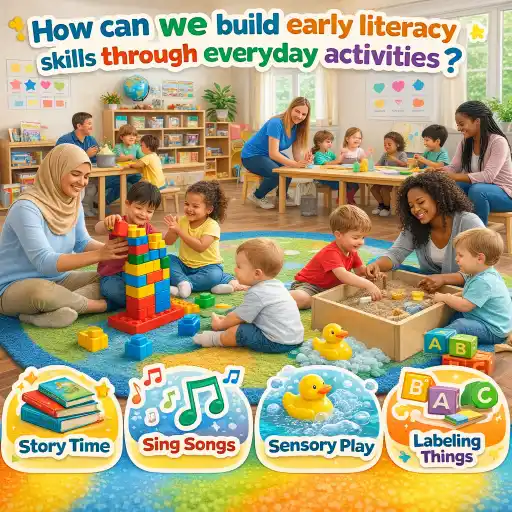
Everyday moments are powerful. Try these easy steps you can add to routines in your #classroom.
- 📚 Read aloud daily. Short, frequent story times (2–10 minutes for infants and toddlers; 10–20 minutes for preschoolers) beat one long session. See tips in Reading Aloud in Child Care.
- 🗣️ Narrate routines. Say what you are doing: "I am pouring milk. The cup is cold." This builds #vocabulary and shows words match actions.
- 🔤 Label the room. Put simple labels on bins and shelves so print is part of play. This is a print-rich idea from Classroom Tools for Emergent Literacy Buy Now $16.00.
- 🎵 Use songs and rhymes during transitions. Rhymes teach sounds and memory.
- 📖 Make books easy to reach. Low shelves and cozy corners invite children to choose books on their own. ChildCareEd’s Classroom Book List: Infants Buy Now $0.00 has ideas.
State requirements vary - check your state licensing agency. Small, consistent steps matter more than perfect lessons.
2. How do I make read-alouds and storytime more powerful?
Turn storytime into a conversation and learning moment. Use these numbered steps to make read-alouds interactive and fun.
- Before reading: pick 2–3 new words to highlight and preview the cover. This simple planning helps focus the read-aloud (Reading Aloud and Storytelling Buy Now $16.00).
- During reading: use dialogic reading—ask questions and let children respond. Example prompts:
- 🔎 "What do you see on this page?"
- 🕵️ "What do you think happens next?"
- After reading: do a quick follow-up. Numbered ideas:
- Act it out with puppets.
- Retell the story in 3 steps: first, next, last.
- Use the new words in play: "This block tower is enormous."
- Reread favorites. Repetition builds memory and comfort. For strategies and lesson ideas see Storytime Superpowers.
Tips for groups: read in smaller groups when possible, give simple jobs (page-turner) and keep voice and faces expressive. These moves support attention and language growth.
3. How can play and routines boost phonemic awareness and vocabulary?
Play is learning. Use these everyday games and routines to build sound awareness and new words.
- 🎶 Rhyme games (1–3 minutes): say a word and have children name rhymes. This builds phonological awareness (see ideas at Scholastic and practice from ChildCareEd courses).
- 👏 Syllable stomp: say a child’s name and stomp syllables (Da-vid = 2 stomps). This helps children hear word parts.
- 🔡 Word hunts during routines: at snack or on walks find items that start with a target sound ("Find /b/!").
- 📝 Vocabulary box: collect 5 new words each week (pictures + real objects). Rotate items so children touch and say words. See the Classroom Tools training for this idea (Classroom Tools for Emergent Literacy Buy Now $16.00).
- 📱Use media wisely: age-appropriate audio books or short songs can support vocabulary, but keep them a supplement to adult talk and play.
Also use bilingual strengths: if families speak other languages, include books or songs in those languages. Strong home language skills support new language learning.
4. What common mistakes do providers make and how do we avoid them?
Here are frequent pitfalls and clear fixes. Use this list to reflect and improve your program quickly.
- ❌ Mistake: Reading only once and quickly. ✅ Fix: Read short, often, and re-read favorites. Repeat new words in play.
- ❌ Mistake: Passive read-alouds (adult reads, children listen). ✅ Fix: Ask simple questions and wait—give children time to answer. Use dialogic reading moves described in Reading Aloud in Child Care.
- ❌ Mistake: Literacy only at circle time. ✅ Fix: Add labels, books in centers, and vocabulary in transitions so print and talk are everywhere.
- ❌ Mistake: Expecting fast progress for every child. ✅ Fix: Scaffold. Give hints, show examples, and celebrate small steps. The Ladders to Literacy guide has good ideas on scaffolding.
- ❌ Mistake: Not checking rules and funding needs. ✅ Fix: Build plans that match your program’s licensing and budgets — state requirements vary - check your state licensing agency.
Quick FAQ (short answers):
- Q: How long should read-aloud be? A: Short and frequent; infants 2–5 mins, toddlers 5–10 mins, preschoolers 10–20 mins.
- Q: What if kids won’t sit? A: Let them wiggle, read during play, use movement and acting.
- Q: Need more ideas? A: Try printable materials from Read Aloud or activities at Turkey Feathers Roll & Write Buy Now $0.00.
Conclusion
Everyday life with children is full of chances to grow #reading, #vocabulary, and a love of books. Start small: add one read-aloud a day, label a shelf, or play a rhyme game at transitions. Use ChildCareEd courses like Language Development in Early Childhood Buy Now $16.00 and Building Vocabulary Buy Now $16.00 for more tools and classroom-ready ideas.
You're doing important work. Celebrate the small wins, share ideas with colleagues, and keep learning together.
- CDA Home Visitor Subject Area 2 Part 3 Birth to 5
- Reading Aloud and Storytelling
- Language and Literacy Foundations in Pre-K
- Play Safe, Think Big: Literacy Through Play
- Pediatric RSV First Aid & CPR/AED
- Classroom Tools for Emergent Literacy
- Texas Director Credential
- Classroom Tools for Emergent Literacy
- Supporting Families and Caregivers in Language and Literacy
- Language Development in School Age
- Read Across America Day
- Phonological Awareness
- How to Foster Early Literacy Skills
- CDA Certification en Español: Recursos y Consejos para Educadores Bilingües
- How can child care providers use the science of reading to boost early literacy in New York?
- What are fun language-learning games preschool teachers can use?
- What simple early literacy activities really work for preschoolers?
- What Kindergarten Readiness Skills Should My Program Build?
- How can preschool programs build early literacy every day?
- What simple early literacy activities really help children learn?
- How can North Dakota child care programs lay reading foundations the right way?
- Can we build early literacy skills through play in high-quality child care?
- How can child care programs build strong readers before kindergarten?
- Why Do Bilingual Classroom Activities Matter for Dual Language Learners?
- How Can Families and Educators Connect Early Literacy With STEM, Art, Music, and Creativity at Home?
- How Can Teachers Build Early Literacy Without Screens or Worksheets?
- How Do Color-Word Activities Support Reading Automaticity?
