Young children learn to read by hearing lots of language, enjoying books, and by playing with sounds and letters. This article gives simple, practical steps child care providers and directors can use tomorrow to strengthen early #early #literacy #preschoolers skills. Short routines and playful activities make big differences over time.
Why it matters
1) Early literacy boosts school readiness, confidence, and curiosity. 2) Small, repeated moments of talk and books add up. For concrete classroom ideas see the ChildCareEd guide What simple early literacy activities really work for preschoolers?.
How can daily routines and read-alouds build strong early literacy?
Daily routines are powerful teaching moments. Use these numbered steps you can fit into any day.
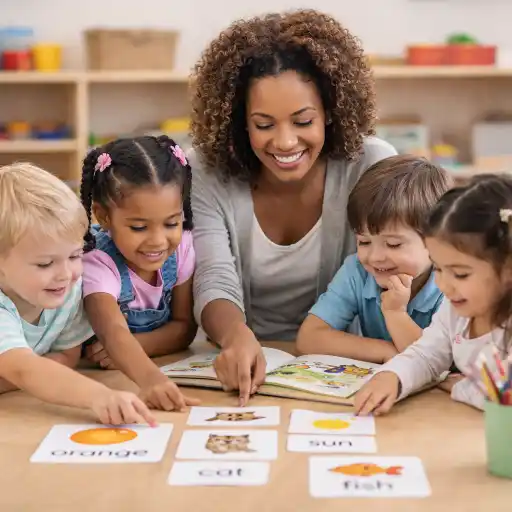
- 📚 Read aloud every day (short and lively). Before reading, show the cover and name 1–2 new words. During reading, ask one or two simple questions. After reading, pick one quick follow-up (act it out, retell in three steps, or use the new word in play). See tips at How can we build early literacy skills through everyday activities?. Seasonal book lists make it easier to choose engaging, age-appropriate titles for daily read-alouds; for an example collection that supports vocabulary and thematic units, see vibrant fall children's books.
- 🗣️ Narrate routines: tell what you are doing at snack, toileting, and clean-up. Short sentences help children match words to actions.
- 🔤 Label the room: put simple labels on bins, shelves, and centers so print is part of play. ChildCareEd’s resources on How to Foster Early Literacy Skills explain labeling and print-rich spaces.
- 🎵 Use rhymes and songs at transitions. Rhymes build sound awareness and memory (see phonological ideas in ChildCareEd posts).
Quick checklist for read-alouds:
- 🔍 Before: choose 1–2 target words.
- 👂 During: ask an open question, wait for answers.
- 🎭 After: do a short follow-up (1–3 minutes) to use new words in play.
Why these steps work:
1) Repetition helps memory. 2) Talk plus gestures plus props makes vocabulary meaningful. 3) Children who see books and labels every day begin to link print to meaning. For more read-aloud strategies try ChildCareEd’s read-aloud post and interactive reading ideas at Eastern CT.
What hands-on play activities teach letters, phonics, and print awareness?
Play teaches letters and sounds naturally. Use short, playful activities (1–10 minutes) that fit into centers and transitions.
- 📦 Letter sensory bins: hide plastic letters in sand or rice. Children find a letter, name it, and say its sound. See ideas at ChildCareEd How can play help preschoolers learn to read and write?.
- 🖍️ Hands-on formation: make letters with playdough, pipe cleaners, or pom-poms to build fine motor strength and letter shape knowledge.
- 🔎 Phonological mini-games (quick daily):
- 🎵 Rhyming rounds: say a word and ask for a rhyme.
- 👣 Syllable stomp: clap or stomp the syllables of names and snack words.
- 🕵️ I-Spy sounds: "I spy something that starts with /b/."
- ✨ Loose parts and name work: let children build their name with bottle caps, rocks, or letter magnets — strong for #phonics and identity. See Loose Parts Play and Literacy.
Keep phonemic practice short and fun. Research and classroom practice show that playful letter and sound games support later decoding; for more phonological games see Phonological Awareness Activities.
How can we partner with families and support dual-language learners?
Family involvement multiplies classroom gains. Follow these numbered steps to make family partnerships quick and useful.
- 📧 Send one weekly note or photo that shows one new word, one rhyme, or one book to read at home.
- 🎵 Invite families to share songs or books in home languages; reading in a child’s home language supports all learning. See research for dual-language strategies in the University of Wyoming summary UW study.
- 📚 Make homemade books with families: simple photo books about home routines help vocabulary and narrative skills.
State rules and family needs: state requirements vary - check your state licensing agency. Use short translations, pictures, or audio recordings when sending tips so all families can use them easily.
Three family-friendly activity examples:
- 🧾 One-line home prompt: "Read one page tonight and name one new word."
- 📷 Photo share: send a picture of a child using a target word at school and invite the family to try it at home.
- 🎤 Story swap: ask families to record a short story or song to play during circle time.
How do we check progress and avoid common mistakes?
Simple, frequent checks work best. Use play-based observations and short tools to track growth.
- 📝 Quick observation notes: write one sentence after an activity (new word used, attempt at name writing, retell of story).
- 📸 Work samples: take a monthly photo of play, drawing, or writing attempts to show progress.
- 🔁 Short checklists: a one-page cheat sheet for letter recognition, rhyming, and telling a short story helps staff stay consistent. ChildCareEd offers resources and printable lists under their #early-literacy collection.
Common mistakes and easy fixes
- ❌ Mistake: One long storytime per day. ✅ Fix: Read short, frequent times and add books into centers.
- ❌ Mistake: Passive reading with no questions. ✅ Fix: Ask 1–2 simple questions and wait for answers (dialogic reading).
- ❌ Mistake: Skipping family input. ✅ Fix: Send a 1-line tip and invite home language books.
Short FAQ
- Q: How long should read-alouds be? A: Short and frequent — 5–15 minutes for preschoolers.
- Q: What if children won’t sit? A: Read during play, split into small groups, or use movement and props.
- Q: How many new words at once? A: Pick 1–2 target words and use them across the day.
- Q: Do I need special materials? A: No — many activities use recycled items, loose parts, and simple household supplies (see loose parts play ideas).
Final encouragement
You are making a big difference. Start with 1–2 small moves: a short read-aloud, a rhyme at transitions, and labels in a center. Track one child’s new words for two weeks and celebrate the gains. For more training and classroom tools, visit ChildCareEd resources like How to Foster Early Literacy Skills and How can play help preschoolers learn to read and write? Basic to Basics: Literacy Skills offers engaging literacy activities for toddlers and preschoolers, including bilingual options families can use at home. — and remember, small, joyful routines add up to strong #phonics and #vocabulary growth.
- Read Across America Day
- Memorial Day Activities
- Phonological Awareness
- Language and Literacy Preschool Curriculum
- CDA Certification en Español: Recursos y Consejos para Educadores Bilingües
- Normas de Licenciamiento de Cuidado Infantil en Virginia para Centros Diurnos Infantiles y Hogares Diurnos Familiares
- How can child care providers best support language development in young children?
- How can child care providers use the science of reading to boost early literacy in New York?
- How Do Art Activities Support Cognitive Growth in North Dakota Preschoolers?
- How do Minnesota's Pre-K programs compare to the rest of the country?
- New Child Care Regulations in Georgia for 2026
- How can preschool classrooms best support language development?
- Celebrando la amistad en el cuidado infantil durante el Día de los Mejores Amigos
- How can Florida educators build strong foundations for infants, toddlers and K–3 readiness together?
- What simple early literacy activities really work for preschoolers?
- How can preschool programs build early literacy every day?
- How can child care providers support name recognition and letter awareness effectively?
- How can child care programs build strong readers before kindergarten?
- Preschool Schedule That Works: When to Plan Centers, Circle Time, and Outdoor Play
- What Are the Best Print-and-Play Activities for Substitute Teachers?
