ChildCareEd has launched a dedicated emergent literacy training for early childhood educators.
Start building foundational reading and vocabulary skills in your program by enrolling in Classroom Tools for Emergent Literacy Buy Now $25.00 or by strengthening your read-aloud practice with Reading Aloud and Storytelling  Buy Now $16.00. This article summarizes course content, classroom strategies you can implement immediately, and related ChildCareEd resources to support implementation.
ChildCareEd is now offering a NEW reading course in partnership with the organization Stop, Read, Go. The new class is called Classroom Tools for Emergent Literacy Buy Now $16.00. Early childhood educators who incorporate effective literacy activities in their classrooms, help children build a foundation for successful literacy development.
What is emergent reading and why does it matter?
Emergent reading describes the cluster of early language and print-awareness behaviors—book handling, vocabulary growth, phonological awareness precursors, and symbolic representation—that precede conventional reading. High-quality emergent literacy instruction in preschool and childcare settings supports the neural and linguistic pathways children need for later decoding and comprehension. Effective classroom practices are intentionally integrated into daily routines so that language learning is continuous rather than episodic. For research-informed approaches you can pair with this course, see how programs use the science of reading to design classroom practices here and practical daily supports for language and literacy here.
Which classroom activities produce measurable gains in emergent literacy?
The course emphasizes activities that research and field practice consistently show to support early literacy: structured interactive read-alouds that embed vocabulary instruction, small-group reading buddies to increase exposure to print, labeling of interest areas to link spoken language with print, and audio-story experiences ("books on tape") to strengthen listening comprehension and vocabulary. These activities are classroom-friendly and can be embedded into routine transitions and play. If you use play-based scaffolds, you can combine these strategies with project-based or play-centered approaches; see examples of play-based literacy implementation here and tested preschool activities here. The course also suggests how to adapt activities for mixed-age groups and children with diverse language backgrounds.
How should teachers plan interactive read-alouds and vocabulary instruction?
Interactive read-alouds are most effective when teachers select a brief, age-appropriate book, pre-teach two to three target words, and use dialogic questioning to prompt prediction, connections, and elaboration. Plan a short pre-reading prompt, a focused read with pauses for interaction, and a post-reading activity that recycles the vocabulary (labeling, dramatization, or a labeling wall). Repetition across days—re-reading favorite books—deepens word learning and comprehension; see practical guidance on repeating favorite books here. The course models short lesson templates you can use for daily read-alouds and provides extensions for small-group work and vocabulary centers.
How can programs involve families and measure classroom impact?
Family engagement amplifies classroom learning. The course includes take-home activity ideas and family communication templates to share specific words and simple practices caregivers can use. Programs should set measurable, realistic indicators (for example: the number of target words a child uses spontaneously over two weeks, or the growth in children’s book-handling behaviors at circle time). ChildCareEd also offers a companion course on partnering with families—Supporting Families and Caregivers in Language and Literacy Buy Now $16.00—that pairs well with emergent literacy classroom practices. For strategies on name recognition and letters that integrate with emergent reading, see this piece.
Across these sections, the course links classroom practice to daily routines and provides simple assessment ideas teachers can use without specialized tools. For activity-level examples you can adopt immediately, review the practical activity list in the course and the classroom-play literacy examples above.
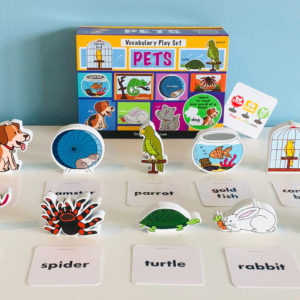
Upon successful completion of Classroom Tools for Emergent Literacy Buy Now $25.00, learners receive a certificate of completion and (where available) course partner materials such as the Stop, Read, Go Vocabulary Box.
What should I do next?
Action steps for practitioners:
- Review the short lesson templates in the emergent literacy course and pick one to pilot for two weeks.
- Share one target vocabulary word with families each week and send a simple home activity card.
- Use the provided quick assessment ideas (e.g., book-handling checklist, vocabulary usage notes) to track progress and adjust instruction.
Check the course page for current availability and partner materials; ChildCareEd updates course offerings and any partner kits on the course landing page.
How can emergent literacy activities be adapted for multilingual learners and children with diverse needs?
Designing emergent literacy activities for multilingual children and those with communication or learning differences requires intentional scaffolding and frequent, multimodal repetition. Practical adaptations include:
- Support home language alongside English: Invite families to share key vocabulary and simple story routines in the child’s home language. Use picture-supported word lists and dual-language labels to link the child’s expressive vocabulary to classroom print.
- Increase visual and tactile supports: Pair books and new words with pictures, real objects, gestures, and manipulatives (puppets, story props). Visual cues reduce processing load and make meaning explicit during read-alouds.
- Chunk vocabulary and rehearse: Pre-teach two to three concrete target words per read-aloud and recycle them across contexts (centers, transitions, songs). Use short dramatizations and repeated predictable phrases to reinforce meaning.
- Differentiated small-group scaffolds: For mixed-ability groups, plan three brief differentiation tiers: (a) highly supported scaffold (modeling and repetition), (b) guided practice (turn-taking questions), and (c) extension (open-ended prompts). Rotate children through tiers so practice is equitable and targeted.
- Use assistive and augmentative strategies when needed: Integrate picture exchange, communication boards, or simple AAC supports during read-alouds and vocabulary centers. Coordinate with speech-language professionals for individualized goals that align with classroom activities.
- Leverage peer models and language partners: Pair children strategically so stronger language users model vocabulary and book-handling routines in small-group reading buddies. Structured peer interactions increase exposure to target words in meaningful contexts.
Assessment and progress monitoring for diverse learners can be observational and curriculum-embedded: use brief checklists to record book-handling behaviors, spontaneous use of target words across settings, and engagement during read-alouds. Document examples (child uses the word during play, points to the printed word, or retells a short sequence) rather than relying solely on formal tests. Share observations with families and specialists and adapt instruction based on those notes.
Summary: What are the key next steps?
To implement the course guidance effectively, pick one lesson template from the Classroom Tools for Emergent Literacy course and pilot it for two weeks with a small group, explicitly pre-teaching 2–3 words per book. Use multimodal supports and family-shared vocabulary to scaffold multilingual learners and children with additional needs, and rely on quick observational tools to track progress and adjust instruction. Pair this classroom work with the Supporting Families and Caregivers in Language and Literacy materials to extend learning at home.
These practical steps both close the implementation gap and provide measurable indicators teachers can use immediately: frequency of spontaneous word use, successful book-handling routines, and engagement during read-alouds. Return to the course materials to refine differentiation strategies and document outcomes for program improvement.
Tags: #emergent #literacy #readaloud #vocabulary #earlychildhood
- CDA Preschool Credential
- Reading Aloud and Storytelling
- Birth to Five CDA Credential with Portfolio Review
- CDA Family Child Care Credential with Portfolio Review
- CDA Infant/Toddler Credential with Portfolio Review
- 24 Hour Texas Pre-Service
- Classroom Tools for Emergent Literacy
- Classroom Tools for Emergent Literacy
- Supporting Families and Caregivers in Language and Literacy
- Rooted in History: Early Childhood
- Read Across America Day
- CDA Certification en Español: Recursos y Consejos para Educadores Bilingües
- Ready, Set, Kindergarten!
- 📖 ¿Cómo puedo hacer que la hora del cuento sea la parte más poderosa de mi día?
- Horas de Capacitación Anual para Proveedores de Cuidado Infantil en Maryland
- How Can Teachers Support Language and Literacy Every Day?
- What simple early literacy activities really help children learn?
- How can we teach preschoolers to ask better questions and make predictions?
- How can child care programs build strong readers before kindergarten?
- Why Do Predictable Books Help Preschoolers Feel Like Readers?
- How Can Emergent Readers Support Vocabulary Growth?
- How Can Emergent Readers Make Story Time More Interactive?
- How Can Teachers Build Early Literacy Without Screens or Worksheets?
- Why Do Simple Books Build Early Reading Confidence?
- How Can Printable Books Help Preschoolers Fall in Love With Reading?
- How Do Repetitive Sentence Patterns Build Early Reading Confidence?
- What Should Effective Beginning-Sound Practice Include?
- How Can Predictable Ocean-Themed Text Build Reading Confidence?
- How Can Educators Invite Children to Revise a Story They Told Earlier?
- A Child Has Memorized the Book: What Can You Teach Next?
