Kindergarten readiness is not a race to master worksheets or memorize facts—it is a gradual process of building confidence, communication, self-regulation, and everyday independence. The three-hour Are They Ready for Kindergarten? Buy Now $35.00 training offers practical guidance on cognitive, physical, and social-emotional readiness; it can help you turn a whole-child perspective into stronger classroom practices. Read on for common pitfalls and realistic ways to avoid them.
Why can a narrow definition of readiness create problems?
Readiness is often mistaken for a short list of academic abilities: naming letters, counting, writing a name, or sitting quietly. These foundations can matter, but they do not tell the whole story. Children also draw on communication, social-emotional development, motor coordination, approaches to learning, and self-help skills as they take part in a new classroom community. Research and practice guidance emphasize that readiness develops across connected domains, and children may show different strengths in each.
A narrow checklist can lead adults to overlook a child’s curiosity, persistence, ability to ask for help, or progress in managing routines. It may also encourage comparisons that are not useful: children develop at different rates, and their experiences, languages, abilities, and opportunities vary. The goal is not to decide whether a child has “passed” readiness. It is to identify what helps that child participate, feel secure, and continue learning.
The Institute of Education Sciences’ Preparing Young Children for School practice guide recommends attention to social-emotional learning, executive function, mathematics, language, letters, sounds, and shared reading. A balanced view does not mean ignoring academics; it means connecting them to meaningful experiences and relationships. Preschool teachers and directors can help by setting strengths-based goals and building readiness through the whole day.
How can teachers avoid overemphasizing worksheets and drills?
Worksheets and repeated drills can seem like visible evidence of preparation, especially when families or schools ask about academic progress. Used selectively, paper activities may have a place, but relying on them as the main teaching method can limit movement, conversation, experimentation, and peer interaction. Many essential foundations grow as children build, pretend, investigate, listen to stories, and solve problems together.
Instead of replacing play with academic practice, weave early concepts into play and routines. In a block area, children can compare height, count pieces, plan a structure, and explain what they are making. During a read-aloud, teachers can introduce vocabulary, invite predictions, and ask children to retell a moment. At snack, children can count servings or compare more and fewer. These moments support early learning while leaving room for choice and active engagement.
The Texas Education Agency’s research-based instructional guidance describes play as supporting cognitive, language, physical, social, and emotional development. To keep academic experiences purposeful:
- Offer hands-on materials and open-ended questions rather than expecting one correct product.
- Use brief, intentional teaching moments, then let children explore and apply ideas.
- Protect uninterrupted periods of #play so children can develop and revise their plans.
- Include movement, conversation, and collaboration alongside early literacy and math.
Why shouldn’t readiness focus only on academics?
Children need more than letters and numbers to take part comfortably in kindergarten. They benefit from practicing how to express needs, listen to others, manage frustration with support, take turns, and recover when an activity feels difficult. These capacities are still developing in preschool; educators should coach them rather than expect perfect compliance or constant stillness.
Academic skills also connect with these broader foundations. A child who can ask a peer to share materials, attend briefly to a story, or try again after a block tower falls has opportunities to engage with language, reasoning, and early math. Research summarized in the Frontiers study on pathways to kindergarten readiness describes relationships among executive function, social-emotional skills, preschool academic abilities, and task behavior. These findings reinforce the value of supporting a range of skills instead of treating academic performance as the sole measure of preparation.
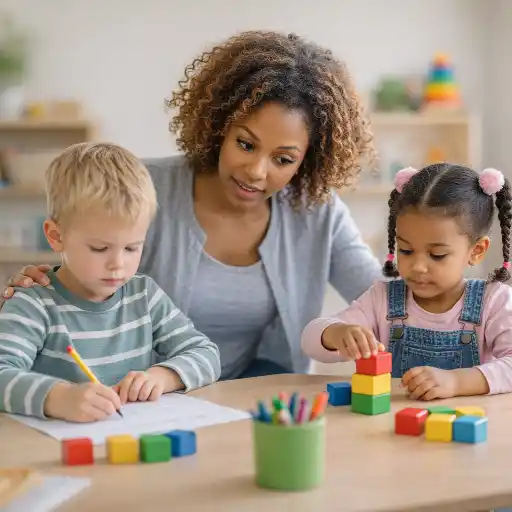
Build practice into everyday interactions: name feelings, model a calming strategy, play a turn-taking game, or invite children to make a plan together. Consistent, warm adult responses help children feel safe enough to participate and try new things. The NAEYC overview of self-regulation and executive function also highlights the role of responsive educators and environments in children’s developing regulation skills. Progress may be uneven; noticing and celebrating small steps is part of good teaching.
How can routines build independence without creating pressure?
A common mistake is treating self-help skills as either unimportant or as tasks children must perform perfectly before school. Everyday independence—such as putting belongings away, washing hands, trying a coat fastener, opening a familiar snack container, or asking for assistance—can make classroom participation easier. These skills develop with practice, appropriate accommodations, and patient adult support.
Use predictable routines as repeated, low-pressure opportunities. Add a picture cue at the cubbies, give children time to try before stepping in, and break a multi-step task into manageable parts. Narrate the process without taking over: “You pulled the zipper up to the bottom; let’s see what happens next.” If a child needs help, offer just enough assistance to support success, then gradually reduce it as the child gains confidence.
It is also a mistake to turn routines into a compliance test. A child may need more time, a different tool, a visual reminder, or an adult nearby. The purpose is participation and growing agency—not speed. Helpful classroom practices include:
- Make materials accessible and label storage with pictures and words.
- Practice routines at calm times, not only during rushed transitions.
- Offer choices where possible, such as which book to carry or which cleanup job to try.
- Recognize effort and problem-solving, not only completed tasks.
For more focused professional learning, Supporting Children’s Independence  Buy Now $24.00 explores developmentally responsive ways to foster self-regulation, conflict resolution, and practical independence.
How can teachers avoid one-size-fits-all expectations and assessments?
Comparing children against a single checklist or expecting every child to reach the same skill at the same moment can obscure strengths and create unnecessary concern. A child may communicate fluently in a home language while still learning English; another may show ideas through movement, drawing, or play more readily than through a direct question. Disability, temperament, culture, prior experiences, and access to learning opportunities all shape how children participate and demonstrate what they know.
Use observation over time and across settings. Record specific examples—what the child did, what was happening, and what support helped—instead of broad labels such as “not ready” or “doesn’t listen.” Then choose a small number of individualized next steps. Visual directions, modeling, extra wait time, adapted materials, peer support, and smaller practice steps can make activities more accessible.
Assessment should inform teaching, not rank children. The participatory research article on school readiness surveys describes the value of observation-based tools and collaboration among educators when thinking about readiness. When concerns persist, share concrete observations with the family, ask what they see at home, and follow program referral procedures. Screening is not a diagnosis, and it should not be used to define a child’s potential. State requirements vary - check your state licensing agency.
How can programs partner with families and schools without adding pressure?
Another common mistake is treating kindergarten transition as the preschool teacher’s job alone—or communicating with families only when a concern arises. Families bring essential knowledge about children’s strengths, language, routines, interests, and ways of adapting to change. Partnership works best as a two-way conversation grounded in respect, not a list of expectations sent home at the end of the year.
Share short, practical ideas that fit family routines: read a favorite story, count steps on the way to the bus, or let the child practice managing a backpack. Ask families what questions they have about school, and provide information in accessible formats and home languages when possible. With appropriate consent, connect with receiving kindergarten teachers to discuss strengths, helpful supports, familiar routines, and transition needs.
Head Start’s guidance on educator practices for successful kindergarten transitions recommends connections among children, families, programs, schools, and communities. A few practical steps can make those connections more concrete:
- Invite kindergarten staff to visit or arrange a classroom visit when feasible.
- Use photos, stories, and role-play to introduce unfamiliar routines without implying children must perform perfectly.
- Begin transition conversations early and invite families to share priorities and concerns.
- Share strengths and useful strategies, rather than sending a deficit-focused checklist.
- 🌟 Celebrate each child’s growing confidence, curiosity, and sense of belonging.
Professional learning can help staff respond consistently. Alongside the readiness training linked above, The Best Promotion is Play Buy Now $35.00, Science of Reading Foundations in the Pre-K Classroom Buy Now $16.00, Preschool Assessments & Observations Buy Now $24.00, and Bridging Cultures: Family Communication & Collaboration Buy Now $55.00 offer focused learning related to play, literacy, observation, and family partnership.
Conclusion: What is the best way to avoid common readiness mistakes?
The most useful response to common kindergarten readiness mistakes is to keep the child—not a checklist—at the center. Avoid narrowing preparation to worksheets, overlooking social-emotional and self-help skills, rushing routines, comparing children, or treating assessment as a pass-or-fail judgment. Instead, offer developmentally appropriate play, rich conversation, predictable routines, individualized supports, and respectful collaboration with families and schools.
Start with one practical change this week: protect a sustained play period, add a visual cue to a routine, ask an open-ended question during a read-aloud, or document one child’s emerging strength. Small, consistent adjustments help preschool teachers build a classroom where children can practice, belong, and grow. Kindergarten readiness is not about producing identical learners; it is about helping each child enter the next setting with support, confidence, and room to keep developing.
- Child Care Professionals
- Ready, Set, Kindergarten!
- Cómo Celebrar el Día Nacional del Kindergarten
- Temas y Actividades para el Día Nacional del Kindergarten para Proveedores
- How can we prepare preschoolers for kindergarten success?
- Kindergarten Readiness Checklist for Preschool Teachers and Parents
- What Kindergarten Readiness Skills Do Children Need?
- VPK Victory: Why Does Florida’s Push for Stronger Pre-K Funding Matter to Providers and Families?
- What Kindergarten Readiness Skills Should My Program Build?
- How Does Guided Play Build School-Ready Skills in New York Preschoolers?
- How Can Preschool Programs Best Prepare Children for Kindergarten?
- Is Your Child Ready for Kindergarten? A Kindergarten Readiness Checklist
- Is My Preschooler Ready for Kindergarten? Milestones Beyond ABCs and 123s
- How Can Child Care Programs Build Meaningful School Readiness?
- How Can Child Care Programs Build Meaningful Kindergarten Readiness?
- How Can Teachers Support Children Starting Kindergarten This Fall?
- What Should a 5-Year-Old Know Before Kindergarten?
- How Can Child Care Providers Support Kindergarten Emotions on the First Day of School?
- What Common Kindergarten Readiness Mistakes Should Preschool Teachers Avoid?
