Kindergarten readiness is built through more than letters and numbers: children also need trusting relationships, confidence, and practice navigating change. Explore practical ways to work with families and weave gratitude into daily learning, and consider Are They Ready for Kindergarten? Buy Now $35.00 for focused professional learning on readiness skills, including social-emotional development. For strategies that strengthen family collaboration across cultures and languages, Bridging Cultures: Family Communication & Collaboration  Buy Now
$55.00$42.00 offers another relevant next step.
Why do family partnership and gratitude matter for readiness?
Kindergarten readiness is not a pass-or-fail checklist or a demand that every child master the same skills at the same pace. It is a developing set of capacities—communication, curiosity, self-regulation, independence, and connection—that help a child participate in a new learning community. Families know children in ways providers cannot learn from classroom observation alone: what comforts them, what excites them, which languages they use, and what routines support their confidence.
When families and educators share information and goals, each can support the child with a fuller understanding of their strengths and needs. The University of Nebraska–Lincoln’s overview of family-childcare partnerships connects purposeful collaboration with children’s learning, social skills, and school readiness. Head Start likewise describes kindergarten transition as a set of connected relationships among children, families, programs, schools, and communities.
Gratitude can contribute to this foundation when it is taught as noticing care and helpful actions—not as compulsory politeness. Children who are invited to recognize contributions, express feelings, and participate in caring routines practice perspective-taking and belonging. A family partnership makes those experiences more meaningful because educators can learn what appreciation looks and sounds like in each child’s home.
How can providers build reciprocal relationships with families?
Strong partnerships develop through ordinary, repeated interactions. A warm greeting, a specific positive observation, or a brief question about a child’s interests can show families that communication is not limited to concerns. NAEYC’s guidance on reciprocal partnerships with families emphasizes two-way communication, shared responsibility, respect for family choices, and valuing caregivers’ knowledge of their children.
- Ask each family how they prefer to communicate, when they are available, and which language or format is most accessible.
- Share concise, concrete updates: a learning moment, a child’s words, or a question families can answer if they choose.
- Invite family input into goals and transition planning. Ask what the child is proud of, what may feel unfamiliar, and what helps during change.
- Offer flexible participation options, such as a short conversation, a take-home activity, a translated note, or a virtual meeting.
Keep the relationship strengths-based. Rather than treating families as recipients of expert advice, approach them as partners whose expertise complements your knowledge of child development. A useful learning option for staff is Building a Community of Families Buy Now $16.00, which focuses on creating supportive relationships with families. Consistent, respectful communication can also help families feel comfortable sharing questions early.
How can gratitude become an everyday readiness practice?
Gratitude is learned through experience, modeling, and developmentally appropriate opportunities—not through repeated demands to say “thank you.” Young children can begin by noticing that someone helped, recognizing how it affected them, and communicating appreciation in a way that fits their age and preferences. Adults can make this visible with specific language: “You held the door while we carried the books. That helped our group.”
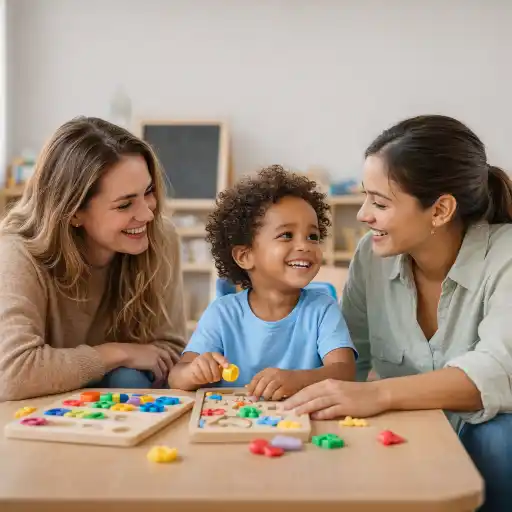
Try routines that connect appreciation with participation and relationships:
- At snack or closing circle, invite children to name, draw, or point to one helpful or enjoyable moment. Let children pass.
- Create a classroom “helping hands” display that recognizes contributions such as sharing materials, caring for a plant, or welcoming a peer.
- Read a story about cooperation and ask, “Who helped? What changed because of that help?” Accept different answers and perspectives.
- Offer art materials for children to make an optional picture or message for someone they appreciate.
- Model appreciation among adults, including thanking families for information or ideas that improve classroom support.
These small experiences strengthen social-emotional capacities related to entering a group setting: listening, noticing others, communicating, and contributing. They also help providers observe how children express connection, which may include gestures, home-language words, drawings, or actions rather than spoken phrases. For additional learning about these foundations, explore Opportunity for Growth: Emotional Development Buy Now $16.00.
How can programs connect gratitude with the kindergarten transition?
Transition planning works best as a process that begins well before the first school day. Providers can help children and families become familiar with the new setting while preserving continuity and recognizing each child’s existing strengths.
- Arrange visits, orientations, or conversations with receiving-school staff when available. Prepare children with photos, books, or simple stories about what they may see.
- Practice everyday routines through playful activities, such as organizing belongings, following a visual schedule, or asking an adult for help.
- Ask families what information they want the receiving teacher to know about the child’s interests, communication, strengths, and supports.
- With appropriate consent and secure procedures, coordinate relevant information with the school and clarify how families can contribute to the process.
- Invite children to reflect on what they appreciate about their current classroom and what they are curious about in kindergarten.
Gratitude here is not a message that children should feel only excited or thankful about change. Mixed feelings—pride, worry, sadness, and curiosity—are normal. Acknowledge them and offer predictable ways to ask questions.
How can programs keep these practices inclusive and avoid common pitfalls?
Family partnership and appreciation should reflect the children and caregivers who are actually part of the program. Families vary in language, culture, schedules, structure, and comfort with public participation. Ask rather than assume; use the names and terms families prefer, provide translated information or interpretation when possible, and make activities accessible through multiple ways to participate. NAEYC’s Five Rs for promoting positive family engagement offers a useful reminder to emphasize respect, responsiveness, relationships, reciprocity, and reflection.
- 🚫 Avoid requiring children to express gratitude aloud or share private family information. Offer choices, including observing or passing.
- Avoid treating event attendance or returned forms as proof of family commitment. Provide flexible, low-pressure ways to connect.
- Avoid framing readiness as a fixed academic score. Notice social, emotional, language, and self-help growth alongside early literacy and math.
- Avoid contacting families only when a problem arises. Make regular positive communication part of program routines.
- Protect children’s and families’ privacy when recording observations, sharing photos, or communicating with schools.
Directors can support staff by agreeing on shared communication practices, reviewing materials for assumptions, and reflecting on whose voices are represented. Track simple indicators—family feedback, two-way contacts, children’s participation, and transition questions—then adapt the plan. State requirements vary - check your state licensing agency, particularly for records, privacy, consent, and transition-related information sharing.
Conclusion: What can providers do now to support readiness?
Family partnership, gratitude, and kindergarten readiness reinforce one another when they are grounded in relationships. Families offer essential knowledge about each child; providers can use that knowledge to make learning and transition supports more responsive. Gratitude routines give children opportunities to notice care, participate in a group, and communicate appreciation without pressure to perform.
Start with one manageable action this week: ask a family what helps their child feel confident during a new experience, add an optional moment of appreciation to a familiar routine, or begin a conversation about the child’s upcoming school transition. Keep listening, share strengths, and offer practical options. In answering the central question—how can family partnership and gratitude support kindergarten readiness?—the clearest answer is through steady, respectful collaboration that helps children feel known, capable, and connected as they move toward a new learning community.
Further professional learning
- Theory of Learning
- CDA Home Visitor Subject Area 3 Part 3 Birth to 5
- Building Bridges for Dual Language Learners: For Workforce Solutions
- What Makes Me Special: An Overview of Autism and ADHD
- Family Connections: Creating Inclusive Relationships
- Family Voices Matter: Tools for Meaningful Collaboration
- Supporting Children's Independence
- Are They Ready for Kindergarten?
- Letter & Number Planning in Child Care
- Equity-Centered Communication in ECE
- CDA Certification en Español: Recursos y Consejos para Educadores Bilingües
- 🔍 ¿Qué ves cuando observas a un niño aprender?
- 💛🧩 ¿Cómo puedo hacer que mi enseñanza sea inclusiva para los niños con autismo?
- Proporciones de Cuidado Infantil y Tamaños de Grupo por Edad en Virginia (Guía Rápida para Centros y Hogares)
- Celebrando la amistad en el cuidado infantil durante el Día de los Mejores Amigos
- Canciones, juegos y preguntas de círculo para niños
- Cómo simplificar la capacitación para sus empleados de daycare
- Mawlid Around the World: How Kids Can Explore Different Traditions and Celebrations
- How Can Teachers Support Children Starting Kindergarten This Fall?
- How Can Children Recognize and Appreciate the Supportive Adults in Their Lives?
- How Can Child Care Providers Strengthen Family Partnerships During Thanksgiving?
- How Can Gratitude Activities Support Kindergarten Readiness?
- What Common Kindergarten Readiness Mistakes Should Preschool Teachers Avoid?
- How Can November Classroom Activities Help Preschoolers Build School Readiness Skills?
- How Can Child Care Providers Strengthen Kindergarten Readiness This November?
- How Can Family Partnership and Gratitude Support Kindergarten Readiness?
- How Can November Reflection Prompts Make Kindergarten Readiness Practical?
- How Can Family Partnership and Gratitude Support Infant-Toddler Development?
- How Can Veterans Day Activities for Kindergarten Build Thinking Skills Without Focusing on Combat?
- What Does Kindergarten Readiness Really Mean in 2026?
