Kindergarten readiness does not require turning preschool into a miniature elementary school. With developmentally appropriate goals, play, and caring routines, your team can build the skills children need while protecting their curiosity; Are They Ready for Kindergarten? Buy Now $35.00 offers focused professional learning on whole-child readiness, and The Best Promotion is Play  Buy Now $24.00 can help staff put purposeful play into practice.
Why does kindergarten preparation need a whole-child perspective?
Readiness is often reduced to knowing letters, counting, or sitting still. Those abilities matter, but they are only part of the picture. Children also draw on communication, physical coordination, relationships, emotional regulation, curiosity, and the ability to participate in daily routines. These domains work together: a child may use language to ask for a turn, regulate frustration while waiting, and persist when a block structure falls.
A whole-child perspective helps educators avoid treating readiness as a pass-or-fail label. Children develop at different rates and may show a skill in one setting before another. Families also bring valuable knowledge about a child’s interests, home language, culture, strengths, and routines. A readiness plan should therefore guide responsive teaching and partnership—not compare children or predict their potential.
The OECD describes child-centered and adult-guided approaches as complementary when used thoughtfully. Intentional teaching can introduce early literacy, numeracy, and science ideas, while child-initiated experiences support autonomy, motivation, and social-emotional growth. The professional question is not whether to teach, but how to make learning meaningful and appropriate to the children in front of us.
For teams, this reframing can ease pressure to produce stacks of worksheets as proof of learning. Strong #readiness includes confidence, connection, and participation alongside early academic foundations.
Which foundations matter more than early academic drills?
Preschoolers benefit from many chances to use language, explore quantities, build relationships, move their bodies, and practice independence. They do not need to read fluently before kindergarten. Instead, educators can nurture the foundations that make later learning accessible and enjoyable.
- Communication and emergent literacy: Build vocabulary through conversation, read-alouds, songs, rhymes, storytelling, and noticing print in meaningful contexts.
- Early mathematical thinking: Count real objects, compare amounts, sort materials, notice patterns, and explore shape and space during play.
- Social-emotional development: Coach children to name feelings, ask for help, negotiate roles, take turns, and try calming strategies. Head Start emphasizes that warm relationships and supportive environments provide a foundation for these skills.
- Physical development: Offer daily opportunities for movement, balance, drawing, building, and manipulating small objects.
- Self-help and participation: Let children practice managing belongings, handwashing, opening familiar containers, and following simple routines with appropriate support.
These capacities are not “extras” that must wait until academics are covered. They are part of learning itself. The CDC’s five-year milestones include examples such as taking turns, telling a story, counting, and trying some clothing fasteners; milestones are developmental monitoring tools, not a rigid classroom entrance exam.
Connect foundational #skills to children’s interests and strengths. A child who loves pretend cooking can count plates, describe ingredients, write a menu with invented marks, and practice cooperating with peers—all within a joyful, purposeful experience.
How can play and daily routines teach intentionally?
Play is not a break from learning; it is one of the richest contexts for it. In block play, children test balance, compare height, plan, and revise. In dramatic play, they use vocabulary, tell stories, negotiate roles, and solve problems. Adults can make these experiences more purposeful without taking over: observe first, offer a timely word or question, then allow children to continue exploring.
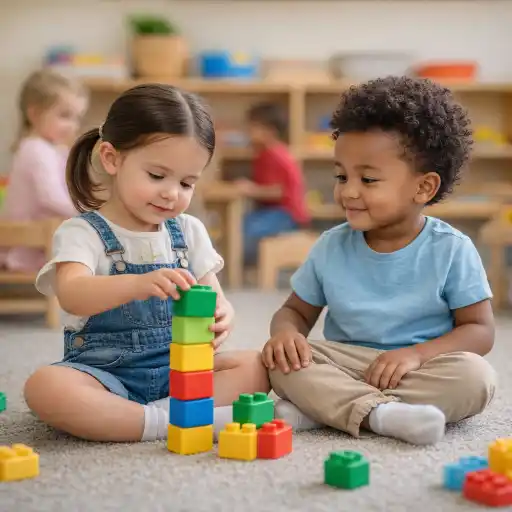
Predictable routines also provide authentic practice. At arrival, children greet others and put away belongings. At snack, they request help, count portions, and open containers. During cleanup, they sort and return materials. Repeated experiences support confidence and independence without adding a crowded schedule of formal lessons.
- Protect a sustained period for child-led play so ideas and peer interactions have time to develop.
- Prepare open-ended materials—blocks, dramatic-play props, art supplies, books, and loose parts—that invite multiple ways to participate.
- Use brief, open prompts such as “What could make the bridge stronger?” or “How might your story continue?”
- Include short, focused small-group experiences when useful, then connect the concept to play or routines.
- ✨ Notice children’s strategies and effort, not only whether they reach a predetermined answer.
Balance matters: educators may explicitly model a rhyme, introduce a number word, or explain a game’s rules, then give children room to apply the idea. The OECD review likewise supports blending staff guidance and child-centered activity while respecting developmental and motivational needs. Protecting #play does not mean abandoning learning goals; it means placing them in experiences children can actively understand and use.
How can programs plan and document learning without over-academic pressure?
Begin with a small number of observable goals connected to children’s current interests and development. A goal might be “use descriptive words during play,” “count a small group of objects,” or “ask a peer for a turn.” Decide where it could naturally arise, choose accessible materials, and consider what support different children may need.
Then use observation to guide the next step. A brief note can be more informative than a completed page: “During block play, Eli counted five blocks, compared two towers, and added a wider base after the first tower tipped.” This captures reasoning, language, persistence, and a possible next challenge. Photos, children’s words, and work samples can also help teams and families see learning in context.
A practical planning cycle for staff is:
- Notice: Observe children across play, routines, group experiences, and outdoor time.
- Choose: Select one or two useful goals rather than targeting every domain in every activity.
- Adapt: Offer visual cues, larger tools, home-language support, peer modeling, or alternate ways to participate.
- Reflect: Review what children did and said; decide whether to repeat, extend, or adjust the experience.
Use assessment to understand and support children, not rank them. If concerns persist, document specific observations, talk with families respectfully, and follow appropriate local screening or referral procedures. Screening is not a diagnosis. #observation keeps planning grounded in real evidence of children’s thinking and participation.
How can programs work with families and receiving schools?
Families may feel pressure about kindergarten expectations, especially when readiness is discussed as a list of academic skills. Listen to those concerns rather than dismissing them. Share concrete examples of learning through play, explain the range of readiness domains, and ask families what they notice at home. Two-way communication helps educators understand children more fully and makes transition planning more relevant.
Keep suggestions manageable and strengths-based. A short book conversation, counting steps on the way to the car, or inviting a child to help pack a bag can support language, early math, and independence without turning home into a classroom. Offer materials in families’ preferred languages and communication formats where possible.
Connections with receiving schools can make the transition more familiar. Head Start recommends practices such as kindergarten visits, family orientations, communication between preschool and school staff, and opportunities to practice everyday school routines. Programs might also invite a kindergarten teacher to visit, share a photo tour, or help families find enrollment and community resources. Share child information only with appropriate consent and according to program policy.
Be careful not to promise a single definition of readiness across communities. Expectations and regulations may differ; state requirements vary - check your state licensing agency. The goal of partnership is continuity and belonging—not asking preschoolers to rehearse every feature of school in advance. A supportive transition helps children arrive feeling known, capable, and ready to explore.
What common pitfalls should directors and providers avoid?
Good intentions can sometimes create unnecessary pressure. Programs may respond to family questions or accountability demands by adding more worksheets, longer seated lessons, or identical targets for every child. These choices can narrow the evidence educators see and leave less time for conversation, movement, problem-solving, and peer relationships.
- Pitfall: Treating readiness as a checklist score. Use checklists as conversation and planning tools, not labels or predictions.
- Pitfall: Replacing play with paper tasks. Keep learning goals, but offer active, hands-on ways for children to explore and show what they understand.
- Pitfall: Expecting every child to progress identically. Set individualized next steps, account for language and access needs, and notice skills across different contexts.
- Pitfall: Doing self-help tasks for children to save time. Build in extra minutes, model steps, and offer support that can gradually fade.
- Pitfall: Delaying conversations about a concern. Record objective examples, partner with the family, and follow local guidance for screening or referral when appropriate.
Directors can support staff by making planning realistic: protect play time, provide open-ended materials, schedule brief team reflection, and share examples of documentation that show learning clearly. Professional learning can also help teams align their language and practices. For a focused next step, explore DAP for Preschool Buy Now $35.00, Supporting Children’s Independence Buy Now $24.00, and Reading Aloud and Storytelling Buy Now $16.00.
Conclusion: What does balanced kindergarten preparation look like?
Preschool programs can prepare children for kindergarten without pushing academics too early by building a whole-child foundation through warm relationships, intentional play, meaningful routines, language-rich interactions, movement, and growing independence. Early literacy and math belong in preschool, but they are most useful when children can explore ideas actively, connect them to familiar experiences, and learn at a pace that respects their development.
Start with one manageable change: protect a sustained play block, add a self-help opportunity to arrival, or choose one question that extends children’s thinking during a favorite center. Observe what children do, share those strengths with families, and use the evidence to plan a next step. Readiness is not a race or a pass-or-fail test; it is a shared process that helps each child enter kindergarten feeling capable, connected, and curious.
To deepen staff practice, consider the ChildCareEd courses Are They Ready for Kindergarten? Buy Now $35.00, The Best Promotion is Play Buy Now $24.00, DAP for Preschool Buy Now $35.00, Supporting Children’s Independence Buy Now $24.00, and Reading Aloud and Storytelling Buy Now $16.00. Check course details and confirm any training-hour requirements with the relevant authority for your program.
- CDA Preschool Credential with Portfolio Review
- 45 Hour Preschool Methods and Materials
- What Makes Me Special: An Overview of Autism and ADHD
- CDA Bridge Bundle: Preschool
- CDA Bridge Bundle: Family Child Care without Portfolio Review
- CDA Bridge Bundle: Infant/Toddler without Portfolio Review
- CDA Bridge Bundle: Preschool without Portfolio Review
- Lesson Planning for Preschoolers
- Roadmapping Preschool Curriculum
- CDA Certification en Español: Recursos y Consejos para Educadores Bilingües
- Ready, Set, Kindergarten!
- Recursos en Español sobre el Sueño Seguro del Bebé
- Cómo Celebrar el Día Nacional del Kindergarten
- Temas y Actividades para el Día Nacional del Kindergarten para Proveedores
- Cómo Ser Maestra de Preescolar en Illinois
- Kindergarten Readiness Checklist for Preschool Teachers and Parents
- Canciones, juegos y preguntas de círculo para niños
- What Kindergarten Readiness Skills Do Children Need?
- How can we prepare children for the transition to kindergarten in New York?
- How Can Child Care Programs Best Prepare Little Ones for the Kindergarten Transition?
- How can we best prepare preschool children for kindergarten?
- How can preschool programs best prepare children for kindergarten?
- How Can Preschool Programs Best Prepare Children for Kindergarten?
- How Can Child Care Programs Build Meaningful Kindergarten Readiness?
- Why May Emotional Self-Regulation Matter More Than Academic Skills Before Kindergarten?
- How Can Child Care Providers Support Kindergarten Emotions on the First Day of School?
- What Common Kindergarten Readiness Mistakes Should Preschool Teachers Avoid?
- How Can Preschool Programs Prepare Children for Kindergarten Without Pushing Academics Too Early?
- Which Skills Matter Most Before Kindergarten: Academics, Independence, or Self-Regulation?
