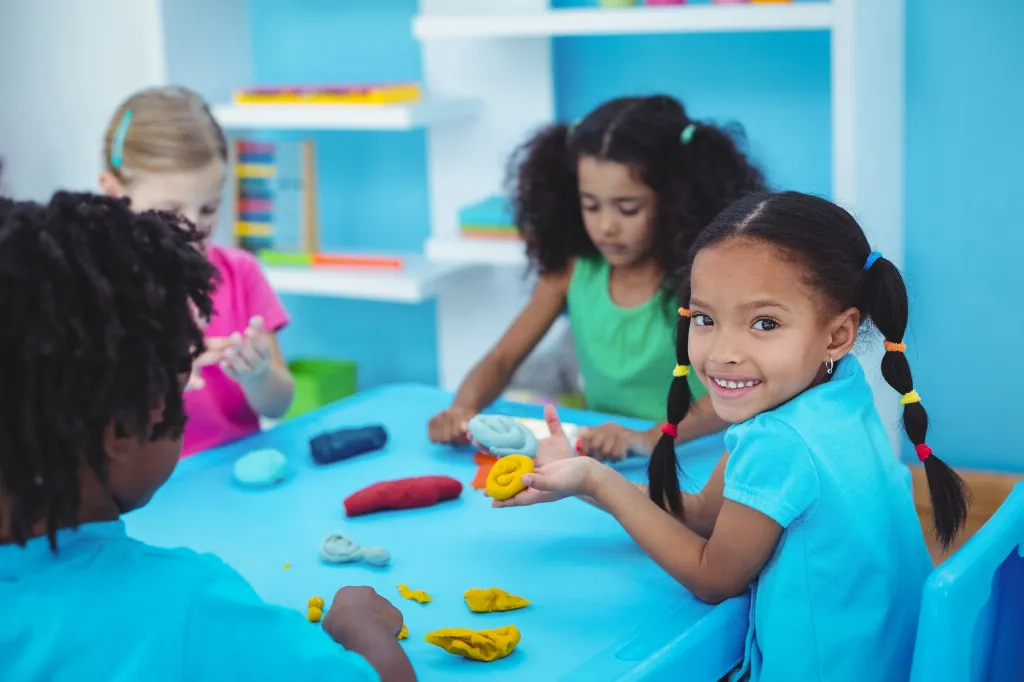
 Welcome, colleagues. This quick guide gives friendly, easy ideas to support young children through play. Put these tips right into your #preschool room so #play turns into #learning and strong #development. You can even add simple #STEM moments during free play.
What simple play activities build learning and growth?
Why it matters: play is how young children explore ideas, practice language, and try out social skills. Use these low-prep activities every day.
- 🔸 Blocks and Builders
- What to do: Offer different sizes of blocks and a small challenge (build a bridge).
- How it helps: Builds #math ideas, fine motor skills, and problem solving. See ideas in Play-Based Learning and Cognitive Growth.
- 🎨 Sensory & Art
- What to do: Sensory bins, finger paint, or fake snow in winter.
- How it helps: Strengthens language and calm focus. Try winter sensory ideas at Snow Much Fun: Winter Sensory Activities.
- 🧑🔬 Quick STEM Play
- What to do: Color-mixing cups, sink-or-float, or seed cups to watch roots.
- You can adapt these ideas into seasonal experiments — see winter holiday STEM activities for hands-on, holiday-themed projects.
- How it helps: Encourages asking questions and predicting. See Playful Scientists: 7 Easy STEM Activities.
- 🧸 Dramatic Play
- What to do: Offer a small pretend corner (store, kitchen, doctor).
- How it helps: Grows vocabulary, social skills, and emotional thinking. For planning help see Little Hands, Big Learning.
How can I plan easy lesson plans and daily routines for Pre-K?
Keep plans short, playful, and predictable. State requirements vary - check your state licensing agency. Use a simple template so staff can follow and adapt quickly.
- 📘 One-sentence goal (what will children learn?).
- 🧰 Three materials (list where they live).
- 🧩 Three steps: start, play, close. Use songs or a short reflection at the end.
- 📸 Quick assessment: 1 observation note and 1 question to ask a child.
Why this works: short plans reduce stress and keep play central. Use the ChildCareEd template and examples in Easy Lesson Plan Examples and the course Lesson Planning for Preschoolers  Buy Now $24.00.
How do I add learning goals like #STEM, math, literacy, SEL, and movement?
Blend subjects into play. Children learn best when activities are active and fun.
- 🟢 STEM & Science
- Try: color mixing, ramps, or seed cups. Link to documentation: Playful Scientists and Preschool STEM Activities.
- 🔵 Math & Patterns
- Try: pattern block play, counting songs, or measuring in cooking play. See math supports at Pre-K Printable Fun: Math.
- 📚 Language & Literacy
- Try: story dramatization, puppets, and label centers. For resources see Preschool Language and Literacy.
- 💛 SEL and Movement
- Try: emotion charts, calm corners, and short dance breaks. For SEL strategies see Emotions in Motion and SEL Strategies.
How do I adapt, track progress, and avoid common mistakes?
Track simple skills and loop with families. Use child-friendly checks and know when to refer for more help.
- 📋 Use a short milestone checklist each month. ChildCareEd offers a Developmental Milestones Checklist Buy Now $0.00 and the CDC has milestones too: CDC Milestones.
- 🤝 When to refer: if you see big delays, document examples, talk to families, and use local referral resources described at Identify resources for referral.
- Common mistakes and how to avoid them:
- ❌ Too many goals at once — Pick one clear goal per day.
- ❌ Over-teaching — Let children explore before offering answers.
- ❌ Skipping movement — Add short breaks; active play boosts learning (see Active Play to Support Learning).
FAQ (quick):
- Q: How long should a STEM activity be? A: 10–20 minutes plus talking time.
- Q: How often do I document? A: A quick note once a week plus snapshots works well.
- Q: What if space is small? A: Use tabletop sensory bins, tape lines, and small-group rotations.
- Q: Who to call for help? A: Your state early intervention number (see CDC find EI) or local services listed in ChildCareEd referral resources.
Conclusion
1) Keep play at the center. 2) Use short lesson plans with one goal. 3) Add simple #STEM, #math, #literacy, SEL, and movement moments. 4) Track growth with a checklist and refer when needed. For more ready ideas, visit the ChildCareEd articles linked above. You are the heart of your program—small choices you make each day help children learn, grow, and feel safe.
- You're Not My Friend Anymore: Learning Conflict Resolution
- CDA Home Visitor Subject Area 3 Part 3 Birth to 5
- CDA Home Visitor Subject Area 2 Part 3 Birth to 5
- Montessori Unveiled: Demystifying the Method for Parents
- Birth to Five CDA Credential with Portfolio Review
- CDA Infants/Toddlers: Brain Development and Gene Expression
- Wellness in Action: Teaching Healthy Habits to Children
- CDA Infants/Toddlers: Stages of Development
- Montessori in Context: Decoding Educational Theories
- Meaningful Lesson Planning for Infants/Toddlers
- 😫🧸 ¿Qué hacer cuando un bebé no quiere dormir la siesta en el aula?
- How does the ChildCareEd–BakerRipley contract make teacher training easier and more affordable for Texas childcare programs?
- ¿Cómo explicar los colores a un niño ciego? Actividades con tacto, sonido y emociones
- ¿Qué Calificaciones Necesitas para Trabajar en Cuidado Infantil?
- ¿Cuáles son las mejores actividades del Día de la Tierra para niños en casa o en el aula?
- Actividades de Motricidad Gruesa que Desarrollan el Equilibrio, la Coordinación y la Fuerza
- 10 Ejemplos de Cómo la Cultura Influye en el Desarrollo Infantil
- Actividades de Otoño Fáciles para Preescolares esta Temporada
- Consejos de Supervisión Activa para Salones de Preescolar y el Juego al Aire Libre
- Capacitación Previa al Servicio para Proveedores de Cuidado Infantil en Georgia
- Best Daycare Field Trip Ideas in Maryland
- Group Training for Child Care Staff: What Directors Need to Know
- Canciones, juegos y preguntas de círculo para niños
- How do I build an effective emergency preparedness plan for my Kansas child care program?
- How can child care programs prevent drowning and keep water play safe?
- How can I set professional development goals that actually stick?
- How can childcare programs create high-quality outdoor classrooms and nature-based care?
- How can we create classrooms where every child feels represented?
- How Can Intergenerational Learning Between Children and Older Adults Improve Early Childhood Practice and Community Well‑Being?
- How do I create an effective staff training plan for my child care program?
